

If you’re over 60, dental implants are one of the safest dental procedures, with up to 98% success rates even in patients in their 80s. This being said, dental implants for seniors face important considerations around bone density, medications, and cost, that must be carefully evaluated.
This guide covers everything you need to know from the best types of implants, who qualifies for surgery, insurance coverage and payment plans — including Medicare, from Dr. Astolfi, and Ivy-League scholar and practicing implantologist.
What Are Dental Implants — and Why Seniors Choose Them?
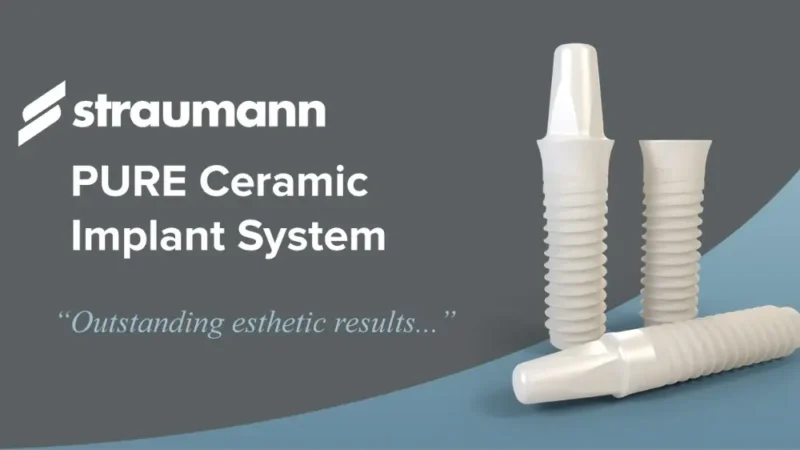
Dental implants are tiny titanium screws that act as artificial tooth roots. Once integrated with the jawbone, they support a crown, bridge, or prosthesis that feels like natural teeth. Implants are permanent, they don’t slip, don’t require adhesive, and they stimulate the jawbone, preventing bone loss and sunken face appearance.
Are Dental Implants Safe for Older Adults?
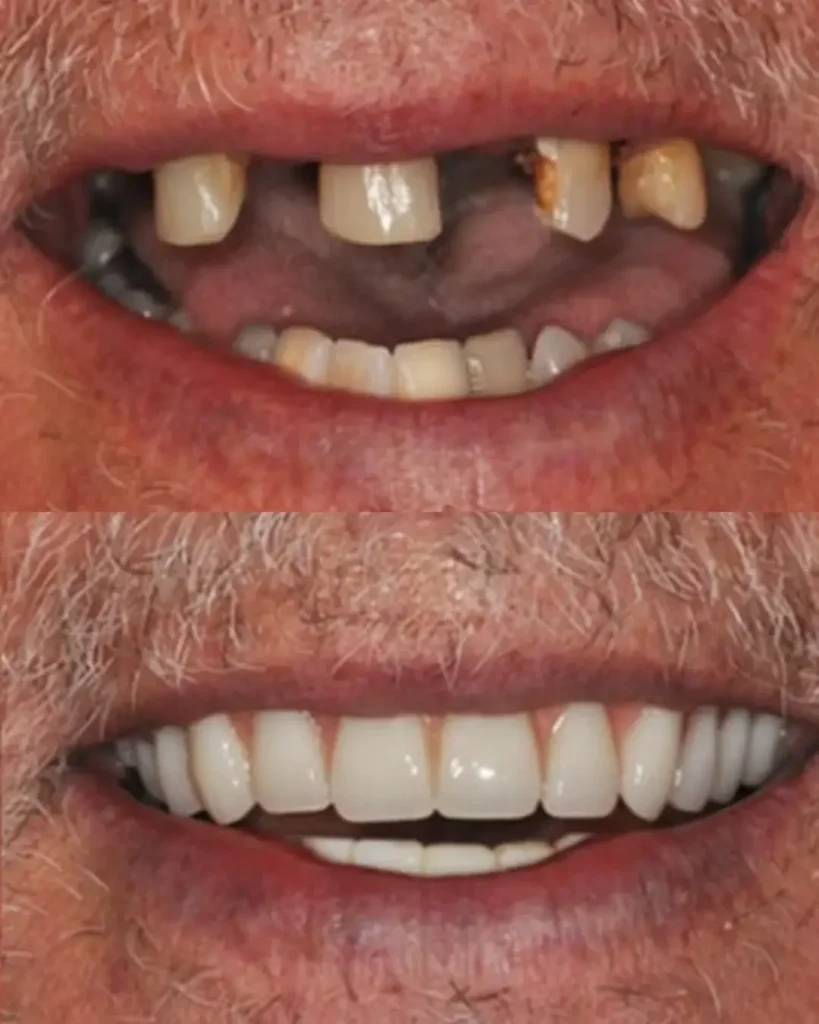
Yes. The scientific consensus is clear: implant therapy is safe and effective for older adults, including those over 75. What matters is not your age. You are likely a good candidate if you:
- Have sufficient jawbone density, or are willing to undergo bone grafting
- Have healthy or treatable gums
- Do not smoke, or are prepared to stop during healing
- Have well-controlled systemic conditions (diabetes, hypertension, osteoporosis)
- Are not currently on high-dose bisphosphonate therapy (used for osteoporosis)
You may need additional evaluation or protocol adjustments if you:
- Take blood thinners (anticoagulants)
- Have poorly controlled diabetes (HbA1c above 8%)
- Have received radiation therapy to the jaw
- Have significant immune system compromise
What Is the Success Rate of Dental Implants in Seniors?
Dental implants in seniors have a success rate of 92–98%. Data was published in the International Journal of Oral and Maxillofacial Implants. Examining 1,256 implants in 245 elderly patients (mean age 62.18 years).
Dental Implants Surgery Step by Step
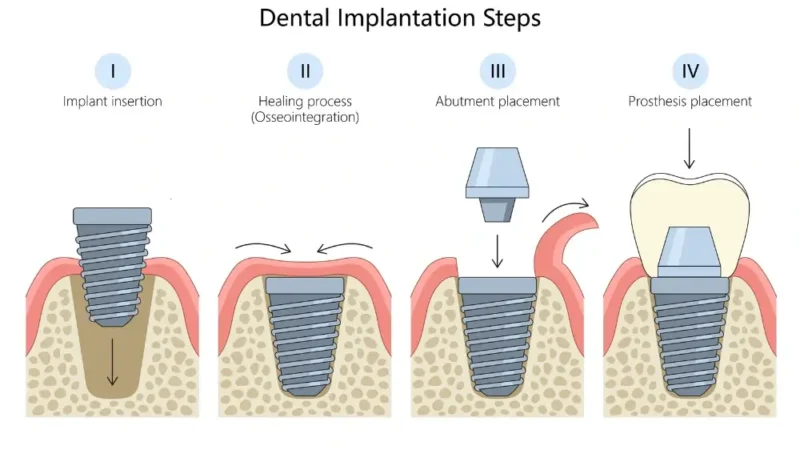
The dental implant process is straightforward and performed under local anaesthesia. Most seniors report it is considerably less uncomfortable than they expected.
- Consultation & Imaging.A 3D cone beam CT scan maps your bone structure in full detail. Dr. Astolfi uses this to plan implant position, angle, and depth with digital precision before a single incision is made.
- Preparatory procedures (if needed).Bone grafting, sinus lifts, or tooth extractions are completed first and given time to heal — typically 3–6 months — before implant placement.
- Implant placement.The titanium post is surgically inserted into the jawbone under local anaesthetic. For most patients, the procedure takes 1–2 hours.
- Osseointegration.Over the following 3–6 months, the implant fuses with the surrounding bone. This is what gives it the strength of a natural tooth root.
- Abutment & crown placement.Once integration is confirmed, the abutment connector and dental crown — or full-arch prosthesis — are fitted. The final result looks, feels, and functions like natural teeth.
Recovery and Aftercare
Most seniors recover after dental implants and return to normal activity within a few days. The post-surgical period is manageable with straightforward care.
What to expect in the first week:
- Mild swelling and bruising around the jaw — normal and typically peaks at 48–72 hours
- Soft diet (soups, yoghurt, mashed foods) for the first 7–10 days
- Prescribed antibiotics and anti-inflammatory medication
- No smoking — this is critical; smoking reduces blood supply to the healing site and is the single biggest controllable risk factor for implant failure
What to expect over 3–6 months:
- Gradual, painless osseointegration
- Follow-up imaging to confirm bone integration before the final crown is placed
- Temporary crown or prosthesis provided to maintain function and appearance during healing
Potential Risks Specific to Seniors
Dental implants are safe, but seniors face a distinct risk profile that every good clinician must address. Knowing these risks in advance is precisely what allows Dr. Astolfi to mitigate them through careful pre-surgical planning.
- Bone loss and the need for grafting. Implants placed in areas where bone augmentation was performed prior to surgery showed slightly lower longevity compared to those placed in native bone.
- Osteoporosis and bisphosphonate medication.A systematic review and meta-analysis found a 65.3% higher risk of implant failure in patients taking bisphosphonates compared to those not taking them, with 5-year survival still reaching 94.2%. Intravenous bisphosphonates carry higher risk than oral ones. Always disclose your full medication list.
- Well-controlled diabetes (HbA1c below 7–8%) is not a barrier to successful implants. Poorly controlled diabetes, however, is associated with delayed osseointegration and greater marginal bone loss.
- Peri-implantitis.This is an inflammatory condition around the implant — the implant equivalent of gum disease.
- Slower healing.Age, corticosteroid use, and certain systemic conditions can extend healing timelines. Dr. Astolfi builds additional recovery time into every senior treatment plan as standard.
How to Mitigate Risks
The risks above are real — but almost all of them are manageable with the right clinical approach. Here is what Dr. Astolfi does systematically for every senior patient:
- 3D CBCT imagingbefore any procedure, to map bone volume, density, and nerve positions
- Full medical and medication reviewat consultation
- HbA1c testingrequired for all diabetic patients
- Periodontal clearance— gum disease is treated and solved before surgery
- Bone grafting or sinus liftplanned proactively where bone volume is insufficient
- Antibiotic prophylaxisapplied to all surgical cases as standard
- Extended healing timelinesbuilt into senior treatment plans — no rushing osseointegration
- Dedicated aftercare programmewith scheduled follow-up imaging and hygiene reviews
Best Dental Implant Types for Seniors
There is no “best” dental implants for seniors — the best types of dental implants for you depend on how many teeth are missing, available bone, overall health, and budget. Below, Dr. Astolfi breaks down each option clearly.
Endosteal Implants
The endosteal implant is a single tooth replacement and the most common implant type worldwide. The procedure is straightforward, recovery is quick, and the long-term outcome is excellent. At OONE LIFE, we use premium Swiss and European brands — verifiable by REF code — starting from $400 per implant.
Full Mouth Implants
For seniors who have lost most or all of their teeth, full mouth implants offer a permanent, fixed alternative to dentures. Many wonder whether seniors can get full mouth dental implants. The answer is yes — and for many older adults, full mouth implants are genuinely life-changing.
All-on-4
All-on-4 dental implants use four angled implants to support a complete fixed arch of teeth. This is the most popular full-arch solution for seniors because it is fast, cost-effective, and works even when bone volume is limited.
All-on-6
All-on-6 dental implants adds two additional implants to the All-on-4 design, distributing chewing forces more evenly and providing greater long-term stability. It is particularly recommended for the upper jaw, where bone is naturally less dense. All-on-6 is also the best option for seniors seeking maximum durability.
All-on-8
All-on-8 is the most robust full-arch solution, placing eight implants across the jaw to support a full fixed prosthesis. It is recommended for patients with excellent bone volume who want the highest possible load distribution and long-term implant stability. All-on-8 delivers the closest equivalent to a full set of natural teeth.
3-on-6
The 3-on-6 system uses six implants to support three separate bridges. Each bridge spans a section of the jaw independently, which means that if one section ever requires attention, the others remain unaffected. This design is particularly valued for its ease of maintenance and its modularity.
Zygomatic Implants
Zygomatic implants are a specialist solution for seniors with severe upper jawbone loss. These longer implants fix into the cheekbone (the zygoma), which retains density even after significant jawbone resorption.
Can seniors get zygomatic implants?
Yes — and for those with advanced bone loss, zygomatic implants are often the only route to fixed teeth without years of bone grafting procedures. The surgery is more complex and requires a highly experienced oral and maxillofacial surgeon such as Dr. Serkan at OONE LIFE.
Implant-Supported Dentures
Implant-supported dentures combine the affordability of a removable prosthesis with the stability that only implants can provide. Two to four implants are placed in the jaw, and the denture snaps onto them securely — eliminating slipping, clicking, and the need for adhesive entirely.
How Much Do Dental Implants for Seniors Cost?
In the United States, the total cost for a single dental implant — including the post, abutment, and crown — typically ranges between $3,000 and $6,000 per tooth. Full-mouth solutions cost anywhere from $25,000 to $80,000.
At OONE LIFE Dental in Istanbul, senior patients access Swiss and European-brand implants verified by REF code — starting from as little as $400 per implant.
Treatment | US Cost | UK Cost | One Life Dental |
Single implant | $3,000–$6,000 | £1,900–£3,200 | From $400 |
All-on-4 (per arch) | $20,000–$30,000 | £12,000–£17,000 | From $6,500 |
All-on-6 (per arch) | $24,000–$35,000 | £14,000–£20,000 | From $7,500 |
Implant-supported dentures | $15,000–$25,000 | £8,000–£14,000 | From $4,500 |
Prices include consultation, 3D scan, implant placement, and crown. Additional procedures such as bone grafting or sinus lifts are quoted separately after assessment.
Additional costs that seniors commonly encounter and should budget for:
- Bone graft:$400–$3,000 in the US; included or competitively priced at One Life Dental
- Sinus lift:$1,500–$5,000 in the US
- Tooth extraction:$150–$650 per tooth in the US
Can Seniors Get Free Teeth Implants?
Truly free dental implants are rare, but reduced-cost options do exist for eligible seniors. Here is what is realistically available:
- Dental schools.University dental programmes offer implant treatment performed by supervised students at 40–60% below private practice rates. The process is slower and requires multiple visits, but the clinical quality is carefully monitored by licensed faculty. This is the most reliable low-cost route for seniors with time and flexibility.
- Dental Lifeline Network.The Dental Lifeline Network provides free comprehensive dental care to seniors, people with disabilities, and medically fragile patients through volunteer dentists, though implant availability is limited.
- Medicaid rarely covers dental implants for seniors. Less than half of US states provide comprehensive adult dental coverage, and most classify implants as elective. A small number of states — including California, Ohio, and West Virginia — may cover implants when deemed medically necessary.
- The VA provides dental benefits including some implant coverage to qualifying veterans. The AAID Foundation’s Smile, Veteran!™ programme offers implants at little or no cost to eligible applicants.
- PACE programme.The Program of All-Inclusive Care for the Elderly integrates dental services for seniors aged 55 and older and may help pay for services like implants that Medicare and Medicaid do not cover in your state.
- Clinical trials.Research institutions periodically offer free or subsidised implant treatment in exchange for participation in clinical outcome studies. Check ClinicalTrials.gov for current opportunities.
Payment Options for Seniors
Cost should not be a barrier to getting the dental care you need. OONE LIFE Dental and most reputable implant providers offer flexible payment structures designed specifically for patients on fixed retirement incomes.
Options to explore:
- Instalment payment plans— spread treatment costs over 6, 12, or 24 months, often with zero or low interest. One Life Dental offers personalised payment plans — ask at consultation.
- CareCredit and dental financing— US-based healthcare credit lines specifically designed for medical and dental treatment, with promotional 0% APR periods of 6–24 months for qualifying applicants
- Dental savings plans— not insurance, but membership schemes that offer 10–60% discounts at participating dentists for an annual fee. Useful for ongoing maintenance costs post-implant
- Health Savings Accounts (HSA) / Flexible Spending Accounts (FSA)— if you have one, dental implants are a qualifying medical expense. Contributions are tax-advantaged, effectively reducing your out-of-pocket cost
- Dental tourism— travelling to Istanbul for treatment at One Life Dental is itself a payment strategy. Most patients save $10,000–$30,000 on full-arch treatments compared to US or UK prices, even after factoring in flights and accommodation. We assist with travel logistics as part of our patient care programme
Does Medicare Cover Dental Implants?
No — Original Medicare does not cover dental implants. This surprises many seniors, but the position is clear and consistent.
Medicare does not cover dental implants unless the implant is directly tied to reconstructive surgery for cancer or traumatic injury — not standard tooth replacement.
Original Medicare Parts A and B do not cover routine dental cleanings, fillings, tooth extractions, or items like dentures and implants. Medicare Advantage plans may offer some coverage for preventive and routine dental care, but high-cost elective procedures like dental implants are not usually covered.
Medicare Advantage (Part C) is the only Medicare pathway to any dental coverage. In 2023, nearly 87% of Medicare Advantage plans offered some form of dental coverage. However, not all plans with dental coverage will cover implants, and those that do may only do so when deemed medically necessary. Annual dental caps on most plans typically range from $1,500 to $2,000 — often insufficient to cover total implant costs.
Benefits of Dental Implants for Seniors
Dental implants do not just replace teeth — for seniors, they can meaningfully improve overall health and quality of life. Here is what the evidence shows:
- Jawbone preservation.When a tooth is lost, the bone beneath it begins to resorb immediately. Implants are the only tooth replacement option that actively prevents this deterioration.
- Better nutrition and chewing function.Missing teeth directly limit what seniors can eat — harder foods, fresh vegetables, and proteins are often avoided, leading to nutritional deficiencies.
- Facial structure and appearance.Bone loss from missing teeth causes the characteristic sunken, aged facial appearance. By preserving bone volume, implants maintain facial contours and soft tissue support.
- Speech and confidence.Loose or ill-fitting dentures affect speech clarity and social confidence. Fixed implants eliminate both problems permanently.
- Long-term cost efficiency. With proper care, implants can last for at least 25 years. Calculated over a lifetime, implants are often the most cost-effective solution.
- Systemic health connection.Emerging research links poor oral health in seniors to increased risk of dementia, cardiovascular disease, and malnutrition. Restoring full dental function is not a cosmetic decision — it is a health decision.
Maintenance & Long-Term Care
An implant is only as good as the care it receives. The good news: implant maintenance is straightforward and very similar to caring for natural teeth.
Daily routine:
- Brush twice daily with a soft-bristle toothbrush — electric is ideal for seniors with dexterity challenges
- Floss daily, or use interdental brushes around the implant posts
- Use a non-abrasive toothpaste — avoid whitening formulas with harsh abrasives
- Consider an antibacterial mouthwash to reduce bacteria around the gum line
Professional maintenance:
- Attend a dental hygiene appointment every 6 months — or every 3–4 months if you have a history of gum disease
- Annual X-rays to monitor bone levels around the implant
- Immediate attention if you notice bleeding, swelling, or mobility around the implant — these are early signs of peri-implantitis, which is treatable when caught early
Senior-specific considerations:
- Dry mouth (from medications) reduces saliva’s natural protective effect — stay well hydrated and ask your dentist about saliva substitutes
- Dexterity challenges can make flossing difficult — water flossers are an excellent alternative
- Inform your dentist of any new medications at each visit — some drugs affect bone metabolism and implant stability