

Fear of pain is the most common reason patients delay dental implant treatment — even when they know they need it. The good news is that sedation and anesthesia options for dental implants have made the procedure highly comfortable, safe, and well-tolerated for the vast majority of patients.
This guide covers everything you need to know: the types of anesthesia available, how to choose the right one for your case, what to expect during and after the procedure, and answers to the most frequently asked questions.
Why Anesthesia Is Essential for Dental Implant Surgery
Dental implant placement is a minor surgical procedure that involves drilling into the jawbone to insert a titanium post. Without proper anesthesia, this would be painful. With it, most patients report feeling little to no discomfort during the procedure.
Beyond pain control, anesthesia also addresses dental anxiety — a very real and widespread barrier to care. According to a systematic review published in the Journal of Dentistry, the global prevalence of dental fear and anxiety in adults is estimated at 15.3%, and a survey of 18,000 people worldwide found that 61% reported experiencing dental fear. For patients with anxiety, choosing the right sedation method is just as important as the implant procedure itself.
Another positive aspect is that anesthesia serves to reduce the physiological stress response of the body during surgery, which can promote faster initial healing and a more stable environment for the surgeon to work.
Types of Anesthesia for Dental Implants
There are three primary categories of sedation used for dental implants: local anesthesia, conscious sedation, and general anesthesia. Each has specific indications, advantages, and limitations. Below is a clear overview:
Sedation Type | Consciousness Level | Best For | Administered By |
Local anesthesia | Fully awake | Single implant, low anxiety | General dentist |
Nitrous oxide | Awake, relaxed | Mild anxiety | General dentist |
Oral sedation | Drowsy, awake | Moderate anxiety | General dentist |
IV sedation | Semi-conscious (“twilight”) | Multiple implants, moderate-high anxiety | Trained specialist |
General anesthesia | Fully unconscious | Complex cases, bone grafts | Oral surgeon only |
Local Anesthesia for Dental Implants: The Standard Option
Local anesthesia is the most widely used option for dental implant placement. Common agents include lidocaine and articaine, typically combined with a small amount of epinephrine (adrenaline) to prolong the numbing effect and reduce bleeding.
With local anesthesia, a numbing agent is applied to the specific area where the implant will go, allowing the patient to stay awake and aware during surgery — effectively controlling pain while providing numbness only at the surgical site. The patient remains fully conscious, can communicate with the surgical team, and recovery is rapid.
Key benefits of local anesthesia:
- Fast-acting and predictable
- Minimal systemic effects
- Quick recovery — patients can often drive themselves home
- Suitable for most single-implant placements
Limitations: Infiltration anesthesia with articaine or lidocaine combined with adrenaline is widely used, but its use in patients with cardiovascular disease is limited due to adrenaline’s effects on the cardiovascular system. For prolonged procedures, its duration may also be insufficient without additional nerve block techniques.
IV Sedation for Dental Implants: The Twilight Option
IV sedation — also called conscious or “twilight” sedation — is the most popular choice for patients with moderate-to-high dental anxiety or those undergoing multiple implant placements. Medication is delivered directly into the bloodstream via a small intravenous catheter.
As the medication is administered directly into the bloodstream, it begins to work quickly and can be adjusted throughout the procedure to maintain the ideal level of sedation, ensuring the patient remains relaxed and comfortable regardless of how long the treatment lasts.
IV sedation for dental implants refers to medication delivered through a vein that guides deep relaxation during implant placement — the patient rests in a sleep-like state, yet breathing stays steady without support machines.
Key benefits of IV sedation:
- Rapid onset — takes effect almost immediately
- Dose can be adjusted in real-time during the procedure
- Patients often report less pain and discomfort after surgery, and reduced stress on the body may contribute to a faster healing process
- Most patients have little to no memory of the procedure
- Safer and more cost-effective than full general anesthesia for most cases
Recovery: IV sedation typically wears off within a few hours, though patients may feel drowsy for the rest of the day. A companion must drive the patient home.
Important note: IV sedation works well for single implant placements, but for full-arch procedures, the time and precision required can make it a less practical option — the longer the surgery, the more challenging it becomes to maintain appropriate sedation safely.
General Anesthesia for Dental Implants: When Is It Necessary?
General anesthesia renders the patient fully unconscious and is preferred for complex cases. General anesthesia is mostly used when bone grafting is necessary, or when the patient does not have enough healthy bone in their jaw to support implants — the patient will be completely unconscious and will not remember the procedure.
Only oral surgeons are licensed to administer general anesthesia, which is typically selected for patients receiving multiple implants or bone grafts, or for those likely to suffer from extreme anxiety.
General anesthesia is generally recommended for:
- Full-mouth rehabilitation (6+ implants)
- Procedures requiring simultaneous bone grafting
- Patients with extreme dental phobia
- Cases requiring zygomatic implants
Limitations: Higher cost, longer recovery, and requires a fully equipped surgical facility and anesthesiologist.
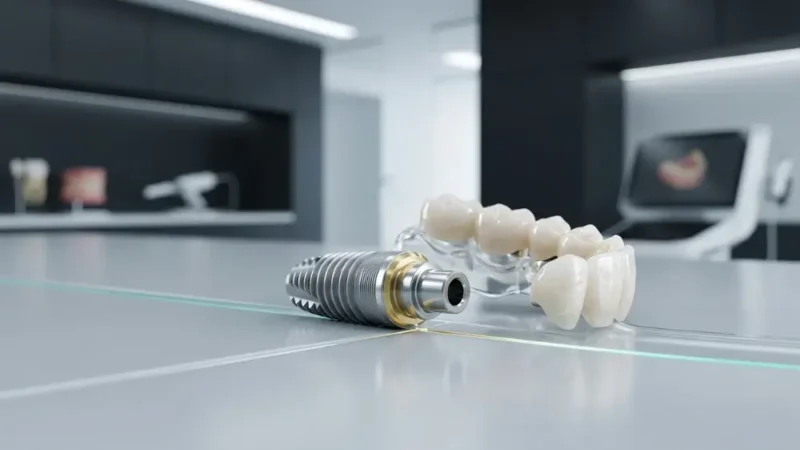
Do I Need Anesthesia for Dental Implant Surgery?
A common question among patients is: “Do I need anesthesia for dental implant surgery?” The answer is a definitive yes. However, the type of anesthesia depends on the scope of the procedure as we have mentioned earlier. It is impossible to place a dental implant without at least local anesthesia for dental implants, as the process involves preparing the bone to receive the titanium post.
Without effective numbing, the procedure would be physically distressing. Fortunately, with anesthesia, the experience is often described by patients as being less painful than a standard tooth extraction. Statistics from patient surveys indicate that over 95% of patients who opted for some form of sedation reported a “comfortable” or “very comfortable” surgical experience.
How to Choose the Right Anesthesia Option
The choice of anesthesia depends on several individual factors. Here is a practical guide:
- Number of implants: Single implant → local anesthesia is usually sufficient. Multiple implants → consider IV sedation or general anesthesia.
- Anxiety level: Mild → nitrous oxide or oral sedation. Moderate-to-severe → IV sedation or general anesthesia.
- Medical history: Cardiovascular conditions may limit the use of epinephrine-based local anesthetics.
- Procedure complexity: Bone grafts or full-arch restorations require deeper sedation.
- Patient preference: Your comfort and peace of mind matter — always discuss your options openly with your surgeon.
- Duration: Longer surgeries are easier for the patient to endure when they are in a drowsy, relaxed state.
Your implant surgeon will conduct a thorough pre-surgical assessment before recommending the most appropriate sedation protocol for your specific case.
What to Expect: Before, During and After Sedation
Before the procedure:
- Fasting is required for IV sedation and general anesthesia (typically 6–8 hours)
- A health review and vital sign assessment will be carried out by your surgical team
- Arrange for someone to drive you home in case you will go through IV sedation or general anesthesia
During the procedure:
- Your surgical team will monitor vital signs throughout
- Midazolam is one of the most commonly used intravenous sedatives in dental implant surgeries, often combined with local anesthesia for complete pain control
- You will feel relaxed, calm, and largely unaware of the procedure
After the procedure:
- There are no major side effects — you may feel groggy for a few hours as the sedation wears off, but serious complications are rare when proper monitoring is performed
- Rest for the rest of the day
- Avoid driving, alcohol, and major decisions for 24 hours
- Drink plenty of water, but avoid using straws as the suction can disrupt healing.
- Stick to soft foods like yogurt or lukewarm soups until the local anesthetic has completely worn off to avoid biting your cheek or tongue.
Sources: Journal of Dentistry (2024), PMC — Journal of Advanced Periodontology and Implant Dentistry (2019), PMC — Considerations for Satisfactory Sedation during Dental Implant Surgery (2023), DentaVox Global Survey.