
The clinical fact is that 4 implants often last as long as 6. But there are cases in which all-on-6 dental implants are highly advisable. For example, for patients with heavy bite forces, strong bruxism, or wanting absolute security 20+ years post-op.
This guide covers everything a well-informed patient should know about all-on-6 dental implants: the best implant brands, how the surgery works, healing and recovery times, and before and after results.
Different Types of All-on-6 Dental Implants
All-on-6 dental implants are six titanium posts placed into your jawbone to anchor a fixed bridge of prosthetic teeth.That’s always the case. Below, you will find the different configurations, their strengths and benefits.
The Classic All-on-6
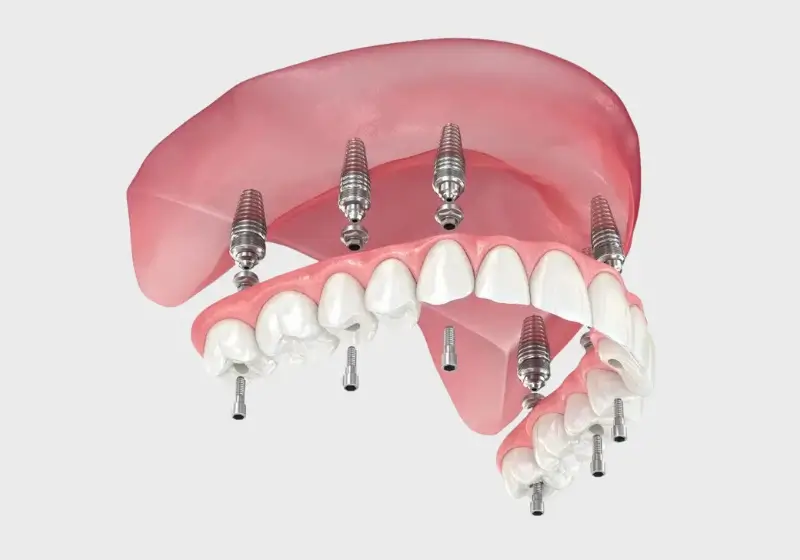
The standard six titanium implants. This distribution reduces stress on each dental implant and provides a stable foundation for the final prosthesis.
3-on-6
A more sophisticated approach. Rather than supporting a single bridge, the arch is divided into three separate bridges — each anchored by two implants.
This design offers several advantages:
- Easier access for cleaning and long-term oral hygiene
- Reduced stress on each individual implant
- Greater flexibility for future repairs or replacements — one segment can be replaced without disturbing the others
- A more natural feel
Zirconia All-on-6
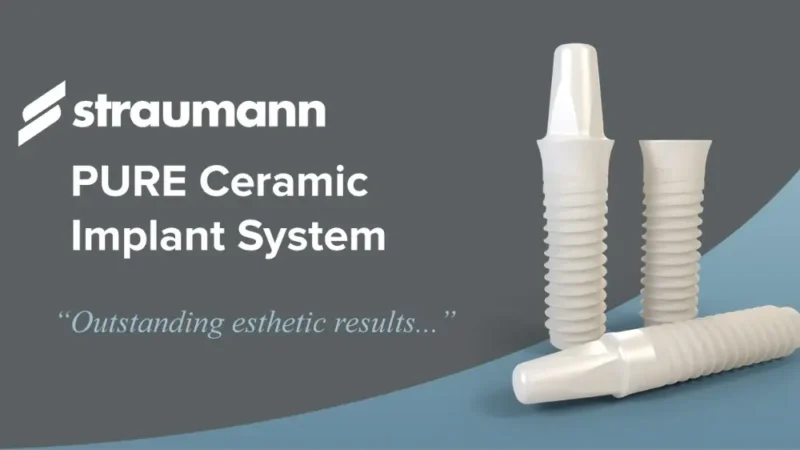
“Zirconia All-on-6” refers to the implant material. Zirconia is an exceptionally hard, biocompatible ceramic. Zirconia implants — also called ceramic implants — are a newer generation system ideal for patients with metal sensitivities.
Its main features include:
- Metal-free throughout
- Aesthetic advantage at the gum line— zirconia is white rather than grey. In patients with thin or receding gum tissue, a white implant is less likely to create a visible greyish tint at the gum margin.
- Greater biocompatibility and less risk of infection
*With only ~25 years in clinical use, zirconia implants have a shorter documented history than titanium.
All-on-6 with Zygomatic Implants
For patients with severe bone loss in the upper jaw. A hybrid All-on-6 may combine two zygomatic implants at the rear, achieving full-mouth restoration in patients who would otherwise not suitable for implants at all.
*This is a highly specialist procedure requiring an oral and maxillofacial surgeon and 3D imaging-guided planning.
Pros & Cons of All-on-6 vs All-on-4
Depending on your case, all-on-4 might make much more sense than all-on-6. For a proper assessment, a CT scan or, at a minimum, a panoramic X-ray are strictly required. You can always contact us for a free online consultation.
All-on-4: The Case For It
- Fewer implants means a shorter, less invasive procedure
- Lower cost than All-on-6
- Clinically safe and long-lasting
All-on-6: The Case For It
- Better jawbone preservation
- Better stability & natural feel
- If one implant is lost, the system preserves functionality
Key Contrasts in a Nutshell
All-on-4 | All-on-6 | |
Bone grafting required | Rarely | Occasionally, depends on anatomy |
Force distribution | Good | Superior |
Posterior molar support | Limited | Stronger |
Redundancy if one implant fails | None | Yes |
Procedure complexity | Lower | Moderate |
Cost (UK, per arch) | £10,000–£15,000 | £15,000–£22,000 |
Cost (US, per arch) | $20,000–$30,000 | $25,000–$35,000 |
Am I a Good Candidate for All-on-6 Dental Implants?
Most edentulous adults are candidates for dental implants. The real question is which configuration is appropriate for your jaw, your health and your goals. Here is what surgeons actually assess before recommending All-on-6.
You Are Likely a Strong Candidate If
- You have enough bone density to support six implants without extensive grafting
- You have no uncontrolled chronic conditions
- You are a non-smoker
- You are over 18 and have fully developed jaw bones
Factors That Require Closer Assessment
- Low bone density
- Diabetes
- Osteoporosis
- Cardiovascular conditions
- Autoimmune conditions
- Long-term steroid use
- Active gum disease or infection
What If I’m Not Suitable?
This is more common than you think. A second opinion from a maxillofacial surgeon or specialist implantologist is always worth seeking. Techniques such as zygomatic implants, guided bone regeneration and advanced grafting have made full-arch restoration possible for patients who were told it was not an option.
All-on-6 Implants Surgery Step by Step
The all-on-6 procedure unfolds across several stages, each one building the foundation for the next. Here is exactly what that process looks like at OONE LIFE:
1. Digital Smile Design (DSD)
Digital Smile Design (DSD) begins with a professional photo and video session capturing your face, your lips, your smile line and your facial proportions from multiple angles. These images are imported into DSD software, which maps your facial geometry in three dimensions and allows the clinical team to design your new smile on your actual face.
Tooth length, width, midline, gingival levels, incisal edge position are all defined and agreed upon pre-op.
2. Bite Analysis: Gnathological Assessment & TMJ Diagnostics
Before committing to a clinic, ask specifically: who will assess my bite, and what equipment will they use? A prosthesisdesigned without a gnathological specialist can create an uneven load distribution
A full-arch implant case at the highest clinical standard requires:
- Condylography or axiography — precise recording of the movement paths of your condyles (the rounded ends of the lower jaw)
- TMJ CT or CBCT imaging — cross-sectional imaging
- Computerised bite analysis — digital mapping of occlusal (biting) forces
3. Pre-Op Tests & Anaesthesia
All-on-6 is typically performed under IV sedation or general anaesthesia. At OONE LIFE, anaesthesia is administered by a qualified anaesthetist present throughout the procedure.
Before surgery is confirmed, however, a comprehensive pre-operative workup is completed:
- Full blood panel — including clotting factors, blood glucose, inflammatory markers and, where indicated, bone metabolism markers
- Medical history review — medications, allergies, systemic conditions, previous surgeries
- ASA classification — a standardised assessment of your anaesthetic risk, carried out by or in consultation with the anaesthetist
4. Tooth Extraction, Bone Grafting & Sinus Lift (If Required)
For many patients, the mouth needs to be prepared before implants can be placed. These are standard components of complex full-arch cases:
- Tooth Extractions: Any remaining failing or non-restorable teeth must be removed before or during the implant surgery.
- Bone Grafting: When bone volume is insufficient to support implants.
- Sinus Lift: If the maxillary sinuses have insufficient vertical bone height for posterior implants.
5. Implant Placement
This is a multi-hour surgery, that can last anywhere from 2 to 5 hours per arch. The surgeon makes controlled incisions in the gum tissue to expose the underlying bone. Using a custom-fabricated surgical guide — derived from the pre-op CBCT data — each implant site is prepared with drills to the exact diameter and depth required.
The implants are then inserted into the sites. The surgeon verifies primary stability (the initial mechanical grip of the implant in the bone) using an insertion torque device or a resonance frequency analyser (RFA).
6. Immediate Loading
Also known as “same-day teeth” — the patient leaves the clinic with a functional, aesthetic set of teeth. Immediate loading does not mean the final prosthesis is fitted immediately. The temporary bridge — usually in acrylic — protects the implants and restores function over the following 3–6 months. The definitive prosthesis is placed in a second visit after such period.
*Not every patient is a candidate for immediate loading. It requires sufficient primary implant stability at the time of placement.
Post-OP Recovery & Aftercare
What you do in the days and weeks after surgery directly influences your long-term outcomes. Recovery from All-on-6 surgery is manageable for the vast majority of patients — but it is not trivial.
Here is an honest account of what to expect.
Days 1–3: The Critical Window
The first 72 hours are the most uncomfortable — and the most important.
What you will experience:
- Swelling — typically peaking at 48–72 hours post-surgery.
- Bruising — particularly around the jaw, chin and occasionally the neck. simultaneously, bruising can be significant. It resolves within 7–14 days.
- Bleeding — minor oozing from the surgical sites is normal for the first 24 hours.
- Discomfort — well-controlled with the prescription pain
What you must do:
- Avoid any physical activity for a minimum of 72 hours
- Sleep with your head elevated
- Cold, soft foods only — yoghurt, smoothies, mashed vegetables, soup.
- Do not smoke. Not even one.
- Take all prescribed antibiotics for the full course — do not stop when you feel better
- Do not touch, probe or rinse aggressively
Weeks 1–8: Osseointegration
From approximately day four onwards, the acute phase subsides and the longer, quieter process of osseointegration begins.
What is happening week by week:
- Weeks 1–2: A blood clot gradually organises into granulation tissue — the scaffold on which new bone will form.
- Weeks 2–4: Woven bone begins forming around the implant surface.
- Weeks 4–8: Woven bone is progressively replaced by denser, more structured lamellar bone.
During this phase:
- Maintain a soft diet
- Oral hygiene is critical.
- Attend all scheduled follow-up appointments.
- Continue to avoid smoking, hard foods, and contact sports.
The Hybrid Prosthesis: Your Final Teeth
The prosthesis is what you actually see, feel and use every day. It will be placed on top of the implants, supported by them. Here is a clear breakdown of the 2 main options.
Full-Zirconia Bridge
Milled from a single solid block of monolithic zirconia — a high-strength, biocompatible ceramic that closely replicate natural tooth enamel. With proper maintenance, a full-zirconia bridge can last 15–20 years or more.
Characteristics:
- Exceptional hardness and fracture resistance
- Highly aesthetic
- Metal-free and hypoallergenic
- Stain-resistant
- Biocompatible
Titanium + Zirconia Hybrid Prostheses
Currently the most prescribed premium hybrid prosthesis worldwide. Titanium framework for structural rigidity; zirconia ceramic superstructure for aesthetics and strength.
Characteristics:
- Strong and durable
- Reasonable aesthetics
- Less translucent than zirconia
Before & After All-on-6 Dental Implants
For prospective patients, real patients, real results offer the most reliable signal available when evaluating a clinic.
What to look for in before & after documentation:
- Consistent lighting and angles
- Visible gum tissue, not just teeth
- Multiple time points
- Cases that match your own situation
- Diversity of starting conditions
Risks & Potential Complications
Every surgical procedure carries risk. A clinic that tells you otherwise is not being honest. Understanding what can go wrong, how likely it is and how it is managed is an essential part of making an informed decision.
Early Complications (Within the First 3 Months)
These are complications that can arise during or shortly after surgery, before osseointegration is complete.
- Infection (peri-implant mucositis or early peri-implantitis)
- Implant mobility or early failure
- Nerve involvement
- Sinus perforation
- Swelling, bruising and bleeding
- Anaesthetic complications
Late Complications (After Osseointegration)
These arise months to years after successful initial healing.
- Peri-implantitis
- Prosthesis fracture or chipping
- Screw loosening
- Bone resorption
- Aesthetic changes over time
How Risk Is Minimised at a Serious Clinic
The honest reality is that the majority of complications listed above are either preventable or manageable when the following conditions are met:
- Thorough pre-operative assessment including CBCT imaging and full medical history
- Surgery performed by a qualified, experienced maxillofacial surgeon or specialist implantologist
- Premium, traceable implant brands with documented clinical performance
- Guided surgical protocols derived from 3D imaging data
- A qualified anaesthetist present throughout
- Structured post-operative follow-up and long-term maintenance programme
- A patient who follows post-operative instructions and attends all scheduled reviews
Long-Term Care & Maintenance of All-on-6 Dental Implants
Once osseointegration is confirmed and your definitive final prosthesis is fitted, you enter the long-term maintenance phase. This is not the end of the clinical relationship. It is the beginning of a permanent one.
Daily home care:
- Brush the bridge and gum margins twice daily
- Use an interdental brush or water flosser daily to clean beneath the bridge
- Antimicrobial mouthwash (chlorhexidine-based, used periodically rather than daily) If you grind your teeth at night (bruxism), a custom night guard is essential
Professional maintenance:
- Professional hygiene appointments every 4–6 months
- Annual radiographic review
How long should All-on-6 implants last?
With correct maintenance, premium implant brands and good systemic health, All-on-6 implants are designed to last a lifetime. The prosthesis itself — particularly acrylic bridges — may require replacement or refurbishment at 10–15 years. Full-zirconia bridges have a significantly longer clinical lifespan. nih
The implants themselves do not wear out. What determines longevity is the health of the bone and soft tissue around them — which is entirely within your control.
All-on-6 Dental Implants Cost
Headline prices of all-on-6 dental implants are frequently stripped of essential components, making direct comparison between clinics almost impossible. This section gives you real, current price ranges across the UK, the US and Turkey, broken down by implant brand and prosthesis material.
How Much Are All on 6 Dental Implants in the UK?
The price per arch for All-on-6 treatment in the UK typically starts at £15,000 and can reach £22,000 for a single arch. For both arches, costs range from £30,000 to £40,000.
Some clinics advertise prices as low as £11,000 for All-on-6 — but these figures frequently cover only the implants themselves, not the full treatment including temporary prosthesis, final bridge, anaesthesia and follow-up care.
Acrylic Bridge | Full-Zirconia Bridge | |
Nobel Biocare® implants | £16,000–£19,000 per arch | £19,000–£24,000 per arch |
Straumann® implants | £15,500–£18,500 per arch | £18,500–£23,000 per arch |
Dentsply Sirona® implants | £14,500–£17,500 per arch | £17,500–£22,000 per arch |
Generic / unverified implants | £8,000–£12,000 per arch | £11,000–£15,000 per arch |
Full mouth (both arches) | £28,000–£36,000 | £35,000–£45,000+ |
Prices are indicative ranges based on current UK market data. Individual quotes will vary based on case complexity, geographic location and what is included in the package.
All-on-6 Cost in the US
In the United States, All-on-6 dental implants average between $25,000 and $35,000 per arch — making a full-mouth restoration $50,000–$70,000 at a standard US private clinic. P
Dental insurance in the US provides minimal coverage for full-arch implant procedures, as they are typically classified as elective or cosmetic rather than medically necessary.
Acrylic Bridge | Full-Zirconia Bridge | |
Nobel Biocare® implants | $26,000–$32,000 per arch | $30,000–$38,000 per arch |
Straumann® implants | $25,000–$31,000 per arch | $29,000–$37,000 per arch |
Dentsply Sirona® implants | $23,000–$29,000 per arch | $27,000–$35,000 per arch |
Generic / unverified implants | $14,000–$19,000 per arch | $18,000–$24,000 per arch |
Full mouth (both arches) | $46,000–$60,000 | $56,000–$72,000+ |
Prices reflect current US private clinic market ranges. Costs vary significantly by state, city and practice type.
All on 6 Cost in Turkey
Dental implants in Turkey have attracted millions of patients until becoming one of the world’s leading destinations. InTurkey, All-on-6 dental implant cost between £3,500 and £9,000 per arch. At OONE LIFE, we use Swiss Nobel Biocare® and Straumann® implants.
Acrylic Bridge | Full-Zirconia Bridge | |
Nobel Biocare® implants | £4,500–£6,000 per arch | £6,500–£8,500 per arch |
Straumann® implants | £4,250–£5,800 per arch | £6,000–£8,000 per arch |
Dentsply Sirona® implants | £3,800–£5,200 per arch | £5,500–£7,500 per arch |
Generic / unverified implants | £2,000–£3,500 per arch | £3,000–£5,000 per arch |
Full mouth (both arches) | £8,000–£11,000 | £11,500–£16,000 |
One Life Dental All-on-6 packages start from £4,250 per arch with Nobel Biocare® or Straumann® implants. All packages include consultation, CBCT imaging, surgery, temporary prosthesis, final bridge and follow-up care.
Verify Implant Authenticity with REF Codes
When a clinic tells you they use Nobel Biocare®, Straumann® or any other premium implant brand, you can verify it by checking the package and the REF code.
What is a REF Code?
Nobel Biocare®, Straumann®, Dentsply Sirona® and every top-tier implant is packaged with a REF (Reference) code, which specifies the exact implant model, diameter, length and surface. This code is traceable.
- A genuine Nobel Biocare® implant REF code can be verified atcom
- A genuine Straumann® implant REF code can be verified atcom
Free Consultation with Dr. Astolfi
Not sure which configuration is right for you? Book a free consultation with Dr. Astolfi and get a straight answer based on your actual clinical picture — no pressure, no commitment. The One Life Dental team works with patients from the UK, US, Canada, Australia, Ireland and New Zealand. Book your free consultation here.