
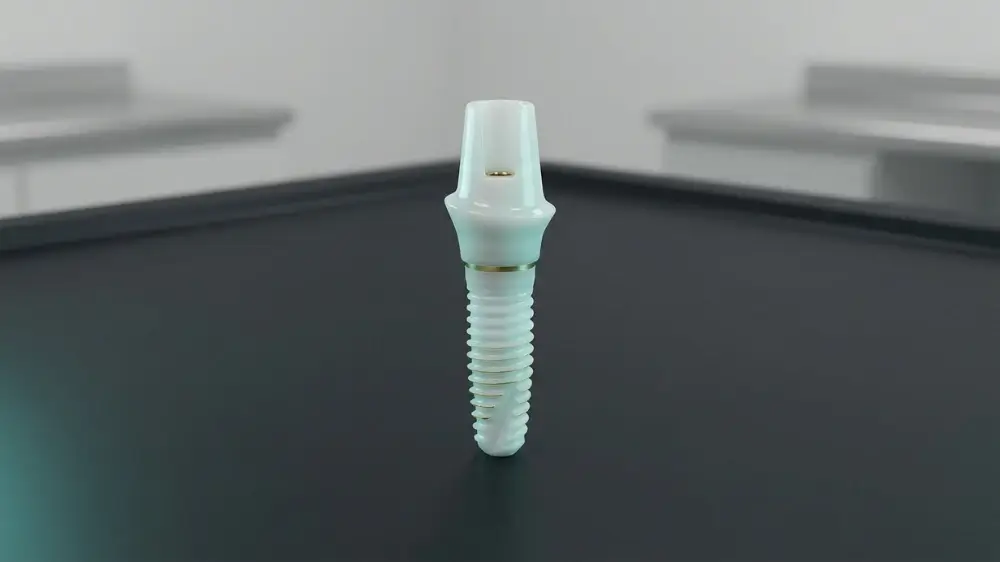
Historically, implants were exclusively titanium. However, the evolution of bioceramics has allowed zirconia to match the toughness of metal. That’s when zirconia teeth implants came in. Avoiding allergic and inflammatory reactions linked to metal, these white implants blend seamlessly within the jaw to resemble real teeth in form and function.
What is a Zirconia Dental Implant?
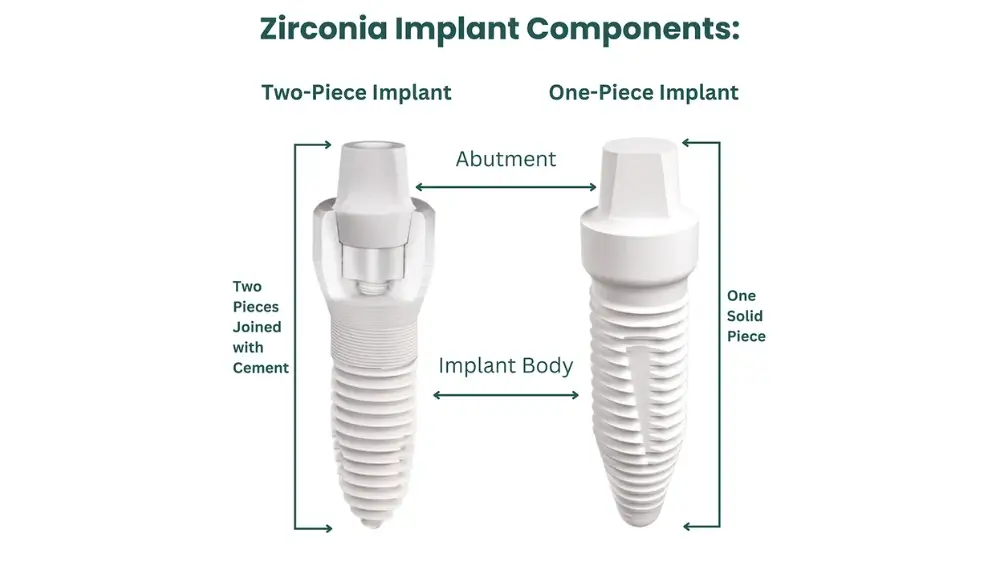
Zirconia dental implants are metal-free, white ceramic alternatives to titanium metal implants. Because they are bio-inert, the body’s immune system does not recognize them as a foreign metal object, which facilitates a healthy osseointegration. They are available in one-piece and two-piece designs, the latter allowing for greater flexibility and prosthetic precision.
What is Zirconia?
Zirconia is a metal oxide categorized as a ceramic. In dentistry, it is used to withstand the extreme forces of human biting and chewing.
Despite being derived from the metal zirconium, the oxidation process transforms zirconia into a non-metallic, polycrystalline ceramic. This is a crucial distinction for patients with Type IV metal allergies or those following a holistic lifestyle. Zirconia is famous for its resistance to thermal shock, making it ideal for the internal environment of the mouth.
Key properties of dental-grade zirconia include:
- High Biocompatibility: It does not leach ions or corrode when exposed to saliva and oral bacteria.
- Low Plaque Affinity: Studies show that bacteria and biofilm are less likely to adhere to zirconia surfaces compared to titanium, promoting healthier gum attachment.
- Radiopacity: It is visible on X-rays and CT scans, allowing your doctor to monitor the health of the bone surrounding the implant accurately.
Advantages of Zirconia Implants
The primary advantages of zirconia implants are their superior aesthetics, metal-free composition, and soft-tissue response. They are the best of all types of dental implant for patients with thin gums or those concerned about metal corrosion.
Zirconia offers a range of benefits that titanium cannot replicate, particularly:
- Aesthetics: Because the implant post is white, it eliminates the risk of a “grayish” shadow showing through the gums.
- Biocompatibility & Allergies: Zirconia is bio-inert. For the estimated 10% of the population with metal sensitivities or Type IV hypersensitivity, zirconia provides a safe
- Soft Tissue Health: Zirconia promotes better blood circulation in the gums compared to titanium. It also has a lower plaque affinity, meaning fewer bacteria accumulate, reducing the risk of peri-implantitis.
- No Galvanized Corrosion: In a mouth with different metals (gold crowns, silver fillings, etc.), titanium can act as a battery, creating a micro-current (galvanism). Zirconia is a non-conductor, eliminating this risk.
Disadvantages, Problems & Side Effects
The main disadvantages of zirconia implants involve their susceptibility to low-temperature degradation (aging) and the technical difficulty of the surgical placement. They are less forgiving than titanium and require a surgeon with specific experience.
Despite their benefits, patients should be aware of certain clinical limitations:
- Material Brittleness: While zirconia has high compressive strength, it is a ceramic. It lacks the “ductility” of titanium, making it slightly more prone to fracture if exposed to bruxism or grinding.
- One-Piece Limitations: Many zirconia implants are monoblock (one-piece). This means the angle of the implant cannot be adjusted with an abutment after placement. If the surgical positioning is slightly off, the final aesthetic result may be compromised.
- Aging (Hydrothermal Degradation): Over several decades, exposure to the moisture of the oral cavity can lead to a transformation in the crystal structure of the zirconia, potentially weakening the material. However, modern Yttria-stabilized versions have largely mitigated this concern.
- Cure Time: Zirconia implants often require a more cautious healing period. Because they do not “bond” to the bone in the exact same chemical way titanium does, surgeons may recommend a longer period before “loading” the implant with a tooth.
How Much Do Zirconia Implants Cost?
Zirconia implants cost roughly 30% to 50% more than titanium implants. This is due to the high cost of manufacturing the ceramic and the surgical kits required for their placement.
In the US and UK, the cost of a zirconia implant (including the crown and surgery) can easily exceed $5,000. By contrast, clinics like OONE LIFE Istanbul in Turkey offer the same premium zirconia for 70% less.
Component | Average Cost USA | OONE LIFE Dental (Turkey) |
Single Zirconia Implant | $4,500 – $6,500 | $800 – $1,200 |
Zirconia Bridge (Full Arch) | $25,000 – $40,000 | $6,500 – $11,000 |
Consultation & 3D Imaging | $500 – $1,000 | Included / Free |
These price differences allow patients to afford top-tier ceramic brands like Straumann® PURE for a fraction of the cost of a generic titanium implant in their home country.
Are Zirconia Implants Worth It?
Zirconia implants are worth it for patients who prioritize avoiding all risks of metallic taste, metal-free living, and elite aesthetics. Patients who have sensitivities to jewelry find in ceramic implants the only solution. The natural translucency of zirconia also ensures that even if gum recession occurs over time, the smile remains bright and natural.
How Long Do Zirconia Teeth Implants Last?
With proper maintenance, zirconia implants are designed to last 20+ years. Current clinical data shows survival rates exceeding 97% after 5 years, which is comparable to the long-term success of titanium.
The longevity of a zirconia implant depends heavily on osseointegration (the bone growing around the implant). Because zirconia has a high resistance to corrosion and does not leach particles, the surrounding bone remains healthy and stable over time. To ensure maximum lifespan, patients must maintain a strict hygiene routine and address any issues with tooth grinding (bruxism) by wearing a night guard
Which Implant is Better, Titanium or Zirconium?
Neither is universally “better.” Titanium is better for complex full-mouth implant cases where flexibility is needed, while Zirconia is better for aesthetics, metal allergies, and holistic health.
What Are The Best Zirconia Implant Brands?
The leaders in the zirconia space include:
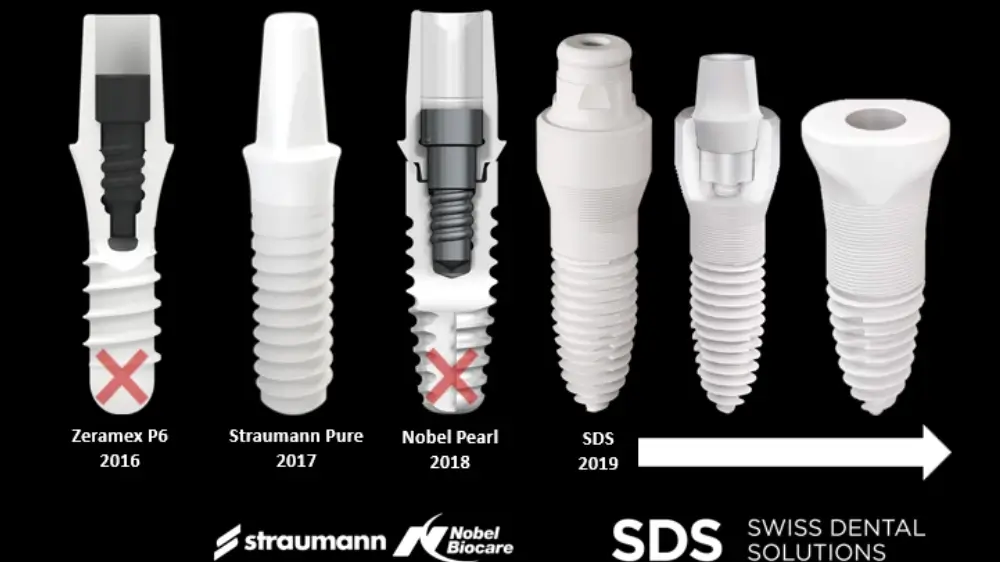
- Straumann® (Switzerland): Their PURE Ceramic line is the industry benchmark for high-strength, two-piece zirconia implants.
- Nobel Biocare™ (Switzerland/Sweden): Known for the NobelPearl, a 100% metal-free, two-piece ceramic solution.
- Z-Systems (Germany/Switzerland): Pioneers in the ceramic implant field with over 20 years of specialized zirconia experience.
- Zeramex: A leading developer of two-piece, metal-free systems that offer high surgical flexibility.
Zirconia Implants Before & After
The visual transformation with zirconia implants shows a natural transition between the crown and the gum line. Unlike titanium, which requires opaque layers to hide the metal, zirconia allows for a life-like depth of color and light.