
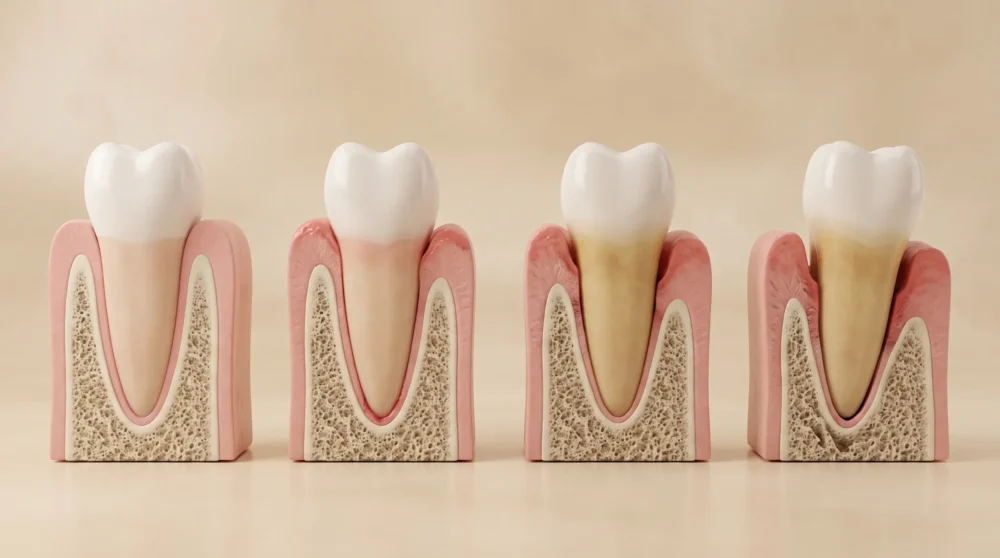
- Periodontitis is a chronic gum infection that destroys the bone and tissue supporting your teeth.
- It affects roughly 42% of US adults over 30, and around 11% of people worldwide have severe cases.
- It can’t be cured, only managed, but caught early, it’s simpler and cheaper to control.
- Risk rises with smoking, diabetes, poor oral hygiene and genetics.
- Treatment ranges from a deep clean to surgery, plus maintenance visits every 3 to 4 months.
What Is Periodontitis? Understanding Gum Disease at Its Root
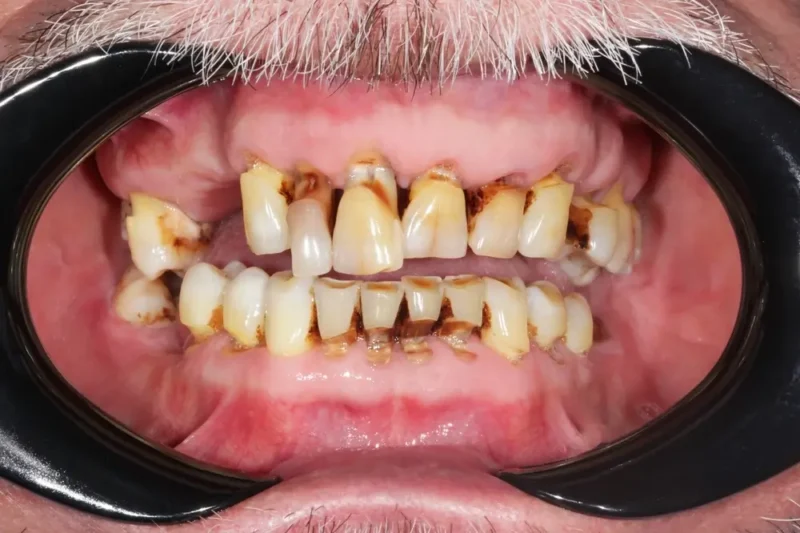
Nearly half of adults will face this disease at some point, and most won’t feel it coming until damage is already done. Understanding what periodontitis actually is, and why it forms, is the first step toward stopping it before it costs you a tooth.
The Meaning Behind the Word: Definition and Origin
Periodontitis comes from the Greek peri (“around”), odont (“tooth”) and -itis (“inflammation”). Put simply, it is a chronic inflammatory gum disease that attacks the tissues surrounding and supporting your teeth: the gums, the periodontal ligament and the underlying jawbone.
Unlike a passing irritation, periodontitis is progressive. Left untreated, it slowly destroys the bone and connective tissue anchoring each tooth, which is why it remains one of the leading causes of adult tooth loss worldwide.
Your Oral Microbiome: ~700 Species of Bacteria Living in Your Mouth
Your mouth is home to an entire ecosystem. Research from the National Institutes of Health estimates that around 700 species of bacteria, fungi and viruses live there, forming your personal oral microbiome.
Most of these microbes are harmless, or even helpful, they support digestion and keep harmful species in check. Problems begin when that balance tips: sugars and poor hygiene allow harmful bacteria to multiply, crowding out the beneficial ones and setting the stage for gum disease.
Dental Plaque Biofilm: The Real Culprit Behind Periodontitis
The main trigger of periodontitis is dental plaque biofilm, a sticky, structured film of bacteria that forms on tooth surfaces, especially along and below the gumline. Inside this biofilm, bacteria organize into protected communities that are far harder to remove than loose, free-floating germs.
If biofilm isn’t disrupted through brushing and flossing, it hardens into tartar (calculus) within days. From there, bacterial toxins trigger a chronic inflammatory response that gradually breaks down gum tissue and bone, the usual process of periodontitis.
A Brief History of Gum Disease: From Ancient Hominins to Pierre Fauchard
Gum disease is not a modern condition. A 2026 study in the Journal of Periodontal Research examined 47 fossilised hominin specimens and found periodontal bone loss in 70% of them, rising to 83.3% among older individuals, evidence that our ancestors battled this disease throughout the Pleistocene. A Neanderthal specimen from Cova Foradà, Spain, shows the same signs.
Written records follow much later: Mesopotamian clay tablets from around 5000 BC describe gum remedies using myrrh and turpentine, Hippocrates referenced gum detachment and bad breath in the Hippocratic Collection, and in 1728, French surgeon Pierre Fauchard gave gum disease (“pyorrhea”) its first full clinical description in Le Chirurgien Dentiste, laying the foundations of modern periodontology.
Gingivitis vs. Periodontitis: The Stages of Gum Disease
Gingivitis is inflammation of the gums caused by plaque buildup, without any loss of bone or the ligament holding your teeth in place. Classic clinical studies (the Löe experimental gingivitis trials) showed that plaque reliably triggers red, swollen, bleeding gums within days, and that this inflammation resolves once plaque is properly removed.
That reversibility is what separates gingivitis from periodontitis.
The Good News: Not All Gingivitis Turns into Periodontitis
Not everyone with gingivitis goes on to develop periodontitis. Long-term research following patients over decades shows that individual susceptibility varies widely, depending on genetics, immune response and risk factors like smoking, so gingivitis is a warning sign, not a guaranteed diagnosis.
Still, since periodontitis almost always starts as untreated gingivitis, addressing early inflammation remains the single most effective way to prevent it from progressing.
The Bad News: When Periodontitis Isn’t Caused by Gingivitis
Periodontitis doesn’t always follow the “gingivitis first” pattern. Necrotizing periodontal disease, a severe, fast-moving form linked to malnutrition, immunosuppression, extreme stress or heavy smoking, can develop rapidly and cause tissue death. Periodontitis can also appear as a direct manifestation of certain systemic conditions, where an underlying disease drives gum destruction independently of everyday plaque buildup.
Periodontitis Stages and Grades: The 2017 Classification (Table)
Dentists worldwide now classify periodontitis using the 2017 AAP/EFP system, which combines a stage (how much damage has already occurred) with a grade (how fast the disease is progressing).
Stage | Severity | Clinical Attachment Loss | Bone Loss | Tooth Loss |
I | Slight | 1–2 mm | Up to 15% | None |
II | Moderate | 3–4 mm | 15–33% | None |
III | Severe | ≥5 mm | ≥33% | Up to 4 teeth |
IV | Severe, complex | ≥5 mm | ≥33% | 5+ teeth, complex rehabilitation needed |
Grades run from A (slow progression) to C (fast progression). Smoking 10 or more cigarettes a day, or an HbA1c of 7% or higher in people with diabetes, automatically pushes a case into Grade C, underlining just how much lifestyle and health conditions influence how aggressively periodontitis advances.
Who Is at Risk of Periodontitis?
Periodontitis doesn’t strike at random. While anyone can develop it, certain groups carry a higher risk. If you recognise yourself in the list below, gum health is worth monitoring closely at least once or twice a year.
You may be at elevated risk if you are:
- A smoker or vaper
- Living with diabetes
- Over 30, and increasingly over 65
- Someone with a family history of gum disease or early tooth loss
- Pregnant, going through puberty or menopause
- Already treated for gingivitis or periodontitis — past inflammation is one of the best predictors of future disease.
- Immunocompromised, under chronic stress, or taking medications that cause dry mouth
How Common Is Periodontitis? US, UK and Global Statistics (Table)
Periodontitis is far more common than most people realise, and it rarely announces itself with pain. The table below summarises the latest figures from major health authorities.
Region | Any Periodontitis | Severe Periodontitis | Source |
United States | 42% of adults 30+ | 8% of adults 30+ | CDC / NHANES |
United Kingdom | ~1 in 5 adults report a gum disease diagnosis | Not separately reported | GOV.UK Adult Oral Health Survey |
Global | Data varies by country | ~11% of the world population (~743 million people) | Global Burden of Disease study |
Severe periodontitis is estimated to be the sixth most prevalent health condition worldwide, which puts it firmly in the same conversation as other major chronic diseases.
The financial toll matches the human one: in 2018, indirect costs of periodontitis, lost productivity and complications like tooth loss, reached an estimated $150.57 billion in the US and €156.12 billion across 32 European countries, dwarfing direct treatment costs of $3.49 billion and €2.52 billion. Prevention is consistently the cheaper path.
Key Risk Factors for Gum Disease
Some risk factors for periodontitis are within your control, others aren’t. Knowing which category you fall into helps you and your dentist build the right prevention plan.
- Smoking and vaping: among the strongest predictors of both onset and severity.
- Diabetes: poorly controlled blood sugar (HbA1c ≥7%) accelerates gum tissue and bone loss.
- Poor oral hygiene: infrequent brushing, flossing or professional cleanings allow plaque biofilm to build up unchecked.
- Genetics and family history: susceptibility to gum inflammation can run in families.
- Hormonal changes: pregnancy, puberty and menopause can all increase gum sensitivity.
- Age: risk and severity both tend to rise with age.
- Stress and certain medications: can weaken the body’s ability to fight off gum infection.
The NHS, for instance, specifically recommends that people with type 2 diabetes see a dental hygienist regularly, underscoring how closely gum and metabolic health are linked.
Early Detection of Periodontitis Matters
Picture two people with identical early symptoms: one books a visit at the first sign of bleeding gums, the other waits a year. The first gets a simple cleaning; the second may need surgery.
When Should You See a Dentist About Your Gums?
Book a dental visit as soon as you notice bleeding, swelling or tenderness in your gums, even if it seems minor. Periodontitis rarely causes pain in its early stages, so by the time discomfort appears, some bone loss may already have occurred. Early evaluation is the only reliable way to catch it before permanent damage sets in, and earlier stages are consistently simpler to treat than advanced ones, waiting rarely makes gum disease easier to manage.
Periodontitis Symptoms You Shouldn’t Ignore
Watch for these warning signs:
- Gums that bleed when brushing or flossing
- Red, swollen or tender gums
- Gum recession, or teeth that look “longer” than before
- Persistent bad breath or a bad taste in your mouth
- Loose or shifting teeth, or new gaps forming
- Pain when chewing, or pus around the gumline
What Causes Periodontitis?
The main cause of periodontitis is poor oral hygiene. When plaque isn’t removed consistently, it hardens into tartar within days, tartar can only be removed professionally, and its continued presence keeps the gums in a state of chronic inflammation. Risk factors like smoking or diabetes don’t cause periodontitis on their own, but they significantly accelerate how fast it progresses once that inflammation takes hold.
Can Periodontitis Be Life-Threatening?
Periodontitis itself is not classified as a direct cause of death. However, in rare, severe and untreated cases, dental infections can spread and escalate into serious complications, such as sepsis or Ludwig’s angina, a fast-spreading infection of the mouth floor, which do require emergency care.
Beyond these rare emergencies, growing research points to an association (not yet proven as direct causation) between periodontitis and conditions like cardiovascular disease, poorly controlled diabetes, rheumatoid arthritis and adverse pregnancy outcomes, likely linked to bacteria and inflammatory markers entering the bloodstream.
Living With Periodontitis: Your Confidence, Your Mouth, Your Whole Body
Beyond the medical risks, periodontitis affects daily life. Visible gum recession, loose teeth or persistent bad breath can chip away at self-esteem and social confidence. Inside the mouth, it can mean difficulty chewing, shifting teeth and eventual tooth loss. And as noted above, the inflammation and bacteria involved don’t always stay contained to the mouth.
Can Periodontitis Be Cured?
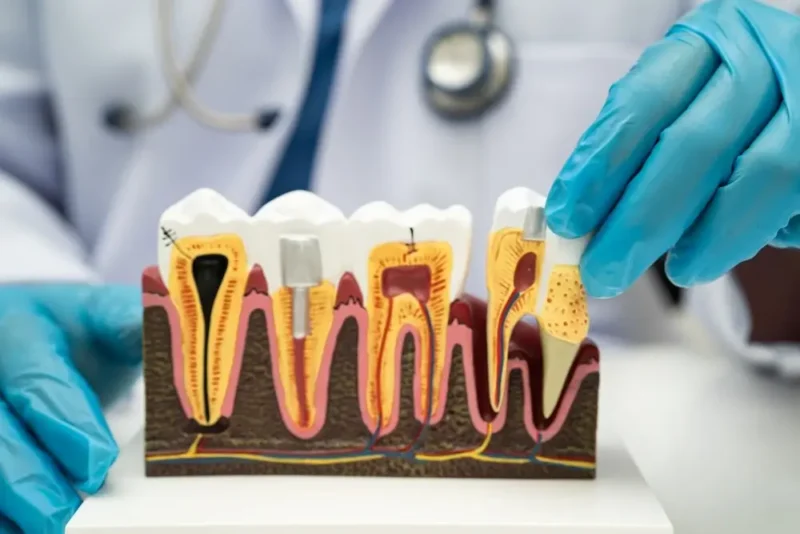
You cannot cure periodontitis, but you can effectively manage it with treatment. Much like diabetes or hypertension, it’s a chronic condition: professional treatment can stop its progression and maintain the health you have left, but ongoing maintenance is what keeps it under control long-term. That’s where the right dental team comes in: at One Life Dental, we help patients build a plan to manage periodontitis for the long run.
Diagnosis, Tests and What to Expect
Diagnosing periodontitis involves a periodontal probe to measure pocket depth around each tooth, checking for bleeding on probing, and X-rays to assess bone loss. Together, these findings determine the stage and grade discussed earlier.
The earlier periodontitis is caught, the better the outlook: Stage I and II cases often stabilise fully with professional cleaning and good home care. Stage III and IV cases can still be controlled, but usually require more intensive treatment and closer long-term monitoring.
Nonsurgical Periodontitis Treatments
For most early to moderate cases, treatment starts without surgery:
- Scaling and root planing (a deep clean): removes plaque and tartar above and below the gumline and smooths root surfaces so gums can reattach.
- Antimicrobial treatments: localised antibiotics or antibacterial rinses to reduce harmful bacteria.
- Maintenance cleanings: typically every 3 to 4 months rather than the standard 6-month interval, tailored to your grade and risk level, to keep bacterial levels low going forward.
Surgical Periodontitis Treatments
Advanced cases (Stage III–IV) may need surgical intervention: flap surgery to clean deep pockets, bone grafts, or guided tissue regeneration to help rebuild lost support around the teeth. In some cases, surgery also prepares the mouth for restorative work, such as dental implants, once any teeth lost to periodontitis need replacing.
Building Your Personalized Periodontal Care Plan
There’s no single fix for everyone: treatment depends on your stage, grade and risk factors, from smoking to diabetes control. A personalised plan combines the right clinical treatment with practical changes at home and a realistic maintenance schedule.
Research is also expanding what a care plan can include: adjunctive approaches like probiotics, photodynamic therapy and anti-inflammatory compounds are being studied, though evidence is still developing and they don’t replace scaling, root planing or surgery when needed.
Wherever you’re reading this from, the UK, the US, Canada, Australia, Ireland or New Zealand, if you’re concerned about your gum health, or have already lost teeth to periodontitis and are exploring options like dental implants, book a free consultation with our dental team at One Life Dental to get a clear, personalised assessment.