

A cantilever dental bridge replaces a missing tooth using a single anchor tooth — no surgery, no implants. It’s one of the most conservative fixed restorations in dentistry, and in the right clinical situation, it delivers excellent long-term results.
In this guide, you’ll find clear answers on how cantilever bridges work, what they cost, what the clinical evidence saysregarding their longevity, and when a dental implant is the smarter choice.
What Is the Cantilever Bridge Technique?
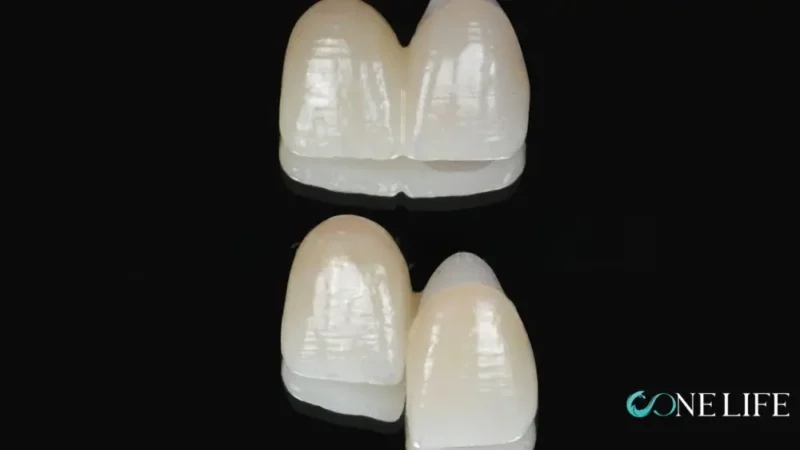
A cantilever dental bridge is a fixed prosthes to replace a missing tooth. A cantilever bridge is supported by just one adjacent tooth, called the abutment. The technique was developed for situations where shaving down tro teeth would be unnecessary. In the right context — particularly for front teeth and low-load areas — it can be a valid and durable option.
There are two main cantilever bridge designs used today:
- Conventional cantilever bridge: The abutment tooth is filed down and capped with a full crown, which anchors the pontic.
- Resin-bonded cantilever bridge (Maryland-type): A ceramic or zirconia wing is bonded to the back of the abutment tooth with minimal or no preparation. This is the more conservative and increasingly preferred option for anterior teeth.
When Is a Cantilever Bridge Suggested?
A cantilever bridge has a specific clinical profile. Your dentist will suggest it when the gap left by a missing tooth has a healthy, strong adjacent tooth on only one side, or when preserving the neighbouring tooth on the other side is a clinical priority.
The most common scenarios where cantilever bridges are indicated:
- Front teeth: (upper or lower incisors and lateral incisors), where biting forces are lower and aesthetics matter most
- Young patients: who are still growing and are not yet candidates for dental implants
- Cases where one adjacent tooth is already crowned: or heavily restored
- Situations where a traditional bridge would require preparing a perfectly healthy tooth
*A cantilever bridge is not recommended for back teeth (molars or premolars), where chewing forces are significantly higher and the risk of mechanical failure increases substantially.
How Is a Cantilever Bridge Fitted? Step by Step
The fitting process typically takes place across two to three appointments over one to two weeks. Here is what to expect at each stage:
- Step 1 — Consultation and assessment: Your dentist evaluates the health of the abutment tooth, your bite, your bone structure, and the overall condition of your mouth. X-rays or a 3D scan may be taken. This step determines whether a cantilever bridge is clinically appropriate for your case.
- Step 2 — Tooth preparation: For a conventional cantilever bridge, the abutment tooth is gently shaped — a small amount of enamel is removed — to allow the crown to sit precisely over it. In more conservative approaches, only the aprismatic enamel is selectively removed without conventional tooth preparation, preserving as much natural tooth structure as possible.
- Step 3 — Impressions or digital scan: A prefabricated impression tray loaded with mould material records the shape of your teeth, or an oral scanner creates a precise digital model. This data is sent to the dental laboratory where your bridge will be custom-fabricated.
- Step 4 — Temporary bridge placement: While the permanent bridge is being crafted in the laboratory, a temporary bridge is placed to protect the prepared tooth and maintain aesthetics, allowing you to function normally in the meantime. This stage typically lasts one to two weeks.
- Step 5 — Final fitting and bonding: The bridge is carefully seated to ensure precise positioning, then bonded using a resin cement with light-curing performed at each margin. A final occlusion check — often underestimated — plays a critical role in the long-term stability of the restoration.
- Step 6 — Follow-up: A check-up appointment is scheduled a few weeks later to assess fit, comfort, and bite. Adjustments are made if needed.
How Much Does a Cantilever Bridge Cost?
In the United States, a single dental bridge can cost between $2,500 and $6,000 depending on the clinic and materials. In the UK, most patients can expect to pay between £500 and £1,500 per tooth on a private basis, with costs rising for more complex cases or premium materials such as zirconia. Under the NHS, a dental bridge falls under Band 3 treatment, charged at £306.80 in England as of April 2025.
For many international patients, dental bridge costs in Turkey are typically 60% to 70% lower than in the US, UK, or Western Europe — and many clinics use the same materials, including zirconia and high-grade porcelain.
Location | Cantilever Bridge (per unit, approx.) |
🇬🇧 UK (NHS) | £306.80 |
🇬🇧 UK (Private) | £500 – £1,500 |
🇺🇸 USA | $1,200 – $3,000 |
🇨🇦 Canada | CAD $1,500 – $3,500 |
🇦🇺 Australia | AUD $1,800 – $4,000 |
🇹🇷 Turkey (Istanbul) | £250 – £600 / €250 – €600 |
What affects the final price?
- Material: Zirconia costs more than porcelain-fused-to-metal (PFM), which costs more than metal. Zirconia is the current gold standard for strength and aesthetics.
- Number of units: A cantilever bridge typically involves two units — the pontic and the crown on the abutment tooth.
- Clinic and location: Specialist prosthodontists and premium clinics charge more.
- Additional procedures: If bone grafting, gum treatment, or tooth extraction is needed beforehand, costs increase accordingly.
Advantages & Disadvantages of a Cantilever Dental Bridge
Like any restoration, a cantilever bridge comes with genuine advantages — and real limitations. Understanding both helps you make an informed decision alongside your dentist.
Benefits
- Only one tooth is shaved down: making it the most conservative dental bridge.
- No surgery required:Unlike a dental implant, there is no incision or healing period.
- Fewer complications: fewer opportunities for complications compared with more treatments.
- Suitable for younger patients: Because no anaesthesia or surgery is required.
- Faster treatment: The process is typically completed in two to three appointments over one to two weeks.
- Lower upfront cost: A cantilever bridge typically costs $1,200–$3,000 in the US, compared to $2,000–$3,500 for a single implant.
Disadvantages
- Irreversible tooth preparation: enamel is permanently removed from the abutment tooth. This cannot be undone.
- Not suitable for back teeth: The high chewing forces generated by molars and premolars make cantilever bridges inappropriate in those areas.
- Higher risk with root-treated abutment teeth: treated teeth used as abutments show a higher frequency of root fracture, making them poor candidates.
- No bone preservation: Unlike implants, bridges do not stimulate the jawbone beneath the missing tooth. Over time, bone resorption in that area is likely, which can affect the appearance of your gum line and complicate future treatments.
Is a Cantilever Bridge Safe?
Yes — when correctly indicated and precisely executed. The problems arise when it is used outside its recommended scope. This is why your dentist’s assessment at the consultation stage is so important — the suitability of the abutment tooth, the position of the gap, your bite, and your bone health all determine whether a cantilever bridge is the right call.
What Are the Most Common Complications?
Based on clinical data, the most significant complications associated with cantilever bridges over a 10-year period include:
- Loss of retentionof the bridge: reported in approximately 16% of cases
- Loss of vitality of the abutment tooth (requiring root canal treatment): reported in up to 32.6% of cases in some studies
- Caries at the abutment tooth: reported in around 9% of cases
- Framework or veneer fracture: reported in approximately 6% of cases
- Fracture of the abutment tooth itself: reported in around 2.4% of cases PubMed
How Long Do Cantilever Dental Bridges Last?
Cantilever bridges have a typical lifespan of 10–15 years with proper maintenance. Zirconia ceramic cantilever resin-bonded bridges, in particular, have demonstrated a 10-year survival rate of 98.2% and a success rate of 92.0% in clinical studies — excellent for a minimally invasive restoration!
That said, several factors directly influence longevity:
- Material: Zirconia outperforms porcelain-fused-to-metal in both strength and resistance to fracture. Metal alloys last longest but are rarely used for visible teeth.
- Position: Front teeth experience far less biting force than back teeth. A cantilever bridge placed in the anterior region will outlast one placed near molars.
- Oral hygiene: Decay in the abutment tooth is one of the most common causes of bridge failure. Daily cleaning around the bridge is not optional — it is essential.
- Bite and grinding habits: Patients who grind or clench their teeth place additional stress on the bridge structure. A custom night guard can significantly reduce this risk.
- Quality of the original fit: A bridge that is not perfectly aligned with your bite will wear unevenly and fail prematurely.
Warning signs that your bridge may need attention:
If you notice any of these, contact your dentist promptly. Early intervention is almost always simpler and less costly than waiting:
- The bridge feels loose or shifts when you bite
- Sensitivity or pain in the abutment tooth
- Visible gaps forming between the bridge and the gum
- Persistent bad taste or odour beneath the bridge
- Visible chipping or cracking of the restoration
Maintenance, Cleaning and Repair
A cantilever bridge requires no special daily routine — but it does require a consistent one. The area beneath the pontic and around the abutment crown is a prime spot for plaque accumulation, and that is where problems typically start.
Daily cleaning routine:
- Brush twice daily with a soft-bristled toothbrush and fluoride toothpaste. Pay particular attention to the margins where the crown meets the gum line.
- Floss daily using a floss threader or interdental brush to clean underneath the pontic. Regular floss cannot reach this area effectively — a water flosser is an excellent alternative and makes cleaning under the bridge straightforward.
- Use an antibacterial mouthwash once daily to reduce bacterial load around the bridge and support gum health.
Professional maintenance:
Schedule a professional cleaning and check-up every six months. Professional cleanings remove plaque and tartar that home care cannot eliminate, and regular examinations allow your dentist to catch and address any issues early.
What about repairs?
Minor issues — such as a small chip in the ceramic or a slightly loose fit — can often be repaired without replacing the entire bridge. Debonding (the bridge coming uncemented) is one of the more common issues; in most cases, a debonded bridge can be successfully re-bonded adhesively, restoring full function without the need for a new restoration. If the abutment tooth itself is compromised, however, a full replacement or a switch to an implant-supported solution may be necessary.
Best Alternatives to Cantilever Bridge Teeth
A cantilever bridge is the right solution for some patients — but not all. If your dentist determines it is not suitable for your case, and you want to understand the full picture, here are the main alternatives:
- Traditional (three-unit) fixed bridge: The most common alternative. The pontic is supported by crowns on bothadjacent teeth. A standard three-unit bridge costs £750–£2,400 in the UK and lasts 10–15 years with proper care, offering greater structural stability than a cantilever design due to bilateral support. The trade-off: two healthy neighbouring teeth must be permanently prepared.
- Maryland resin-bonded bridge: A more conservative option, similar in concept to the cantilever design but using a metal or ceramic wing bonded to the back of the adjacent tooth rather than a full crown. Less tooth preparation is required, but the bond may not be as strong under heavy chewing loads, making it less suitable for posterior teeth.
- Dental implant: The gold standard for single tooth replacement. A titanium post is placed directly into the jawbone, topped with a custom crown. Unlike bridges, implants preserve the underlying bone and do not affect adjacent teeth. A 2010 study found a 5-year success rate of 94.3% for implant-supported fixed dental prostheses replacing a single tooth. The trade-off: higher upfront cost and a surgical procedure with a healing period of several months.
- Implant-supported cantilever bridge: A hybrid solution. Instead of anchoring to a natural tooth, the cantilever bridge is supported by a single implant. This works best for small spaces — often in the front of the mouth — with controlled bite forces, combining the conservative span of a cantilever design with the stability and bone-preservation benefits of an implant.
- Partial denture (removable): A removable appliance that clips onto remaining teeth to fill the gap. The least invasive and lowest-cost option, but also the least comfortable and least stable for daily function. Most patients consider it a temporary or transitional solution rather than a long-term fix.
Option | Invasiveness | Approx. Cost (UK) | Avg. Lifespan | Bone Preserved? |
Cantilever bridge | Low | £500–£1,500 | 10–15 yrs | ❌ |
Traditional bridge | Low–Medium | £750–£2,400 | 10–15 yrs | ❌ |
Maryland bridge | Very low | £350–£1,000 | 5–10 yrs | ❌ |
Dental implant | Medium (surgical) | £1,800–£3,800 | 25+ yrs | ✅ |
Implant cantilever | Medium (surgical) | £2,000–£4,000 | 20+ yrs | ✅ |
Partial denture | None | £300–£1,000 | 5–8 yrs | ❌ |
Cantilever Bridge vs Implant: Which Is Better Long-Term?
For most patients, a dental implant delivers better long-term outcomes. But for a subset of patients, a cantilever bridge is genuinely the smarter choice.
Here is how the two compare across the factors that matter most:
- Bone preservation: A bridge does not stimulate bone growth. Bone loss continues under the missing tooth, leading to changes in the shape of the face or oral structure over time. An implant prevents resorption and preserves facial structure for decades.
- Impact on adjacent teeth: For a bridge to be placed, adjacent teeth must be prepared. This can weaken those teeth and make them more susceptible to decay over time.
- Longevity: Bridges last 5–15 years depending on materials, care quality, and stress. Implants typically last 25 or more years, with many functioning for life.
- Surgical requirement: This is where the cantilever bridge has a genuine advantage. It requires no surgery, no bone assessment, and no healing period.
- Cost: A cantilever bridge costs 40-60% than an implant. But when the full lifespan cost is calculated — including likely bridge replacement — the implant often proves more cost-effective.
Summary: which should you choose?
Factor | Cantilever Bridge | Dental Implant |
Surgery required | ❌ No | ✅ Yes |
Bone preserved | ❌ No | ✅ Yes |
Adjacent teeth affected | ⚠️ One tooth prepared | ❌ None |
Upfront cost (UK) | £800–£1,200 | £1,800–£3,800 |
Average lifespan | 10–15 years | 25+ years |
Best for | Front teeth, no surgery candidates, young patients | Most adults with sufficient bone |
Not Sure Which Option Is Right for You? Book a Free Consultation
At OONE LIFE, our specialists assess every case individually — with no pressure and no assumptions. Whether a cantilever bridge, a zirconia implant, or another solution is right for you, we’ll tell you exactly why, backed by clinical evidence and full transparency on costs.