
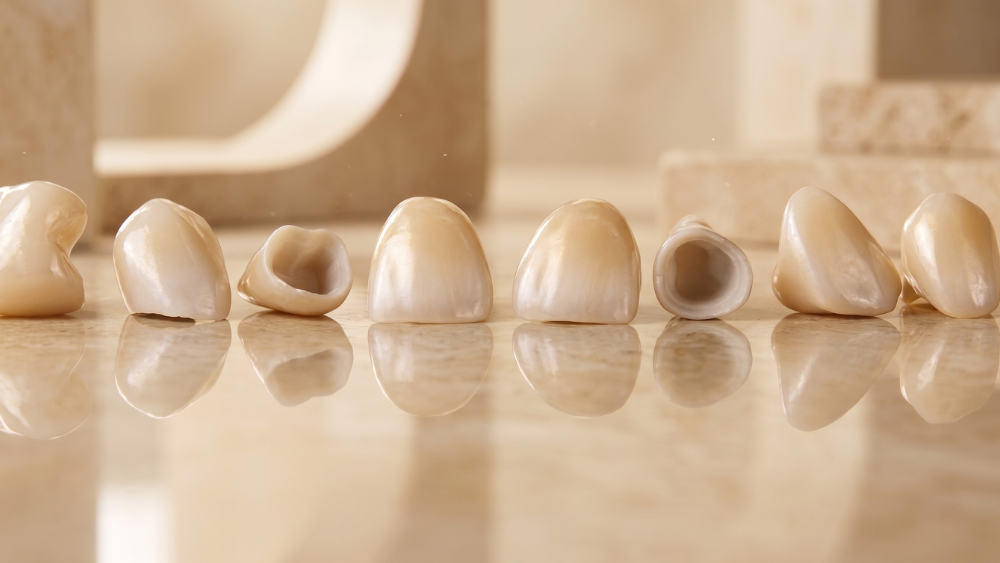
The crown your dentist recommended is made from a ceramic originally engineered for hip replacements and space-shuttle heat shields. Zirconia crowns are milled from zirconium dioxide, a non-metallic material that survives roughly ten times the bending force of the porcelain used for decades.
The difference from an artificial shade to a natural white lies in the grade of zirconia, the amount of tooth removed, and the technician who made it.
Key points from this article:
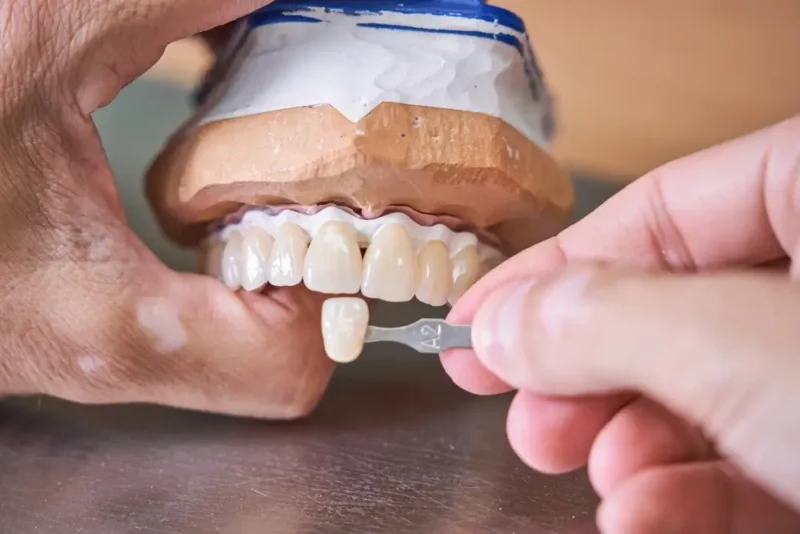
Its full name is zirconium dioxide (ZrO₂), a ceramic with a small percentage of yttrium oxide. Aerospace engineers used it as a thermal barrier. Dentistry only adopted it once CAD/CAM milling could shape a material this hard into something as small and precise as a tooth.
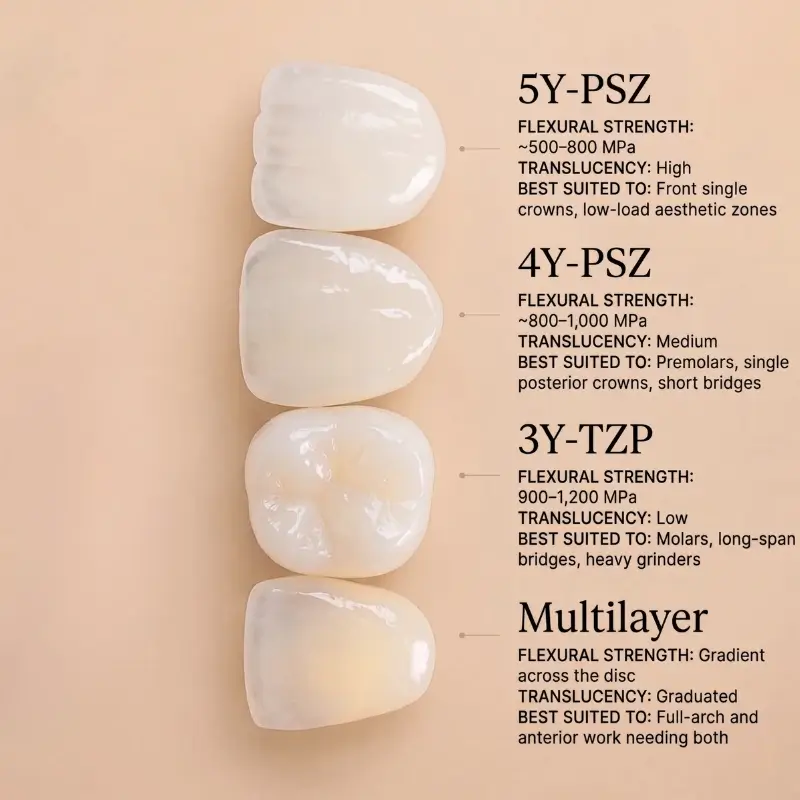
Zirconia is a family of at least four materials, ranging from the strongest 3Y (which is opaquer and not the best choice for front teeth), to the least strong 5Y zirconia, which is translucent and beautiful for frontal teeth.
Grade | Flexural strength | Translucency | Best suited to |
3Y-TZP | 900–1,200 MPa | Low | Molars, long-span bridges, heavy grinders |
4Y-PSZ | ~800–1,000 MPa | Medium | Premolars, single posterior crowns, short bridges |
5Y-PSZ | ~500–800 MPa | High | Front single crowns, low-load aesthetic zones |
Multilayer | Gradient across the disc | Graduated | Full-arch and anterior work needing both |
A monolithic zirconia crown is milled from one solid block and finished with surface stains and glaze. Nothing is added on top. A layered zirconia crown uses a zirconia core with c porcelain hand-built over the visible surface (beautiful, but that porcelain can fracture away from the core underneath).
The choice: for molars and for anyone who grinds, monolithic is safer. For a single front tooth where maximum realism is the priority, layered zirconia may earn its small extra risk. That decision belongs to your clinician.
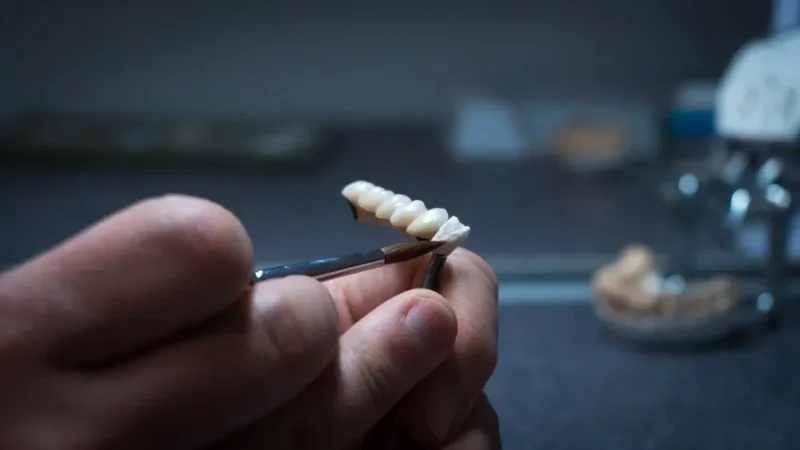
Natural teeth are not one colour. They are a layered optical system: an opaque dentine core carrying most of the hue, covered by semi-translucent enamel that scatters light, thins toward the edge, and produces a faint blue-grey shimmer at the tip called opalescence.
Three variables decide how natural zirconia crowns look:
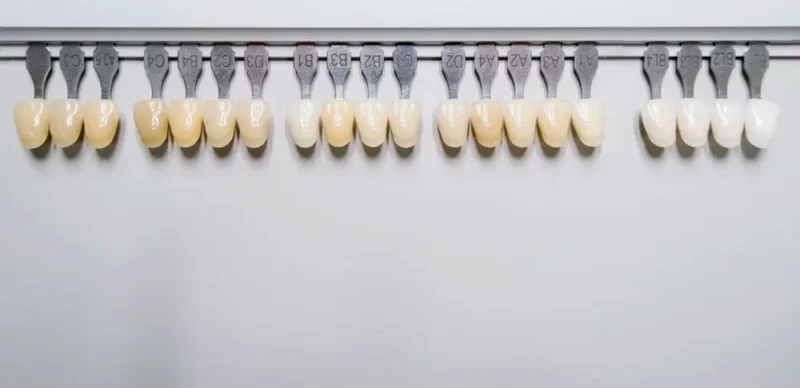
Shade is measured against the VITA Classical and VITA 3D-Master systems. The VITA Classical guide organises 16 shades into four hue families. Each carries a letter for hue and a number for saturation, so A1 is the lightest of the reddish-brown family and A4 the deepest:
Group | Hue family | Shades | Typically seen in |
A | Reddish-brown | A1 · A2 · A3 · A3.5 · A4 | The most common natural range worldwide |
B | Reddish-yellow | B1 · B2 · B3 · B4 | Lighter, warmer smiles |
C | Greyish | C1 · C2 · C3 · C4 | Often associated with ageing enamel |
D | Reddish-grey | D2 · D3 · D4 | Less frequent, muted tones |
BL | Bleach shades | BL1 · BL2 · BL3 · BL4 | Whitened and cosmetic cases |
A zirconia dental crown takes two appointments in most cases. What follows is the order just as it is followed for most of our patients at One Life Dental:
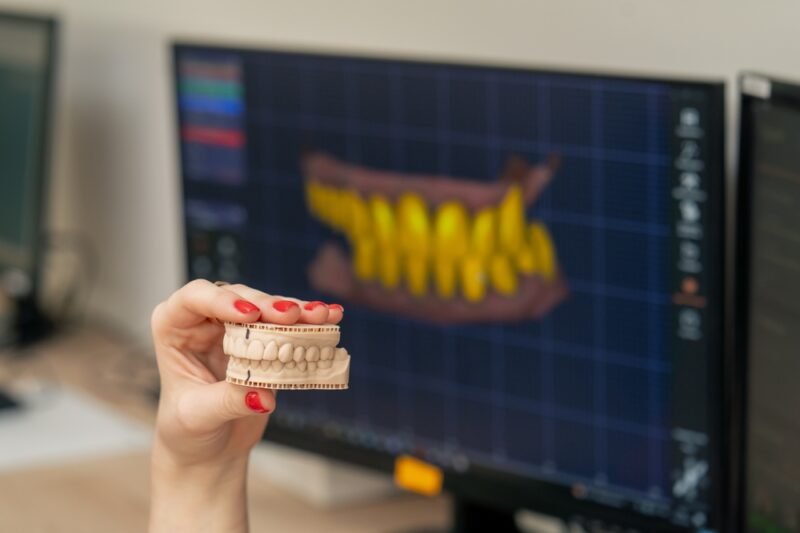
The first appointment is diagnostic: a 3D CBCT scan to check the health of the tooth and the bone beneath it, a periodontal assessment, and a bite analysis. This is also where Digital Smile Design happens. An intraoral scan and facial photographs let the clinician design the restoration against your face.
The reference points:
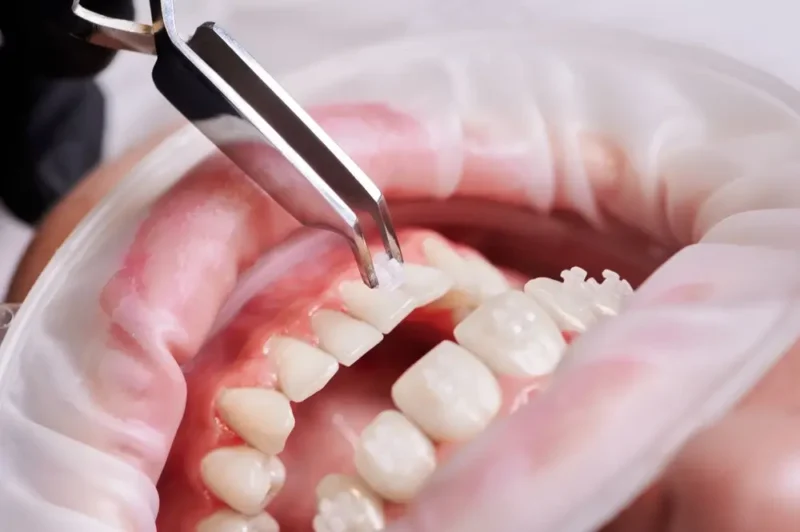
Under local anaesthetic, the tooth is reduced by approximately 1.5–2 mm around its full circumference and 1.5–2 mm on the biting surface, creating space for the crown to sit without bulking out the tooth.
That structure does not grow back. A prepared tooth will always need a crown from that moment forward.
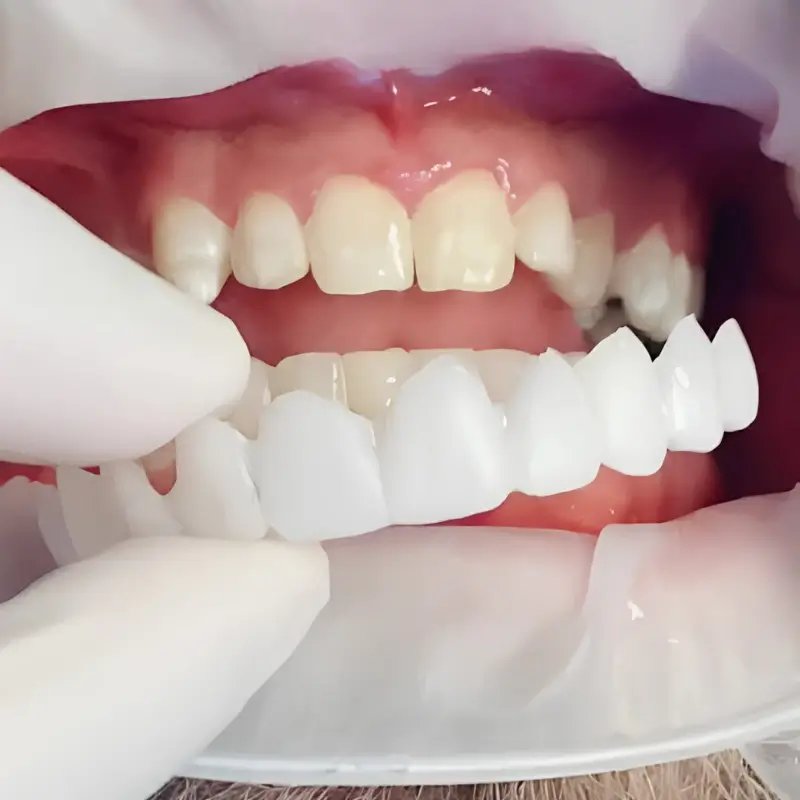
The trial smile is the most valuable appointment in the whole treatment. You wear the shape and length as temporariesand test speech, eating. Length, shape and midline can still be changed at this stage.
Teeth that are slightly too long or too thick alter F and S sounds immediately. You will notice within a day, which is why the trial period should last more than an hour.
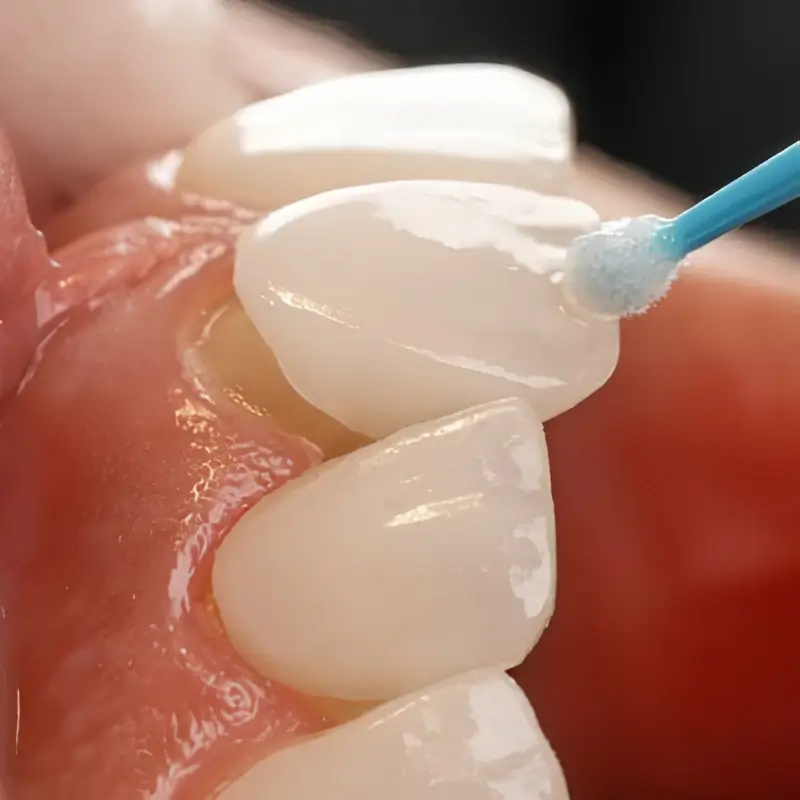
At the final appointment, the crown is checked: fit at the margin, contact with adjacent teeth, then the bite. Any surface adjusted with a bur must then be re-polished, because roughened zirconia is abrasive to the tooth biting against it.
A single zirconia crown costs £550–£1,600 in the UK and $1,000–$2,500 in the US. The spread is wide because the fee often bundles different things. On insurance, expect less than you hope. Most plans classify a crown as restorative work and pay around 50% of the allowed amount, bringing out-of-pocket to roughly $500–$900. A single crown can consume most of a $1,000–$2,000 annual maximum.
Country | Zirconia crown (per tooth) |
United Kingdom | £550–£1,600 (London: £700–£1,400 routinely) |
United States | $1,000–$2,500 (premium cosmetic practices to $3,000) |
Australia | AUD $1,500–$3,200 |
Ireland | €650–€1,500 (indicative; tracks UK private fees) |
Turkey (all-inclusive) | £250–£600 per unit |
Expect 10–15 years with good habits, but zirconia crowns can live beyond 20. Survival means the crown is still in place and functioning. Success means it is still in place with no complications at all. Those are very different bars.
Time in service | Monolithic zirconia | Porcelain-layered zirconia |
5 years | ~95–98% survival | ~77% survival |
10 years | ~86–93% survival | ~71% survival |
15 years | ~72% survival (pooled data) | Limited long-term data |
Head-to-head, monolithic crowns showed 95.5% five-year survival against 76.9% for porcelain-fused zirconia. The crown that never had porcelain on it has nothing to chip off.
The main causes of zirconia crown failure are tooth decay at the margin, gum recession, and fracture of the underlying tooth: all conditions of the tooth beneath, not the ceramic above.
Zirconia dental crowns are extremely resistant, but their extreme hardness can actually wear down the teeth opposite them. They’re also fairly opaque, so they can look a bit chalky compared to natural enamel (tricky choice for front teeth).Zirconia also blocks X-rays completely, making it harder for your dentist to spot decay underneath it.
Finally, if one ever needs to be reshaped, adjusted, or cut off down the road, it takes serious time and effort to work through the material.
Disadvantage | What happens | How it’s controlled |
Wear on opposing teeth | Zirconia is harder than enamel. A rough or unpolished surface abrades the opposing tooth. | Meticulous polishing after chairside adjustments; proper bite balancing. |
Opacity in low grades | 3Y-TZP blocks look flat and chalky on front teeth (the “bathroom tile” effect). | Select high-translucency, multilayer, or 5Y grades for anterior teeth. |
Irreversible preparation | 1.5–2 mm of natural tooth structure is removed permanently. | Confirm a crown is genuinely indicated over a conservative veneer or onlay. |
Chipping in layered versions | The cosmetic porcelain layered over the strong zirconia core can fracture off. | Choose monolithic (solid) zirconia for high-load areas like molars. |
Difficult removal | High material strength makes cutting off or adjusting a crown time-consuming. | Use specialist burs; ensure precise planning so removal isn’t needed. |
Low-temperature degradation | Moisture causes slow structural ageing over time, mainly in older 3Y-TZP grades. | Use modern 5Y grades containing a cubic phase resistant to degradation. |
Hidden decay detection | Zirconia completely blocks X-rays, making underlying decay hard to spot early. | Ensure a precise marginal seal during fitting and maintain strict hygiene. |
Zirconia is the most versatile crown material available and, currently, the most popular one overall. However, there are situations where something else serves you better.
On a front tooth, e.max is often the harder material to beat. Lithium disilicate is a glass-ceramic: light passes through it the way it passes through enamel, producing translucency and opalescence that even multilayer zirconia cannot replicate.
The problem with emax crowns is load. E.max fractures more readily under heavy biting (around 360–400 MPa against zirconia’s 900–1,200):
Gold wears at a rate similar to enamel, making it far kinder to opposing teeth than hard ceramics. PFM remains durable and cheaper, but it is hardly chosen by dentists today. The metal core is opaque, and its dark margin tends to show at the gumline as gums recede.
What follows is the orientation table summarizing the key comparison points we have discussed earlier.
Zirconia | E.max (lithium disilicate) | PFM | Feldspathic porcelain | |
Material type | Ceramic, metal-free | Glass-ceramic, metal-free | Porcelain over metal alloy | Glass ceramic |
Flexural strength | 500–1,200 MPa by grade | ~360–400 MPa | Metal core, porcelain surface | ~100 MPa |
Aesthetics | Good to excellent | Excellent | Fair — grey margin risk | Excellent |
Best position | Molars, bridges, full arch | Front teeth, single units | Back teeth, budget cases | Veneers, front units |
Main weakness | Opacity in low grades; hard on opposing teeth | Fractures under heavy load | Dark line at gumline over time | Chips easily |
Typical price | £550–£1,600 | £550–£1,600 | £400–£800 | £500–£1,000 |
This is the most consequential comparison in the article. A crown covers the tooth in 360°, requiring 1.5–2 mm of reduction all round. A veneer covers the front surface only, typically at 0.3–0.7 mm.
Option | Tooth removed | Suitable when |
Bonding | Essentially none | Small chips, gaps, minor shape changes |
Veneer | ~0.3–0.7 mm, front surface | Tooth structurally sound; issue is appearance |
Onlay | Biting surface only | Cracked cusp, large old filling, healthy walls |
Crown | 1.5–2 mm circumferential | Tooth structurally compromised, post-root canal, extensively filled |
Your crown is milled larger than it needs to be, then shrinks into shape. That explains most of what happens in a dental laboratory. The sequence, just as it happens in our ComfyDent Lab, is the following: