
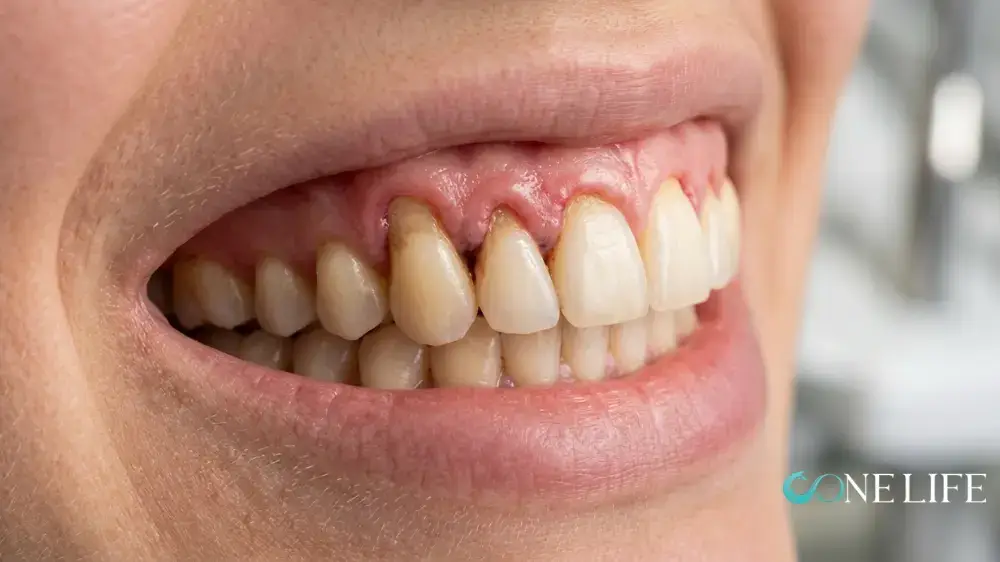
If your teeth look longer than they used to, or feel unusually sensitive to cold drinks, you may be experiencing gum recession. This concerns patients for good reason. Left untreated, it can lead to tooth sensitivity, root decay, bone loss, and ultimately, tooth loss. It affects 81.1% of the adult population for 1 mm or more. Yet, receding gums are often silent in the early stages.
Gum Recession Symptoms & Diagnosis
Are your gums actually receding? Dentists diagnose recession using a periodontal probe. This tiny tool measures the amount of gum recession and the depth of the periodontal pockets. Healthy pockets measure between 1 and 3 millimetres. With gingivitis, pockets measure 4 millimetres, and up to 5 mm or more with periodontal disease.
The most common symptoms of receding gums include:
- Teeth that appear longer than before
- Increased sensitivity to hot, cold, or sweet foods and drinks
- A notch or groove you can feel with your tongue at the gum line
- Exposed tooth roots — yellowish or darker than the enamel surface
- Gums that look red, swollen, or bleed easily when brushing or flossing
- Persistent bad breath (halitosis) not resolved by brushing
- Loose or shifting teeth in more advanced stages
Receding Gums Stages
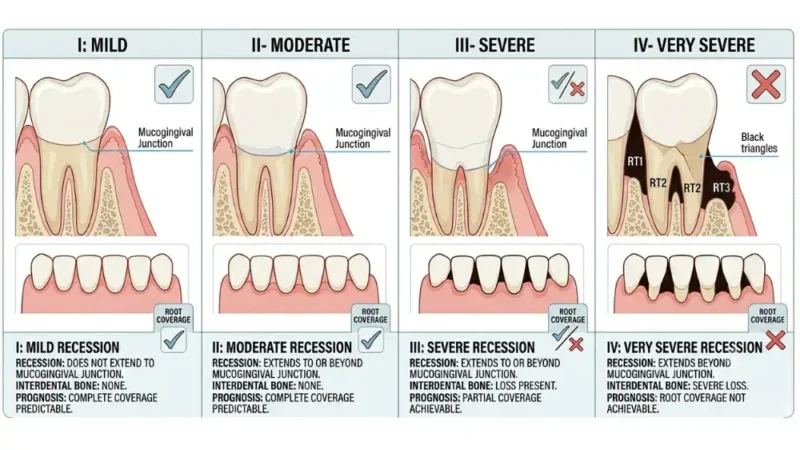
Miller’s Classification (1985), divides gum recession into four classes based on the extent of tissue and bone loss, and what degree of coverage is achievable after treatment. The treatment options available to you, and the results you can realistically expect, shrink significantly as recession advances.
A newer system, Cairo’s Classification (RT1, RT2, RT3), is considered clearer and more treatment-oriented. Both systems are used in clinical practice today, often together.
Stage | Description | Bone/Tissue Loss | Root Coverage Prognosis |
Class I (Mild) | Recession does not extend to the mucogingival junction | None in the interdental area | Complete coverage predictable |
Class II (Moderate) | Recession extends to or beyond the mucogingival junction | None in the interdental area | Complete coverage predictable |
Class III (Severe) | Recession extends to or beyond the mucogingival junction | Bone or soft tissue loss interdentally present | Only partial coverage achievable |
Class IV (Very Severe) | Recession extends beyond the mucogingival junction | Severe interdental bone and soft tissue loss | Root coverage not achievable |
Why Are Your Gums Receding? 15 Main Causes
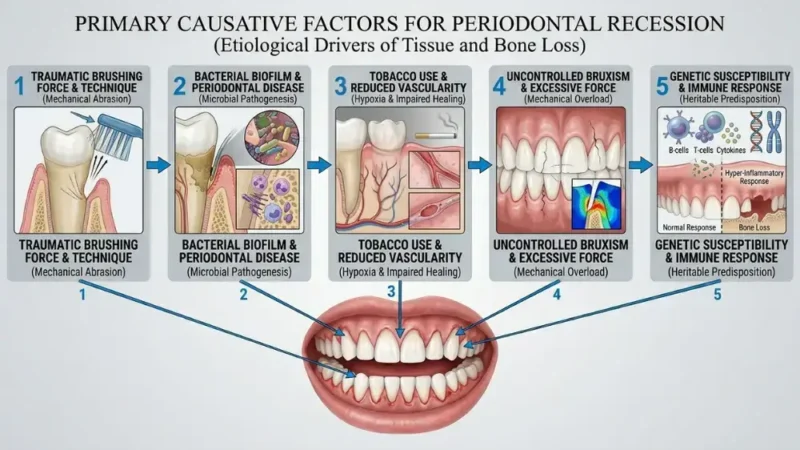
Gum recession is rarely caused by a single factor. In most patients, it is the result of a combination of biological, behavioural, and environmental triggers. Below is a list of every recognised cause by order of how common they are.
1. Periodontal disease (gum disease)
The leading cause. Bacterial gum infections destroy gum tissue and the bone that holds teeth in place. Periodontitis, the more advanced form of gum disease, is a primary cause of gum recession.
2. Brushing too hard
The second most common cause. Brushing teeth too aggressively or with improper technique can cause the gum tissue to wear away, leading to gum recession. Using a hard-bristle toothbrush worsens this significantly.
3. Genetics
Studies indicate that up to 30% of the population may be inherently susceptible to gum disease, even with diligent oral care.
4. Hormones fluctuating
Fluctuations in oestrogen levels throughout a woman’s life — such as during puberty, pregnancy, and menopause — can render gums increasingly sensitive and vulnerable to recession.
5. Tobacco
Smoking is the most significant risk factor for gum disease. Smoking and chewing tobacco damage gum tissue directly, reduce blood supply to the gums, and impair the body’s immune response to infection.
6. Teeth grinding (bruxism)
Excessive and repetitive force applied to the teeth can stress the supporting bone and gum tissue, accelerating recession over time.
7. Misaligned teeth
When teeth do not meet correctly, uneven pressure is distributed across the gum line, wearing tissue down in specific spots.
8. Poor oral hygiene
Inadequate brushing and flossing allow plaque to harden into tartar. Tartar can only be removed through a professional dental cleaning. Once below the gum line, tartar drives chronic inflammation and recession.
9. Lip or tongue piercings
Metal jewellery constantly rubbing against gum tissue causes localised trauma and gradual tissue loss.
10. Ill-fitting dental restorations
Dentures, retainers, or poorly placed crowns that do not fit correctly can put pressure on the gum margin and erode it over time.
11. Diabetes
Individuals with diabetes are more susceptible to infections, including periodontal disease. Severe gum disease can make it harder to control blood sugar levels, creating a two-way relationship between the two conditions.
12. Certain medications
Some medications — including antihypertensives, anticonvulsants, and immunosuppressants — cause gum changes such as gingival overgrowth or increased susceptibility to recession as a side effect.
13. Aggressive orthodontic treatment
Moving teeth outside the limits of the supporting bone — particularly with extensive orthodontic work — can thin and recede the gum tissue on the labial (outer) surface of the affected teeth.
14. Nutritional deficiencies
Low levels of vitamin C and vitamin D are associated with weaker gum tissue and impaired immune response, increasing vulnerability to periodontal infection.
15. Ageing
As a general biological process, gum tissue thins and becomes less resilient with age, making recession more likely even in the absence of disease.
Can Receding Gums Be Reversed?
Unfortunately, receding gums cannot grow back. Once gum tissue is lost, the body does not regenerate it. What modern dentistry can do is stop the recession from progressing further, cover exposed roots surgically, reduce sensitivity, and restore a healthy, protective gum line.
The key is timing. Complete root coverage is possible in Class I and Class II recession, unpredictable in Class III, and impossible in Class IV. A patient who waits until teeth are loose and bone has been lost significantly is facing a far more complex, costly, and limited set of options.
How to Stop Receding Gums Progressing Further
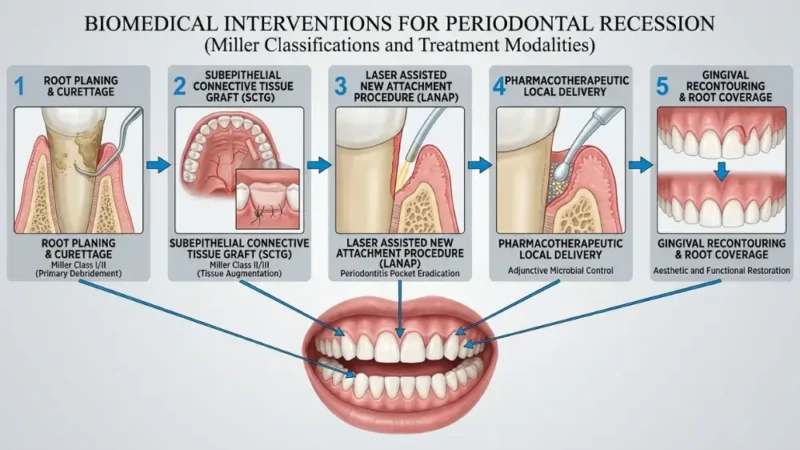
Receding gum treatment depends on how advanced your recession is, what caused it, and how much tissue remains. Below is every available option — surgical and non-surgical — organised by Dr. Astolfi.
How to Fix Receding Gums Without Surgery (for Stage 1-2 Recession)
For mild to moderate recession, a range of non-surgical options can slow or stop progression and support gum health.
1. Scaling and Root Planing (Deep Cleaning)
During deep cleaning, plaque and tartar are removed and the exposed root area is smoothed over, making it more difficult for bacteria to accumulate. Unlike a standard cleaning, this procedure goes beneath the gum line and often requires local anaesthetic.
2. Antibiotics
In conjunction with deep cleaning, locally delivered antibiotics — placed directly into the periodontal pocket — can reduce bacterial load and support healing. Systemic oral antibiotics may also be prescribed in acute cases.
3. Dental Bonding
A tooth-coloured resin can be applied over exposed root surfaces to reduce sensitivity and improve appearance. It is not a treatment for the recession itself, but it provides short-term relief and protection.
4. Orthodontic Treatment
In cases where recession is driven by tooth malpositioning, orthodontics can reposition teeth within the bone, redistributing pressure and sometimes reducing recession over time.
5. Wear a Night Guard
For patients whose recession is caused or worsened by bruxism (teeth grinding), a custom-fitted night guard redistributes biting forces, protecting both the teeth and gum tissue.
6. Use a Soft Bristle Toothbrush for Receding Gums
Switching your toothbrush is one of the simplest and most impactful changes you can make. Use a soft or extra-soft bristled toothbrush — manual or electric — and hold it at a 45-degree angle to the gum line. Apply light pressure only; letting the bristles do the work.
7. Use the Best Toothpaste for Receding Gums
No toothpaste can reverse lost gum tissue, but the right formula protects exposed roots and manages sensitivity. Look for these key ingredients:
- Stannous fluoride
- Potassium nitrate
- Hydroxyapatite
8. Use the Best Mouthwash for Receding Gums
Choose an alcohol-free antibacterial or antiseptic mouthwash. Alcohol-based rinses can dry out the oral tissues, exacerbating irritation. Key ingredients to look for:
- Chlorhexidine (prescription-grade)
- Cetylpyridinium chloride (CPC)
- Stannous fluoride rinses
- Prebiotic mouthwashes containing xylitol or inulin
9. Natural Home Remedies
No natural remedies can replace professional treatment where recession has already caused root exposure, bone loss, or persistent sensitivity. This being said, all of the approaches below have supporting evidence and are widely used as complements to professional care.
- Saltwater rinses
- Oil pulling
- Aloe vera gel
- Green tea
- Turmeric (curcumin) gel
- Vitamin C
- Vitamin D
- Omega-3 fatty acids
- Hydrogen peroxide rinse (diluted)
- Tea tree oil
Receding Gums Surgery (for Late 2-4 Recession Stage)
Receding gums surgery is performed when recession is moderate to severe, when there is significant root exposure, or when non-surgical approaches have been insufficient to stop progression.
1. Connective Tissue Graft (CTG)
During this procedure, a flap of skin is cut at the roof of the mouth while tissue from underneath is removed and stitched surrounding the exposed root.
2. Free Gingival Graft (FGG)
Similar to a CTG, but tissue is removed directly from the surface of the palate. It is used when the aim is to increase the thickness of existing thin gum tissue rather than to cover exposed roots.
3. Pedicle Graft
Tissue is taken from the gum adjacent to the area of recession, partially cut, and stretched sideways to cover the exposed root.
4. Tunnel Technique
The periodontist creates a tunnel beneath the gum tissue and threads a connective tissue graft through it without lifting a large flap.
5. Guided Tissue Regeneration (GTR)
These techniques involve applying a regenerative material — a membrane, stimulating protein, or bone graft — to encourage the body’s natural ability to regenerate bone and tissue.
6. Flap Surgery
A periodontist cuts a flap in the gum and folds it back to clean the surface underneath, before suturing the gum tissue back into place.
7. LANAP Laser Therapy
A newer, FDA-cleared laser-based alternative to traditional flap surgery. The laser selectively targets and removes diseased gum tissue and kills bacteria in deep pockets without a scalpel.
8. Pinhole Surgical Technique (PST™)
A newer approach. A periodontist creates a small pinhole in the gum and uses specialised instruments to gently loosen and reposition the gums over exposed tooth roots. No sutures are typically required.
How Long Does it Take to Recover from Gum Grafting Surgery?
On average, gum graft recovery takes one to two weeks. If multiple areas were treated at once, recovery may take a little longer. Most people can return to work or school within one to two days. During the first week, patients should avoid strenuous activity, stick to soft foods, and follow the post-operative instructions given by their periodontist.
What Happens if Receding Gums Go Untreated?
Ignoring gum recession makes it worse — and the consequences extend well beyond your mouth.
In Your Mouth:
- Increased tooth sensitivity
- Root decay
- Deepening periodontal pockets
- Jawbone loss
- Tooth mobility and tooth loss
In Your Body:
The bacteria responsible for periodontal disease do not stay localised. They enter the bloodstream through inflamed gum tissue and trigger a systemic inflammatory response throughout the body. The evidence is telling:
- People with significant periodontal disease are nearly twice as likely to develop cardiovascular disease.
- According to a 2021 Harvard Health article, people with gum disease have two to three times the risk of having a heart attack, stroke, or other serious cardiovascular event.
- Additional links includediabetes (gum disease worsens blood sugar control and vice versa), respiratory disease (bacteria inhaled from the mouth can cause pneumonia and COPD), adverse pregnancy (preterm birth and low birth weight)
- Emerging research connects periodontal disease tocognitive decline and rheumatoid arthritis.
Best Ways to Prevent Receding Gums
Prevention is always preferable to treatment — and most causes of gum recession are modifiable. Follow these evidence-based habits consistently:
- Brush correctly, not forcefully
- Floss or use interdental brushes daily
- Use an alcohol-free antibacterial mouthwash
- Attend professional cleanings every 6 months(or every 3–4 months if you have a history of periodontal disease)
- Quit smoking
- Wear a night guard if you grind your teeth
- Manage diabetes and other systemic conditions
- Eat a diet rich in vitamins C and D, calcium, and omega-3s
- Correct misaligned teeth
- Avoid tongue or lip piercings
- Know your family history
When is the Right Time to Consult a Periodontist?
A periodontist like Dr. Astolfi is a dental specialist with three additional years of focused postgraduate training in the prevention, diagnosis, and treatment of gum disease and the placement of dental implants.
Book a periodontal consultation without delay if you notice any of the following:
- Your teeth look visibly longer than they used to
- You feel a notch at the gum line when you run your tongue along your teeth
- You experience sensitivity to hot, cold, or sweet that was not present before
- Your gums bleed regularly during brushing or flossing
- You have persistent bad breath that does not resolve with brushing
- A tooth feels loose or has shifted position
- You have already been diagnosed with gingivitis or periodontitis
- Gum disease runs in your family and you have not had a periodontal assessment
Online Periodontist for Receding Gums: Dr. Astolfi
Not sure where to start? Dr. Astolfi offers a free online consultation for patients concerned about receding gums. Share your symptoms, photos, or questions from wherever you are — and receive personalised, expert guidance on your next step.