
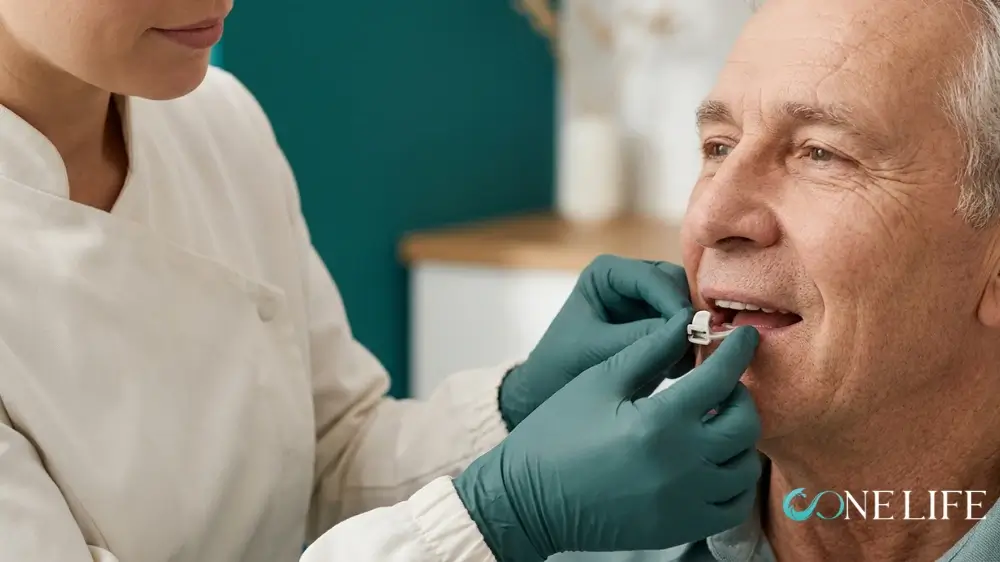
If you’re missing most or all of your teeth snap on dental implants offer a middle ground between removable dentures and fixed implant systems. They attach to implants with a snap mechanism, stay firmly in place when you eat, talk, and laugh, but can be removed each night for cleaning.
For patients who value simplicity and lower costs, that combination is hard to beat. This guide covers everything you need to know: how snap on dental implants work, real costs, clinical success rates, and answers to the most common patient questions.
What Are Snap On Dental Implants?
Snap on dental implants are removable prostheses anchored to 2-to-6 implants per jaw. They feel far more secure than any other type of removable denture. They are also called implant-retained overdentures, snap-in dentures, or clip-on dentures.
Implant-supported dentures have far superior stability and bite than traditional dentures. Their bone-preserving effect is also significant: implants stimulate jawbone like natural tooth roots, slowing or halting bone reabsorption due to tooth loss.
Types of Snap-On Dentures
Let’s now look at the different types of prosthesis and dental implants for this solution. Should you need professional advice on which is best for you, you can always contact us for a free online consultation. Here are the main variants:
- Ball-Attachment Overdenture:The most common type. Each implant has a ball-shaped connector; the denture has sockets that snap onto them. Simple, cost-effective, and easy to maintain.
- Bar-Retained Overdenture:A thin metal bar runs along the jaw, connecting 3–5 implants. The denture clips onto the bar for enhanced stability and load distribution. Recommended for patients with lower bone density or higher bite forces.
- Locator Attachment Overdenture:Uses low-profileLocator® attachments — a popular and well-establishedprecision system — for a secure, self-aligning snap fit.
- Magnetic Attachment Overdenture:Rare but available. Small magnets in both the implant abutment and the denture hold the prosthesis in place.
How Do Snap On Dental Implants Work? Step-by-Step
Understanding the process helps set realistic expectations — both for timing and recovery. Here is what the treatment journey looks like from start to finish.
- Step 1 — Initial Consultation & 3D Imaging: Your dentist takes a 3D CBCT scan (cone beam CT) to assess your bone volume, density, and anatomy. This scan is non-negotiable for safe implant planning — it reveals nerve positions and sinus locations that a standard X-ray cannot show.
- Step 2 — Treatment Planning: Based on the scan, your surgeon determines the number of implants needed (typically 2–4 per arch), their optimal positions, and whether any preparatory procedures — such as a bone graft or sinus lift — are required first.
- Step 3 — Implant Surgery: Titanium dental implants have been widely used in the rehabilitation of patients with missing teeth. Implants provide adequate denture stability, improve oral function, and oral health-related quality of life — with excellent long-term success rates reported for both fixed and removable prostheses. The surgery itself is performed under local anaesthetic and typically takes 1–2 hours per arch.
- Step 4 — Osseointegration (Healing Phase): The implants are left to fuse with the jawbone — a biological process called osseointegration. This typically takes three to six months. The biological bond creates a stable foundation that traditional dentures cannot match, and also prevents the bone deterioration that occurs with removable dentures.
- Step 5 — Fitting the Overdenture: Once healing is confirmed, your custom overdenture is fabricated and fitted. The denture snaps onto the attachment system, and your dentist adjusts the fit, bite, and aesthetics until the result feels natural and comfortable.
- Step 6 — Follow-Up & Aftercare: Patients with removable overdentures should remove the denture daily to brush all surfaces and clean the attachments, and visit the clinic periodically to replace worn inserts and check fit. Regular professional check-ups — typically every 6 months — ensure long-term implant health.
Pros & Cons of the Snap-On System
No dental solution is perfect for every patient. Here is an honest, evidence-based breakdown of what snap on dental implants do well — and where their limitations lie.
✅ Advantages
- Far more stable than conventional dentures. The implants anchor the denture firmly, reducing slipping and improving comfort while eating or speaking.
- Preserves jawbone. Implants stimulate the bone like natural roots, slowing the resorption that accelerates with traditional dentures.
- Removable for easy cleaning. Unlike All-on-4 dental implants, snap-in overdentures come out for daily cleaning, making oral hygiene straightforward and accessible.
- No adhesives required. Patients are permanently free from messy dental pastes and creams.
- More affordable than fixed implants. Lower implant count and a removable prosthesis make the overall investment significantly lower than All-on-4 or All-on-6.
- Long-lasting. The implants supporting your snap-in denture can last a lifetime with proper care — you are replacing the denture portion every 5–8 years, not the implant structure.
❌ Limitations
- Still removable. Some patients find daily removal less convenient than a fully fixed solution.
- Attachment wear. The attachments may wear out and need maintenance or replacement periodically. This is a routine but recurring cost.
- Lower bite force than fixed implants. Snap-on systems do not transmit chewing force as efficiently as permanently fixed prostheses.
- Can feel bulky. Some patients find the size and feel of removable dentures less natural than fixed alternatives.
How Much Does a Full Mouth of Snap-On Dentures Cost?
In the United States, the total price for a full arch snap-on implant system typically ranges between $6,000 and $25,000. Full mouth (both arches) in the US can therefore reach $12,000–$50,000 depending on complexity and location.
Snap On Dentures Cost in the UK
Per-arch costs at UK clinics typically range from £2,000 to £5,000, though clinics in London charge considerably more. Current figures put a single dental implant at roughly £1,900–£3,200 in the UK, while a full-arch All-on-4 bridge sits between £12,000 and £17,000 per jaw.
Important: NHS dental implant coverage is extremely limited — available only for specific medical conditions like congenital tooth absence, trauma, or cancer treatment. Less than 1% of patients qualify.
Snap On Dental Implants in Turkey: Is It Worth It?
Turkey has become the leading destination for affordable snap on dental implants. Snap-on dentures in Turkey use 2–4 implants per jaw and are far more secure than conventional dentures, but removable for cleaning. Prices start from £1,800 per jaw in all-inclusive packages.
Here is a clear cost comparison across key markets:
Country | Snap-On Implants (per arch) | Full Mouth (both arches) |
🇬🇧 United Kingdom | £2,000 – £5,000 | £4,000 – £10,000+ |
🇺🇸 United States | $6,000 – $12,500 | $12,000 – $25,000 |
🇨🇦 Canada | CAD $8,000 – $14,000 | CAD $16,000 – $28,000 |
🇦🇺 Australia | AUD $9,000 – $15,000 | AUD $18,000 – $30,000 |
🇮🇪 Ireland | €3,000 – €6,000 | €6,000 – €12,000 |
🇹🇷 Turkey (all-incl.) | £1,800 – £3,500 | £3,600 – £7,000 |
Prices are indicative averages for 2025–2026. Final costs depend on implant brand, bone condition, and any additional procedures required. Always request a written itemised quote.
Why Choose Snap-On Dentures? Best Candidates
Snap on dental implants are not the right solution for everyone — but for the right patient, they are transformative. Here is who tends to benefit most.
You are likely a strong candidate if:
- You are missing all or most teeth in one or both arches
- You currently wear conventional dentures and struggle with slipping, sore spots, or adhesives
- You have sufficient bone density to support 2–4 implants per arch without extensive grafting
- You are looking for amore affordable alternative to fixed full-arch implants
- You are comfortable with daily removal for cleaning
- You are in good general health — well-controlled diabetes, non-smoker or light smoker, no active gum disease
- You are a senior patient seeking improved quality of life without undergoing more complex surgery
You may need to consider alternatives if:
- You have severe, advanced bone loss
- You have uncontrolled systemic conditions such as unmanaged diabetes or active autoimmune disease
- You are a heavy smoker
- You have active periodontal disease
- You strongly prefer teeth that never come out
How Long Do Snap-On Implants Last?
This is one of the most common questions patients ask — and the answer requires separating two distinct components: the implants and the overdenture prosthesis.
The implants: designed to last a lifetime
Dental implant success rates range from 95% to 98%, making them a highly reliable option for tooth replacement. With correct installation and proper maintenance, an implant can keep you smiling for at least 25 years. The titanium fixture, once fully osseointegrated, behaves like a natural tooth root and is not subject to decay.
Globally, the average failure rate for a dental implant is 3.1% worldwide. At experienced, accredited clinics using premium brands such as Straumann® or Nobel Biocare®, success rates consistently exceed 97%.
The overdenture: plan for replacement every 5–10 years
The removable prosthesis itself has a finite lifespan. The nature of snap-on devices promotes a higher level of wear and tear, which leads to a loose fit after a few years. Dentists typically recommend replacing the overdenture after five to ten years. The attachment components — locators, clips, or ball sockets — wear sooner and typically need replacing every 1–3 years, depending on usage and care.
What affects longevity most?
- Oral hygiene discipline — daily cleaning of both the prosthesis and the implant abutments
- Regular professional check-ups — every 6 months is the clinical standard
- Bite habits — patients who grind their teeth (bruxism) will wear attachments faster and should use a nightguard
- Implant brand quality — premium brands carry superior surface technology and long-term clinical data
- Smoking — significantly accelerates bone loss around implants and shortens prosthesis lifespan
Maintenance & Aftercare
Proper maintenance is what separates a snap-on system that lasts 15+ years from one that fails prematurely.
Daily cleaning routine
- Remove the overdenture every night. This allows your gum tissue to rest and gives you full access to clean both the prosthesis and the implant attachments.
- Brush the overdenture thoroughly on all surfaces using a soft-bristle brush and non-abrasive denture cleaner. Standard toothpaste is too abrasive and will scratch the acrylic over time.
- Clean the implant abutments in the mouth with a soft brush or interdental brush. Remove any plaque or food debris around the attachment points — this is the area most vulnerable to bacterial buildup.
- Soak the denture overnight in a denture-cleaning solution to eliminate bacteria and maintain the material’s integrity.
- Rinse thoroughly before reinserting in the morning.
Professional check-ups
Regular hygienist visits matter more with implants than with natural teeth. Bone loss around implants accelerates rapidly once started and cannot be reversed. Professional cleaning every 3–6 months prevents the bacterial buildup that triggers this process. Budget approximately £100–£150 per year in the UK (or equivalent) for professional hygiene maintenance.
Snap On Dental Implants vs Fixed Implants: Which Is Right for You?
Both systems use titanium implants; the difference lies in how the prosthesis attaches and whether you can remove it yourself. All-on-4 is a permanent, fixed solution you can care for like natural teeth. Snap-on dentures, by contrast, may be fixed or removable — and if removable, should be cared for like conventional dentures.
Here is a detailed side-by-side comparison:
Feature | Snap-On Implants | Fixed Implants (All-on-4/6) |
Removable by patient | ✅ Yes — removed nightly | ❌ No — fixed permanently |
Number of implants | 2–4 per arch | 4–6 per arch |
Cleaning method | Remove & brush daily | Water flosser + specialist brush |
Feel & aesthetics | Very good | Closest to natural teeth |
Bite force efficiency | Good | Excellent |
Bone preservation | ✅ Yes | ✅ Yes |
Prosthesis lifespan | 5–10 years | 10–20 years |
Implant lifespan | Lifetime (with care) | Lifetime (with care) |
Surgical complexity | Lower | Higher |
Cost (Turkey, per arch) | From £1,800 | From £3,280 |
Receive a Free Consultation
Not sure which system is right for you? Book a free consultation with Dr. Astolfi at OONE LIFE. In a single no-obligation call or visit, we will review your case, answer your questions honestly, and give you a clear, itemised treatment plan — with no hidden fees.
FAQs
Are snap-in dental implants good?
Yes — they are clinically proven and significantly superior to conventional dentures. They eliminate adhesives, prevent bone loss, and restore chewing confidence. Success rates range from 95% to 98%. For the right patient, they deliver excellent results at lower cost than fixed implants.
Are clip-on dentures any good?
Yes — clip-on dentures are a well-established, effective solution. They offer far greater stability than traditional dentures relying on suction or adhesives, while allowing easier access for cleaning around implants and gums. Outcome depends heavily on clinic quality and implant brand.
Who is a good candidate for snap-in dentures?
Anyone missing most or all teeth, with adequate bone density and good general health. They are often the preferred option for patients wanting a more cost-effective, comfortable solution than full implant bridges. A 3D CBCT scan confirms suitability.
Can you eat with snap-on teeth?
Yes — comfortably and with far more freedom than conventional dentures. Implant overdentures reduce dietary restrictions and improve bite power significantly. Avoid very hard or sticky foods to protect the attachment mechanism. A soft diet is required during the initial healing period only.
Can you sleep with clip-on dentures?
No — removing them nightly is the clinical recommendation. Dentists advise taking the denture off at night to let the gums rest and allow proper cleaning of the attachment components. Sleeping with them in accelerates wear and increases infection risk.
Who cannot get snap-in dentures?
Patients with severe bone loss, uncontrolled diabetes, active gum disease, or heavy smoking habits are typically excluded. Those on bisphosphonate medications or with certain autoimmune conditions may also be contraindicated. A full clinical assessment confirms eligibility before any treatment begins.
How painful is it to get snap-on dentures?
Not painful — surgery is performed under local anaesthetic. Post-operative soreness lasts 3–5 days and is managed with standard over-the-counter pain relief. A soft food diet is required during the initial healing period of a few weeks.
How often do you need to take out snap-in dentures?
Once daily — every night. You remove them each night for cleaning. They stay firmly in place when eating, talking, and laughing throughout the day. The routine becomes effortless within days of receiving your prosthesis.
Where is the cheapest place in the world to get snap-on dentures?
Turkey — offering 60–75% savings versus UK and US prices. All-inclusive packages start from £1,800 per jaw, covering hotel, transfers, scans, and a lifetime implant guarantee. Always verify clinic accreditation and implant brand authenticity before booking.