
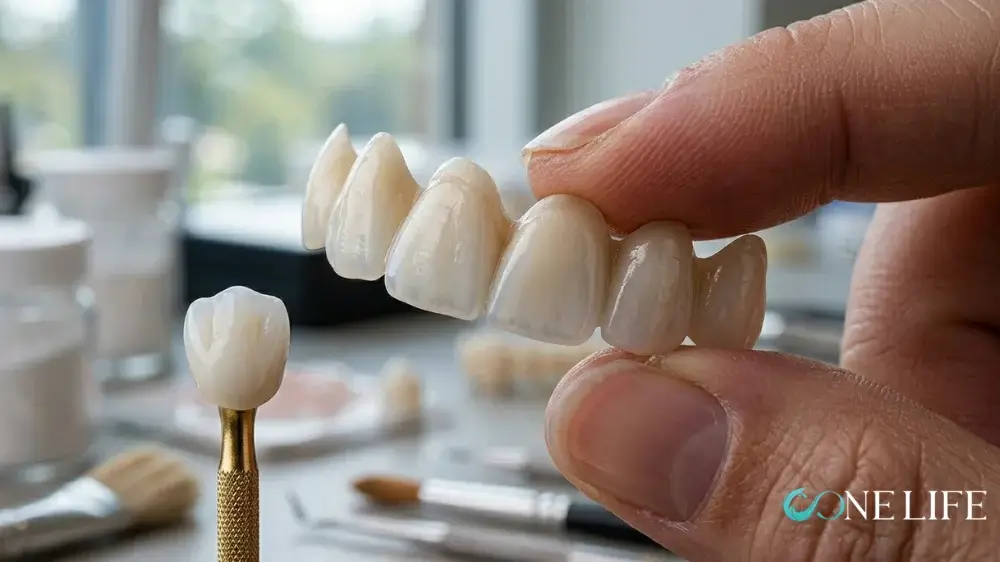
Every year, tens of thousands of patients travel for porcelain veneers in Turkey — and save 60% to 75%. But how much of your natural tooth is removed? What material is actually going inside your mouth, and how do you tell a world-class clinic from one that will leave you worse off than when you started?
In this guide, Dr. Astolfi gives you all necessary information about porcelain material traceability, package costs & all key insider knowledge to do your due diligence (the kind most clinics in Turkey don’t want you to know!).
How Much Tooth Is Removed for Veneers in Turkey?
For well-placed porcelain veneers in Turkey, 0.3 mm to 0.5 mm of enamel is removed from the surface of the tooth. That is roughly the thickness of a contact lens or a fingernail. The whole point of a veneer is to preserve as much natural tooth structure as possible, because veneers are irreversible. Once enamel is removed, it does not grow back.
Here is what that looks like in clinical terms:
- Minimal-prep veneers (0.3–0.5 mm): the standard for healthy, well-aligned teeth. Enamel removal is limited to the facial (front) surface only.
- No-prep veneers (0 mm): possible in specific cases where the tooth is small or set back. Not suitable for most patients.
- Over-preparation (1.0 mm+): this is what causes the “Turkey Teeth” problem you may have seen on social media. When too much tooth is removed — or when the preparation extends below the gumline — the tooth is permanently and severely compromised.
*At OONE LIFE, Dr. Serkan, Tarkan & Astolfi provide a Digital Wax-Up to show you the planned result in 3D — so you approve the design before the preparation begins.
Why Choose Porcelain Veneers? Comparison vs. E.max®, Zirconia & Composite
A veneer is an ultra-thin shell, replacing discoloured, chipped, or misshapen enamel. What most patients call “porcelain veneers” today are almost always made from E.max® lithium disilicate glass-ceramic. Here is how the three main materials compare:
Material | Type | Thickness | Translucency | Lifespan | Best For |
E.max® lithium disilicate | Glass-ceramic | 0.3–0.5 mm | Excellent — mimics natural enamel | 12–20 years | Most veneer cases |
Zirconia | Polycrystalline ceramic | 0.5–1.5 mm | Lower — more opaque | 15–25 years | Damaged/heavily filled teeth |
Composite resin | Plastic resin | 0.5–1.0 mm | Moderate | 4–7 years | Budget cases, minor corrections |
E.max® Lithium Disilicate
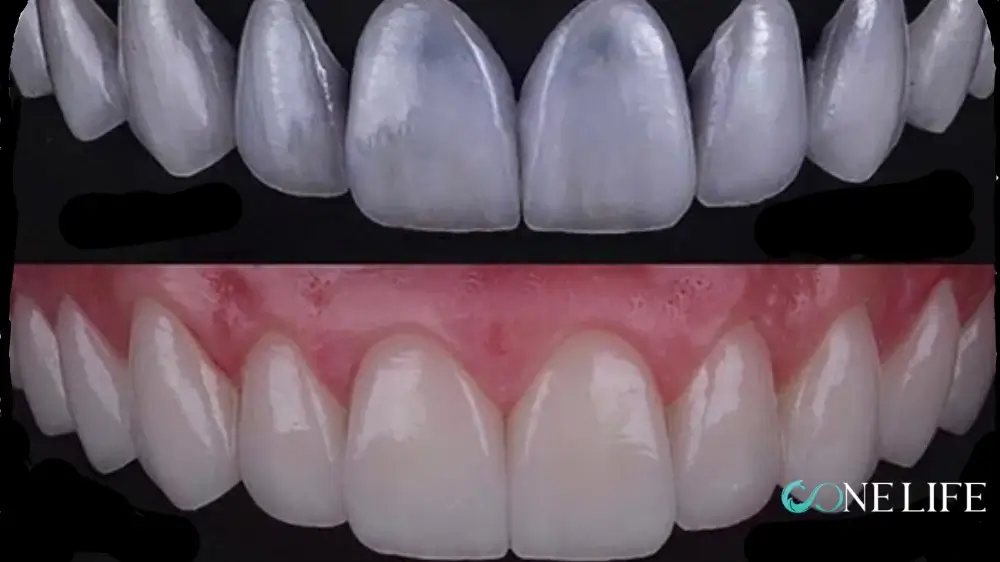
E.max® is a lithium disilicate glass-ceramic manufactured by Ivoclar Vivadent. Light passes through it and reflects off the natural dentin beneath, creating the depth and luminosity of a real tooth. No other material replicates this as convincingly.
A systematic review published in Researchgate (2026) found that E.max CAD laminate veneers achieved a 10-year survival rate of 92.7%, with a 5-year success rate of 100% in several studies. E.max® is the material used at OONE LIFE for all veneer cases.
Zirconia: Strong, But Requires More Shaving
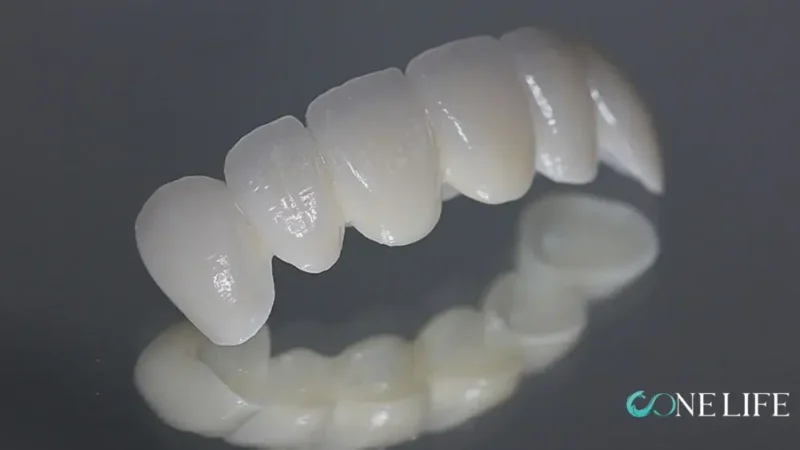
Zirconia requires more tooth reduction and covers the entire tooth surface, it is more accurately described as a veneer crown. It is the right choice when natural teeth are heavily damaged, root-treated, or significantly misaligned. Its opacity means it cannot replicate the natural translucency of E.max® — under certain lighting, zirconia restorations can appear flat or artificial.
Composite Resin: The Budget Option
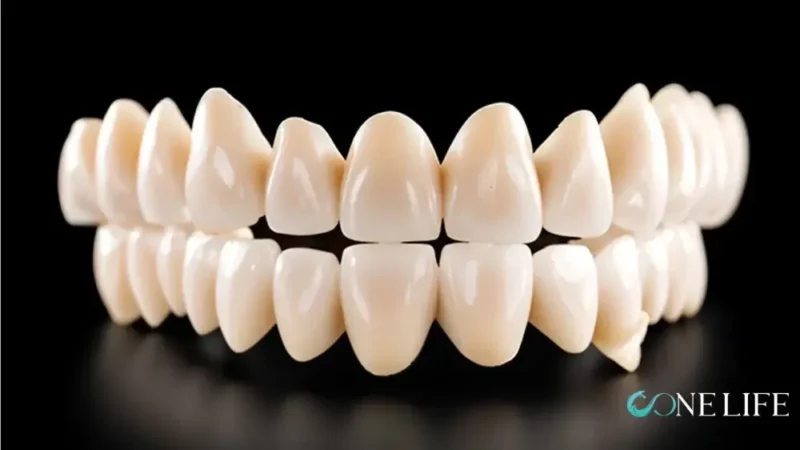
Composite veneers are sculpted directly onto the tooth in a single appointment — no laboratory, no temporaries, no waiting. They cost significantly less, which is their primary appeal. The clinical trade-off is durability: composite stains, chips, and degrades faster than ceramic. Most composite veneers require replacement or significant repair within 4–7 years.
How Much Do Porcelain Veneers Cost in Turkey?
A single E.max® porcelain veneer in Turkey costs between £200 and £350 (approximately $250–$440 USD) in 2026 — compared to £800–£1,200 per tooth in the UK and $1,200–$2,500 per tooth in the US.
The table below gives you a clear, country-by-country comparison for a single E.max® veneer at a quality clinic:
Country | Cost Per Tooth (E.max®) | Cost Per Tooth (Composite) |
Turkey | £200–£350 / $250–$440 | £80–£150 / $100–$190 |
United Kingdom | £800–£1,200 | £250–£450 |
United States | $1,200–$2,500 | $400–$1,500 |
Australia | $1,500–$3,000 AUD | $500–$900 AUD |
Canada | $1,400–$2,800 CAD | $450–$800 CAD |
Sources: British Dental Association fee guides; Bookimed verified clinic invoices 2025–2026. Figures are indicative and subject to individual assessment.
What Drives the Price Variation?
Several factors legitimately affect the per-tooth price:
- Material brand: genuine Ivoclar Vivadent E.max® costs more than unbranded or counterfeit ceramic. Always ask for the batch code (more on this below).
- In-house vs outsourced laboratory: clinics with their own CAD/CAM lab have faster turnaround, tighter quality control, and often more competitive pricing.
- Surgeon seniority: a specialist prosthodontist will charge more than a general dentist.
- City:Istanbul clinics typically price 20–30% higher than those in Antalya or Izmir.
How Much Is a Full Set of Veneers in Turkey?
A full set of porcelain veneers in Turkey costs between £3,200 and £5,500 at a quality clinic in 2026. The equivalent treatment in the UK would cost £12,800–£24,000. For most patients this is:
- 8 veneers: upper front teeth only. The most conservative option, addressing the most visible teeth.
- 10–12 veneers: upper arch. Covers the full smile line for the majority of patients.
- 16–20 veneers: upper and lower arches. A complete Hollywood Smile makeover.
Your dentist will determine the right number during your Digital Smile Design consultation. A reputable clinic will never recommend more veneers than your smile line requires.
Does the Saving Still Hold After Travel Costs?
Yes — by a significant margin. The same 20 E.max® veneers at a reputable London cosmetic dental practice would cost £16,000–£24,000, with no accommodation or transfers included. Sixteen-tooth transformations in Turkey range from £2,880 to £5,600, depending on material, compared to £12,800–£19,200 in the UK.
- Veneers at OONE LIFE: £3,000–£4,500
- Return flights London–Istanbul:£150–£300
- Accommodation (5–7 nights, included in package): £0
- Transfers (included in package): £0
- Total: £3,200–£4,800
Why Are Veneers So Cheap in Turkey?
Turkish veneers cost less because of structural economics — not lower quality. The material inside your mouth is identical as in London or New York (often produced by the same company and manufactured by the same CNC Milling machines).
Four factors drive the price difference:
- Lower operational costs: Istanbul clinic rent averages £1,800 monthly versus £8,000 or more in London. Staff salaries, utilities, and insurance follow the same pattern.
- Favourable exchange rates:the Turkish lira weakened 12% against the pound in 2024, amplifying savings for UK, US, and Australian patients year on year.
- Lower laboratory costs: Turkish labs produce porcelain veneers at 30–50% lower cost than Western facilities, thanks to automated CAD/CAM systems and bulk ceramic purchasing.
- No NHS/insurance overhead: Turkish private clinics carry none of the administrative burden that inflates costs in the UK or US systems.
Porcelain Veneer Process in Turkey, Step by Step
A full porcelain veneer treatment at a quality clinic takes 5–7 days from first appointment to final fitting. The process involves four clinical stages — each stage is non-negotiable. A clinic that skips or compresses any of them is cutting corners!
Step 1: Digital Consultation & Smile Design (Day 1)
Before any clinical work begins, your dentist conducts a full assessment:
- 3D intraoral scanning: a digital map of your teeth, bite, and gum architecture is created without traditional moulds. Takes approximately 15 minutes.
- Digital Smile Design (DSD): your new smile is designed digitally and overlaid onto photographs and video of your face. You see and approve the result — shape, size, proportion, shade — before any tooth is touched.
- Clinical photography and shade matching: baseline records taken under standardised lighting conditions. These guide the laboratory technician throughout manufacture.
- Treatment planning: the number of teeth, preparation depth, and material are confirmed. Any pre-existing restorations, decay, or gum issues are identified and addressed before veneer work begins.
Step 2: Tooth Preparation & Temporaries (Day 2)
This is the most clinically significant stage of the entire process:
- Local anaesthesia is administered. The preparation should be entirely pain-free.
- Enamel reduction of 0.3–0.5 mm is carried out on each tooth using high-magnification loupes. The preparation margin is kept supragingival (above the gumline) wherever anatomy permits.
- Final digital impressions are taken of the prepared teeth and sent immediately to the in-house laboratory.
- Temporary veneers are placed the same day. This is a critical step that many budget clinics omit. Temporaries protect your prepared teeth, allow you to evaluate the shape and shade in real life, and give your dentist the opportunity to refine the design before the permanent veneers are milled.
Step 3: Laboratory Manufacture (Days 3–4)
While you rest and recover — typically enjoying Istanbul — your veneers are being milled, refined, and finished in the clinic’s laboratory. At a clinic with in-house CAD/CAM capability, this takes 2–3 days. Clinics that outsource laboratory work to external facilities require longer turnaround times and have less control over quality.
Step 4: Final Fitting & Bonding (Day 5–6)
The most satisfying stage — and the most technically demanding:
- Try-in: your permanent veneers are placed without adhesive first. You and your dentist assess fit, shade, and aesthetics under different lighting conditions. Adjustments are made at this stage, not after bonding.
- Tooth surface etching: the prepared enamel is micro-etched with phosphoric acid to create a mechanical bonding surface.
- Silane coupling agent: applied to the inner ceramic surface to promote chemical adhesion between the veneer and the resin cement.
- Dual-cure resin cement:each veneer is bonded individually under controlled conditions. Excess cement is removed with precision instruments before light-curing.
- Occlusal check: your bite is assessed and micro-adjusted to ensure no veneer carries uneven load — a common cause of early fracture when skipped.
Step 5: Post-Treatment Review (Day 6–7)
A final clinical review checks gum response, cement margins, bite, and surface finish. Your dentist provides written aftercare instructions and confirms your follow-up protocol. At OONE LIFE, lifetime follow-up is included — remote consultations are available for international patients who return home.
How Long Do You Stay in Turkey to Get Veneers?
Plan for 5 to 7 nights. This is the minimum for a properly executed veneer treatment — enough time to complete all four stages without compressing any step. Be cautious of any clinic promising completion in 3 days or fewer.
For most patients travelling from the UK, Ireland, the US, or Australia, the treatment schedule looks like this:
Day | Activity |
Day 1 | Arrival, private transfer to hotel, welcome consultation |
Day 2 | 3D scanning, Digital Smile Design, treatment sign-off |
Day 3 | Tooth preparation, temporaries placed, lab work begins |
Days 4–5 | Rest, recovery, explore Istanbul. Temporary review if needed |
Day 6 | Final fitting, bonding, occlusal check |
Day 7 | Post-treatment review, departure |
What About the Recovery Period?
Porcelain veneres Turkey is not a surgical treatment. There is no swelling, no stitches, and no significant downtime. Most patients feel mild tooth sensitivity for 24–72 hours after preparation, which resolves once temporaries are placed. You can eat, speak, and socialise normally throughout your stay (avoid hard, crunchy, or very sticky foods during days 3–5).
By the time your permanent veneers are bonded, sensitivity is typically gone entirely.
Practical Travel Notes for UK & International Patients
- Direct flights from London to Istanbul take approximately 3 hours 45 minutes. Multiple daily departures operate from Heathrow, Gatwick, Stansted, and Manchester.
- From the US: direct flights from New York (JFK) to Istanbul take approximately 10 hours. Connections available from most major US cities.
- From Australia: most patients connect via Dubai or Doha. Total journey time from Sydney or Melbourne is approximately 20–22 hours — still worthwhile given the scale of the saving on a full-mouth case.
- Visa requirements: UK, US, Canadian, Australian, Irish, and New Zealand passport holders can obtain an e-Visa for Turkey online in advance at evisa.gov.tr. Processing takes minutes.
What Is Included in the Turkey Veneer Package?
An all-inclusive veneer package in Turkey should cover every clinical and logistical element of your treatment — not just the veneers themselves. Here is exactly what should be included, and what to verify before you book.
- Consultation and full clinical assessment
- Digital Smile Design (DSD)
- Temporary veneers for the full preparation period
- max® Ivoclar Vivadent ingot batch code verification — provided before treatment begins
- Lifetime remote follow-up for international patients
- Luxury hotel accommodation (typically 5-star, 5–7 nights)
- All private airport and clinic transfers
- Dedicated personal translator and patient host throughout your stay
- 24/7 patient coordinator contact before and during your trip
What Should NOT Be Charged as an Extra
If any of the following appear as additional line items on a clinic’s quote, treat it as a transparency concern:
- Consultation fee
- X-rays or CBCT scan
- Temporary veneers
- Local anaesthesia
- Post-treatment review
- Airport transfers (when advertised as all-inclusive)
How Long Do Turkish Veneers Last?
A well-placed E.max® porcelain veneer lasts 12–20 years. Longevity is determined by preparation quality, bonding protocol, and patient maintenance — not by the country where the treatment was performed.
What the Clinical Evidence Shows
- A systematic review tracking 197 laminate veneers over 10 years found an estimated Kaplan-Meier survival rate of 92.7% for E.max CAD restorations — meaning fewer than 1 in 13 veneers required replacement over a decade.
- A separate study of chair-side CAD/CAM ceramic laminate veneers reported a mean survival rate of 99.0% and a success rate of 96.4% after 5 years.
- Clinical success rates for veneers across a wide range of studies register between 75% and 100%, with observation periods ranging from 18 months to 20 years.
What Determines How Long Your Veneers Last
Veneers fail for identifiable reasons. Understanding those reasons puts control back in your hands. The primary determinants of longevity are:
- Preparation quality: conservative, supragingival margins preserve enamel bonding surface and protect long-term gum health. Over-preparation accelerates failure.
- Bonding protocol: proper acid etching, silane application, and dual-cure resin cement are non-negotiable steps. Skipping or rushing any of them compromises the adhesive bond.
- Occlusal load: patients who grind or clench their teeth (bruxism) place significantly higher stress on veneers. A custom night guard is essential for these patients and should be discussed before treatment.
- Patient maintenance: veneers require no special cleaning routine beyond standard oral hygiene — twice-daily brushing with a non-abrasive toothpaste, flossing, and regular professional hygiene appointments.
Composite vs E.max® Longevity
The lifespan difference between materials is clinically significant and commercially important:
Material | Expected Lifespan | Replacement Cycle (Full Set) |
E.max® lithium disilicate | 12–20 years | Once or twice in a lifetime |
Zirconia | 15–25 years | Once in a lifetime |
Composite resin | 4–7 years | Multiple replacements likely |
Is It Safe to Get Veneers in Turkey?
Yes — when you choose the right clinic. The risks associated with dental tourism are real but entirely avoidable with proper due diligence.
Green Flags: What a Safe, High-Quality Clinic Looks Like
- Named, verifiable surgeon: you know exactly which dentist will prepare your teeth. Their qualifications, training, and before-and-after portfolio are publicly available.
- In-house CAD/CAM laboratory: veneers are manufactured on-site, not outsourced. The ceramicist works directly with your dentist.
- Digital Smile Design before preparation: you approve the result digitally before any enamel is removed.
- max® batch code verification: the clinic provides Ivoclar Vivadent batch and LOT numbers before treatment begins.
- Written guarantee policy: specific, enforceable, and applicable to international patients.
- Transparent, itemised pricing: no headline rates that expand on arrival.
Red Flags: What to Walk Away From
- Prices significantly below the market floor (under £100 per tooth for E.max®)
- No named surgeon or vague descriptions of “our team of specialists”
- No temporary veneer phase offered or included
- Inability or unwillingness to provide material batch codes
- Guarantee terms that require in-person return to the clinic with no remote assessment option
- Pressure to book immediately or claims of “limited availability”
- Before-and-after photos with no patient identifiers, dates, or clinical context
Accreditation: What to Look For
When evaluating a Turkish dental clinic, the following accreditations and affiliations are meaningful quality signals:
- JCI (Joint Commission International): the global gold standard for healthcare facility accreditation
- AACI (American Accreditation Commission International): widely held by leading Turkish dental clinics
- ISO 9001 certification: quality management systems certification
- Membership of the Turkish Dental Association (TDA)
What to Ask Your Clinic Before You Book
These five questions separate genuinely high-quality providers from those relying on marketing over clinical substance. Ask all of them — in writing — before committing to any deposit.
- Can you show me the batch code of the E.max® ingots before treatment begins?
- Who specifically will be preparing my teeth — and what are their qualifications?
- Will I receive temporary veneers between preparation and final fitting?
- Do you provide the medical complication insurance as requested by the Turkish Ministry of Health?
- What is your guarantee and revision policy — in writing — for international patients?