
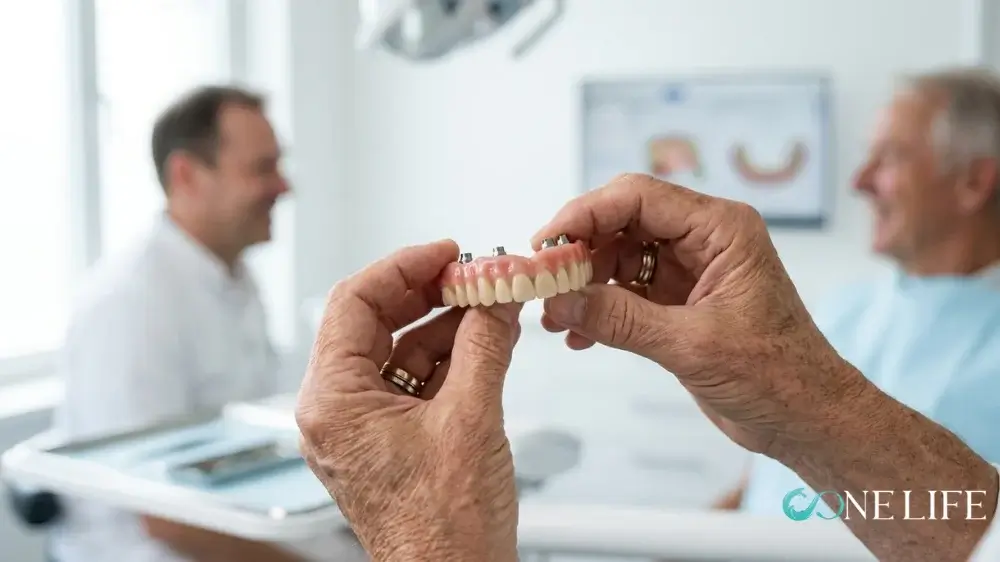
If you are missing most or all of your teeth a hybrid dental implant prosthesis may be the most complete solution available today. In short: it gives you a full arch of fixed, non-removable teeth, anchored to implants in your jawbone, that look, feel and function like natural teeth. No adhesives. No overnight soaking.
This guide covers everything you need to know: what hybrid dental implants are, the five different types, who qualifies,costs & what the science says about durability and success rates.
What Are Hybrid Dental Implants?
Hybrid dental implants — also called an implant hybrid prosthesis or implant-supported hybrid denture — are a full-arch fixed restoration. A complete set of artificial teeth is permanently screwed onto a series of dental implants (typically 4 to 6 per jaw), replacing every tooth in the upper or lower arch, or both.
It is called “hybrid” because it combines two or more materials (titanium, zirconia or PEEK) with a tooth-and-gum component on top (acrylic, composite or zirconia). This combination is what gives it strength and aesthetics at the same time.
Unlike removable dentures, a hybrid prosthesis is screw-retained directly onto the implants. Only a dentist can remove it.
How Does an Implant Hybrid Prosthesis Work? Step by Step
The process behind a hybrid dental implant is more straightforward than most expect. It follows a clear surgical planthat has been refined over decades of clinical use.
- Step 1 — Assessment and planning: Digital planning software maps the ideal implant positions before a single incision is made.
- Step 2 — Implant placement:Between 4 and 6 titanium implants are surgically inserted into the jawbone per arch.
- Step 3 — Immediate temporary prosthesis: a temporary fixed arch is fitted. This is commonly referred to as“teeth in a day” or immediate loading.
- Step 4 — Osseointegration:Over the following 3 to 6 months, the implants fuse with the jawbone in a biological process called osseointegration.
- Step 5 — Final hybrid prosthesis fitted:Once osseointegration is confirmed, your permanent implant hybrid prosthesis is screwed into place.
The 5 Types of Hybrid Dental Implant Prosthesis
The material combination your surgeon and prosthodontist recommend will depend on your bone structure, bite force, aesthetic goals and budget. Here is a clear breakdown of every option available.
1. Titanium + Acrylic (PMMA) Hybrid — The Classic Option

The original hybrid prosthesis, developed alongside the Brånemark implant system in the 1970s. Still one of the most widely prescribed options worldwide.
How it is built:
- Titanium or cobalt-chrome metal bar → internal framework
- Acrylic resin (PMMA) → pink gum-coloured base
- Prefabricated or custom denture teeth → bonded on top
Key advantages:
- ✅ Lightest and most affordable option
- ✅ Shock-absorbing — reduces biting forces on implants
- ✅ Individual teeth repairable chairside (no need to remake the whole prosthesis)
- ✅ Well-established, decades of clinical evidence
Limitations:
- ❌ More prone to staining and wear
- ❌ Prosthesis typically needs replacement or rebasing after7–10 years (implants remain)
- ❌ Less aesthetic than zirconia
2. Titanium + Milled Composite (Smart Composite) Hybrid
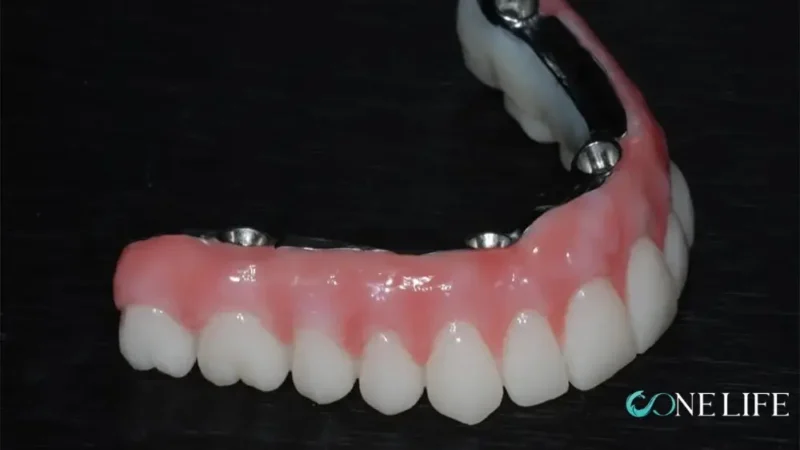
A significant step up from acrylic. The metal framework remains, but the teeth and gum component are CAD/CAM milled from a high-density composite block — not hand-built.
Key advantages:
- ✅ Denser and more homogeneous than hand-built acrylic
- ✅ Better resistance to chipping and staining
- ✅ Can still be polished and repaired directly in the mouth
- ✅ Lighter than full zirconia
Limitations:
- ❌ Not as hard as zirconia — may show wear after8–12 years under heavy load
- ❌ Aesthetics fall short of zirconia options
3. Titanium + Zirconia Hybrid — Premium Choice
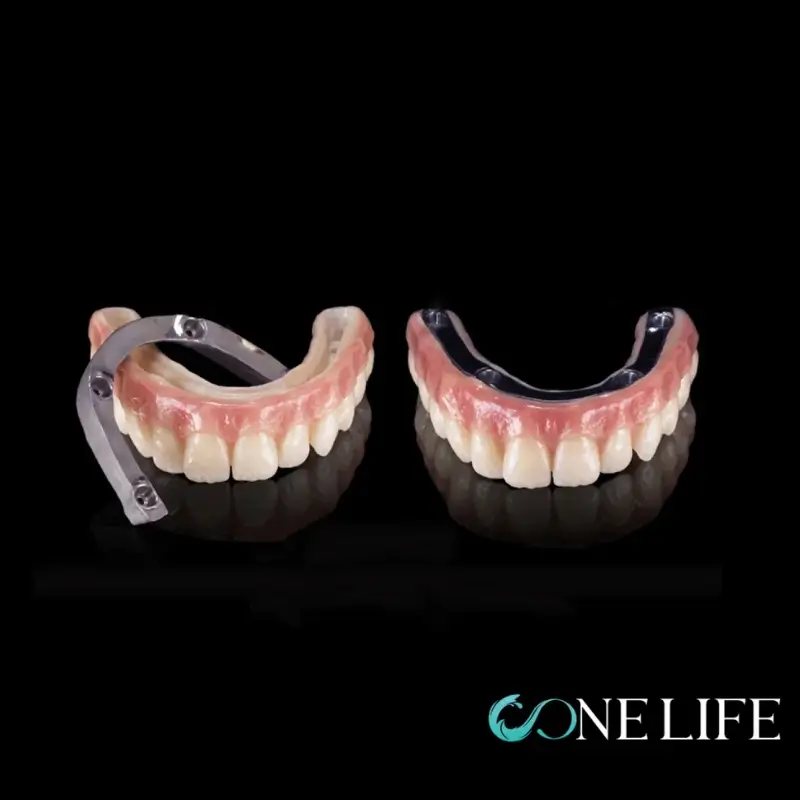
Currently the most prescribed premium hybrid prosthesis worldwide. Titanium framework for structural rigidity; zirconia ceramic superstructure for aesthetics and strength.
By the numbers:
- Flexural strength: 900–1,200 MPa
- Surface: non-porous, stain-resistant, low bacterial adhesion
- Translucency: closely mimics natural dental enamel
Key advantages:
- ✅ Exceptional aesthetics — patients consistently rate it as closest to natural teeth
- ✅ Highly durable, stain-resistant and long-lasting
- ✅ Biocompatible and hypoallergenic
Limitations:
- ❌ Cannot be repaired chairside — chips or fractures require laboratory refabrication
- ❌ Heavier than acrylic or composite options
- ❌ Higher cost
4. PEEK / BioHPP Hybrid — The Metal-Free Alternative
PEEK (Polyetheretherketone) — available in dental grade as BioHPP — replaces the titanium bar entirely with a high-performance polymer framework. A growing option backed by solid clinical evidence.
Why PEEK is clinically relevant:
- Its elastic modulus is closer to cortical bone than titanium — meaning more natural load distribution
- Radiolucent — invisible on X-rays, simplifying long-term implant monitoring
- Contains no metal — ideal for patients with allergies or sensitivities
Clinical evidence snapshot:
A 3-year prospective study (37 patients, 49 full-arch prostheses) found:
- 98%prosthetic survival rate
- 100%implant survival
- Average marginal bone loss:40 mm (well within safe limits)
- Patient satisfaction:90% (NIH/PubMed, 2020)
Key advantages:
- ✅ Best option for bruxism and metal sensitivity
- ✅ Excellent biomechanical load distribution
- ✅ Lightweight and biocompatible
Limitations:
- ❌ Less widely available than titanium-based options
- ❌ Long-term data (10+ years) still emerging
5. Monolithic Full-Arch Zirconia — Fixed, Seamless, Durable
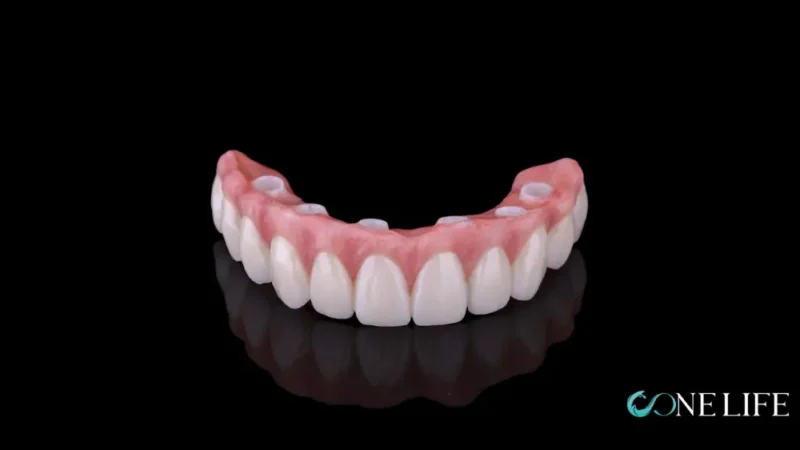
The most advanced option. The entire prosthesis — teeth, gums and structure — is milled from one single solid block of zirconia. No separate framework, no bonded components.
Technical specs:
- Flexural strength:>1,000 MPa
- Construction: single monolithic piece, zero bonded joints
- Surface: non-porous, virtually zero bacterial adhesion
Key advantages:
- ✅ Hardest and most fracture-resistant full-arch restoration available
- ✅ Does not stain, warp or degrade over time
- ✅ Highest aesthetic ceiling — advanced staining creates lifelike translucency and gingival colour
- ✅ Longest-lasting definitive solution
Limitations:
- ❌ Heaviest option
- ❌ Cannot be repaired if fractured — requires partial or full replacement
- ❌ Highest cost of all five types
How Do You Choose the Right Type of Hybrid Prosthesis?
Your surgeon and prosthodontist will guide you. The table below gives you a clear, at-a-glance comparison of all five types across the criteria that matter most.
Acrylic (PMMA) | Milled Composite | Titanium + Zirconia | PEEK / BioHPP | Monolithic Zirconia | |
Framework | Titanium/metal | Titanium/metal | Titanium | PEEK polymer | None (monolithic) |
Aesthetics | ⭐⭐ | ⭐⭐⭐ | ⭐⭐⭐⭐ | ⭐⭐⭐ | ⭐⭐⭐⭐⭐ |
Durability | ⭐⭐ | ⭐⭐⭐ | ⭐⭐⭐⭐ | ⭐⭐⭐ | ⭐⭐⭐⭐⭐ |
Repairability | ✅ Easy | ✅ Easy | ⚠️ Lab only | ✅ Moderate | ❌Lab/replacement |
Metal-free | ❌ | ❌ | ❌ | ✅ | ✅ |
Shock absorption | ✅ High | ✅ Moderate | ⚠️ Low | ✅ High | ⚠️ Low |
Weight | Lightest | Light | Medium | Light | Heaviest |
Lifespan (prosthesis) | 7–10 yrs | 8–12 yrs | 15–20 yrs | 10–15 yrs | 15–20+ yrs |
Relative cost | £ | ££ | £££ | £££ | ££££ |
Best for | Budget, transitional | Mid-range upgrade | Premium definitive | Metal allergy, bruxism | Ultimate durability |
Note: implant lifespan is independent of prosthesis type. Implants are designed to last a lifetime with proper care.
Beyond the table, here are the key questions to discuss with your clinician:
- Do you grind your teeth (bruxism)? → Lean towards acrylic, composite or PEEK for shock absorption
- Do you have ametal allergy or sensitivity? → PEEK/BioHPP or monolithic zirconia are your safest options
- Isaesthetics your top priority? → Titanium-zirconia hybrid or monolithic zirconia
- Are you looking for themost cost-effective entry point? → Titanium-acrylic remains clinically excellent
- Do you wantone definitive prosthesis for life? → Monolithic zirconia or titanium-zirconia hybrid
How Long Do Hybrid Dental Implants Last?
The answer depends on which component you are asking about — because the implants and the prosthesis are two separate things with different lifespans.
The implants (titanium screws in the bone):
- Designed to bepermanent
- Clinical studies show survival rates of91–100% over 20 years with proper care
- A 2025 long-term follow-up study reported a6% cumulative implant survival rate at 38–40 years
- In short: if osseointegration is successful, your implants should last a lifetime
The prosthesis (the teeth you see):
- Lifespan varies by material — see the table in the previous section
- Acrylic:7–10 years before rebasing or replacement
- Milled composite:8–12 years
- PEEK/BioHPP:10–15 years
- Titanium + Zirconia or Monolithic Zirconia:15–20+ years
What affects longevity most:
- ✅ Daily oral hygiene around implants
- ✅ Regular professional maintenance (every 6–12 months)
- ✅ Avoiding excessive biting forces on hard objects
- ⚠️ Unmanaged bruxism is the single biggest risk factor for early prosthesis wear
The Most Common Complications (And How Manageable They Are)
It is important to be transparent. Complications do occur — but the vast majority are minor and resolvable.
Complication | Frequency | Severity | Resolution |
Acrylic/composite tooth fracture | Moderate | Minor | Chairside repair |
Screw loosening | Moderate | Minor | Tightened at maintenance visit |
Veneer adhesion issues (PEEK) | Moderate | Minor | Resolved for all patients in study |
Peri-implant mucositis (gum inflammation) | Moderate | Minor–Moderate | Non-surgical treatment |
Implant failure (lack of osseointegration) | Low | Major | Replacement implant after healing |
Framework fracture | Rare | Major | Laboratory refabrication |
How Much Do Hybrid Dental Implants Cost?
Hybrid dental implants in Turkey cost 60–75% less than equivalent treatment in the UK or US — with the same premium implant brands, the same CAD/CAM technology, and the same clinical protocols.
Price Comparison by Country: Full-Arch Hybrid Prosthesis
Treatment | UK (GBP) | USA (USD) | Turkey (GBP) | Turkey (USD) |
Single arch — Acrylic hybrid (All-on-4) | £13,000–£18,000 | $12,000–$25,000 | £3,000–£5,000 | $3,500–$6,000 |
Single arch — Zirconia hybrid (All-on-4) | £15,000–£22,000 | $15,000–$30,000 | £4,500–£7,000 | $5,500–$9,000 |
Single arch — Monolithic zirconia (All-on-6) | £18,000–£25,000 | $18,000–$35,000 | £5,500–£9,000 | $7,000–$11,000 |
Both arches — Acrylic hybrid | £26,000–£36,000 | $24,000–$50,000 | £6,000–£10,000 | $7,000–$12,000 |
Both arches — Zirconia hybrid | £30,000–£44,000 | $30,000–$60,000 | £9,000–£14,000 | $11,000–$18,000 |
Prices are indicative ranges based on current market data (2025–2026). Final cost depends on number of implants, material choice, bone condition and clinic.