
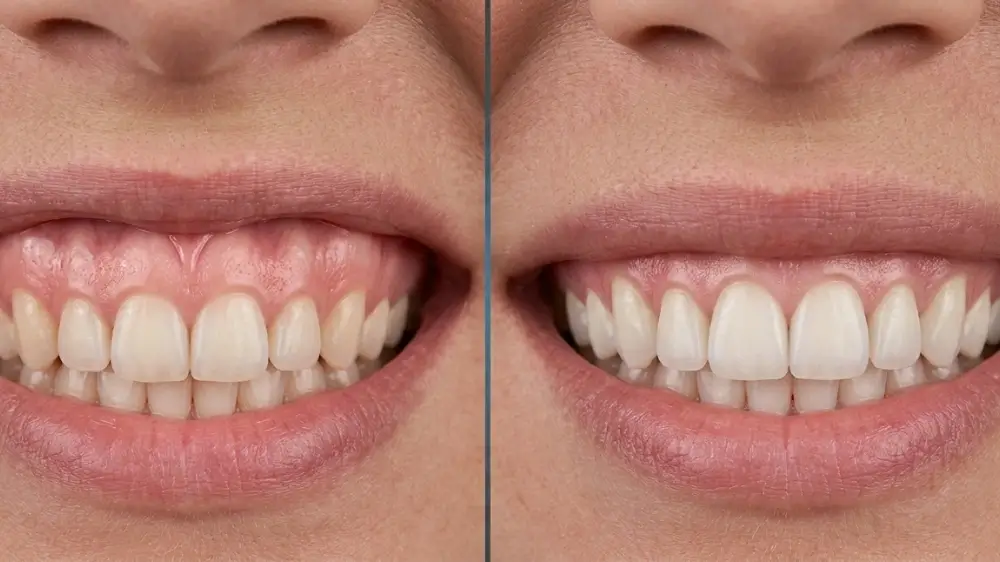
A gummy smile occurs when too much gingivae is visible while smiling and showing your teeth. If you don’t like the way it looks on you, don’t worry at all: there are treatments and permanent solutions for it. From non-invasive procedures like botox to surgery such as lip repositioning or orthognathic surgery, let’s go through all possible treatments in detail with Dr. Astolfi!
The 3-Millimeter Rule: Do You Have a Gummy Smile?
You might find yourself wondering if your smile is actually “gummy” or if you are being a bit too critical of your reflection. To help patients understand their anatomy, the experts rely on the 3-millimeter rule.
A smile is considered “balanced” when the upper lip rests just above the teeth. If that gap reaches 3 millimeters or more, it is classified as a gummy smile.
This measurement isn’t a beauty standard; it’s a medical starting point. Knowing your scale helps us decide if you need a quick non-surgical fix or a structural approach tailored to your face.
Common Causes Behind a Gummy Smile
It’s rarely just one thing that creates this look. Most of the time, a gummy smile is the result of how different parts of your face work together.
- Hyperactive Lip Muscles: This is one of the most common reasons. If the muscles that control your upper lip are a bit too enthusiastic, they pull the lip up higher than necessary when you smile.
- Issues with Tooth Eruption: Sometimes, teeth don’t emerge from the gums quite right during childhood. This can leave a part of the tooth hidden under the gum line, making the teeth look “short” and the gums look long.
- Jaw Development: In some cases, the upper jaw (the maxilla) grows longer than average. This pushes the entire row of teeth and the gums downward.
- Gingival Overgrowth: Occasionally, the gum tissue itself is just naturally thicker or more prominent, which can be due to genetics or even certain medications.
Gummy Smile Solutions
Because every face is unique, the fix for a gummy smile isn’t one-size-fits-all. Here are the most effective ways to reclaim your smile:
Gummy Smile Botox: The Non-Surgical Revolution
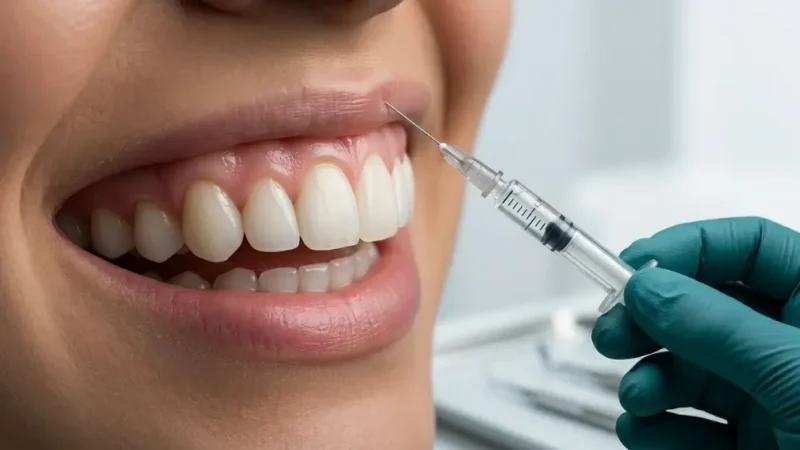
If your gummy smile is caused by a hyperactive upper lip, Botox is a game-changer. It is fast, virtually painless, and requires zero downtime. By injecting a small amount of botulinum toxin into specific muscles, the lip relaxes, so it doesn’t retract so high when you laugh or smile.
- Injection Points: The base of the nose, to calm the muscles responsible for lifting the lip.
- Expected Results: You’ll start to notice a difference in 3 to 5 days, with the full effect settling in at the 2-week mark.
- Duration: The results typically last 3 to 4 months. It’s the perfect option for those who want a visible change without committing to surgery.
Orthodontic Treatment
Sometimes, the gums aren’t the problem—the teeth are. If your teeth are tilted or misaligned, orthodontic treatment like braces or Invisalign can shift them into a better position. In more specific cases, we tiny anchors called TADs is used to “pull” the teeth upward, naturally bringing the gum line along with them for a more balanced look.
Gum Contouring and Crown Lengthening
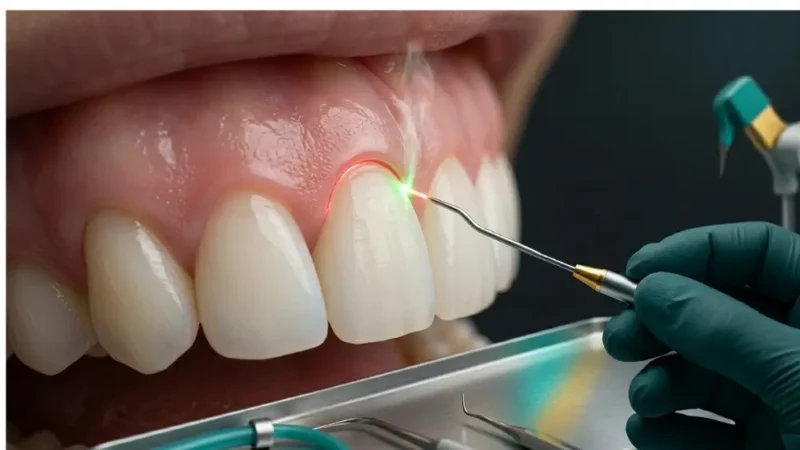
If your teeth look “short” because they are hiding under excess tissue, gum contouring is the answer. Using a specialized laser, extra gum is gently removed to reveal more of your tooth. If the bone underneath also needs a slight adjustment to keep the results permanent, crown lengthening is performed. The result? Teeth that look longer and a smile that looks much more proportional.
Lip Repositioning Surgery
For those looking for a permanent fix without the need for frequent injections, lip repositioning surgery is an excellent alternative to Botox. This is a short, outpatient procedure where a small incision is made on the inside of the upper lip.
By removing a thin strip of tissue and “tucking” the lip into a slightly lower position, the lip is limited to go high up when you smile. The appearance of your face doesn’t change—your lip stays in a more harmonious position over your teeth.
Orthognathic Surgery for Vertical Maxillary Excess
In cases where the gummy smile is caused by the jawbone being too long, we look toward orthognathic surgery. This is the most comprehensive solution available. A maxillofacial surgeon repositions the entire upper jaw (the maxilla) upward to correct the skeletal imbalance. While it involves a longer recovery, the results are life-changing, providing a permanent and perfectly balanced facial profile.
Cost of the Treatments
The investment for a gummy smile treatment depends entirely on the path you choose.
Botox: Generally the most budget-friendly entry point, though it requires maintenance every few months.
US: $200 – $500 per session. UK: £150 – £350 per session.
Note: Since results are temporary, this requires maintenance every 3–4 months.
Gum Contouring: Moderately priced and often considered a one-time investment.
US: $1,000 – $4,000 (depending on how many teeth are treated). UK: £800 – £3,000.
Surgical Options: Procedures like lip repositioning or jaw surgery have a higher upfront cost, but they offer a permanent solution that doesn’t require repetition.
Lip Repositioning Surgery: US: $2,500 – $5,000. UK: £2,000 – £4,500.
Orthognathic (Jaw) Surgery: US: $20,000 – $40,000 UK: £10,000 – £25,000+ (private).
Note: These costs often include hospital fees and anesthesia.
Treatment Options: A Comparative Overview
Treatment | Primary Indication | Procedure Type | Longevity | Recovery Time |
Gummy Smile Botox | Hyperactive upper lip | Non-surgical / Injection | 3–4 Months | Immediate |
Gingival Contouring | Excess gum tissue | Laser / Surgical | Permanent | 1–2 Weeks |
Crown Lengthening | Short clinical teeth | Surgical | Permanent | 2–4 Weeks |
Lip Repositioning | Hyperactive lip / Short lip | Surgical | Permanent | 1–2 Weeks |
Orthodontic Treatment | Malocclusion / Tooth position | Non-surgical | Permanent | None (Long duration) |
Orthognathic Surgery | Vertical Maxillary Excess | Major Surgery | Permanent | 6–12 Weeks |
Success Rates and Patient Satisfaction
According to studies published in the Journal of Clinical & Diagnostic Research, botox for gummy smile has a satisfaction rate of over 90% due to its ease and immediate results.
For surgical options, research indicates that lip repositioning surgery maintains a success rate of over 85% after a three-year follow-up, with most patients requiring no further adjustments. Orthognathic surgery, despite being the most intensive option, offers a 95% satisfaction rate regarding facial harmony and functional bite improvement.
What to Expect During Your Recovery
Recovery depends entirely on the chosen gummy smile solution. For non-surgical options like botox for gummy smile, there is virtually no downtime; patients can return to work immediately, though they are advised to avoid strenuous exercise for 24 hours.
For surgical treatments such as gum contouring or lip repositioning, you may experience:
- Mild Swelling: This is normal for the first 48 to 72 hours.
- Dietary Restrictions: You may need to stick to soft foods for several days to avoid irritating the sutures.
- Oral Hygiene: A special antimicrobial mouthwash is often prescribed to keep the area clean while brushing is restricted.
- Sensation: Most patients report manageable discomfort that is easily controlled with standard over-the-counter pain relief.
Benefits of Treating a Gummy Smile
Choosing to address a gummy smile is about more than just what you see in the mirror; it’s about how you feel when you engage with the world. While the visual change is often striking, the benefits go much deeper.
- A Natural Confidence Boost: Many patients tell us they used to “train” themselves to smile less or cover their mouths when they laughed. Treating the excess gum display removes that barrier, allowing you to be your most authentic self in photos and social settings.
- Better Oral Health: When excess gum tissue is the culprit, it can create small areas where plaque and bacteria love to hide. By contouring the gums, you make it much easier to keep your teeth clean, reducing the risk of inflammation and gingivitis.
- Harmonious Facial Balance: Every treatment we perform is designed to bring your features into proportion. By adjusting the “gum-to-tooth ratio,” we highlight your teeth and lips, creating a balanced look that complements your entire face.