
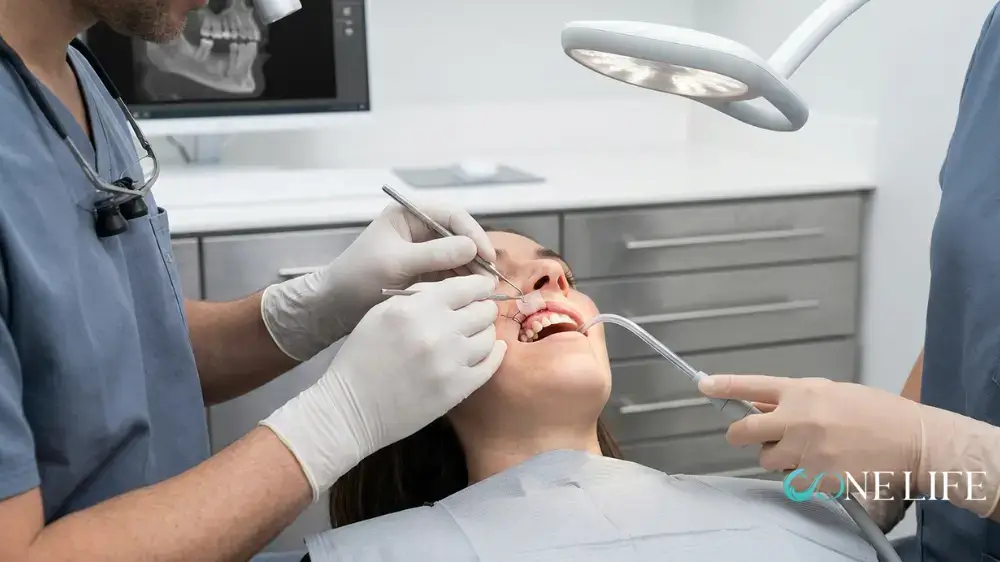
A gingival graft is one of the best proven ways to restore lost gum tissue, stop recession in its tracks and protect your teeth from decay. The procedure is performed under local anaesthesia, takes under two hours, and failure occurs in fewer than 2% of cases (as per Canadian Dental Association data). In this guide, a periodontist walks you through the three main techniques, what happens in the chair, and what recovery looks like.
What is a Gingival Graft?
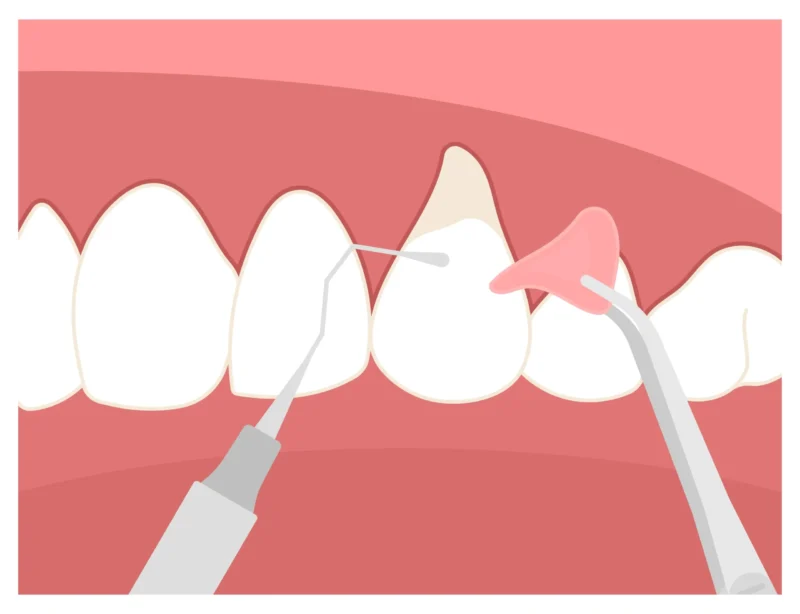
A gingival graft (also known as a gum graft or periodontal soft tissue graft) transplants gum tissue to an area where recession has exposed tooth roots. Grafted tissue is usually taken from the palate (upper mouth); once in place, itintegrates over a period of weeks until it fully fuses into the receded area. Gingival grafts are performed by periodontists. The procedure is carried out under local anaesthesia and typically lasts 60 to 90 minutes.
Do You Need Gum Grafting?
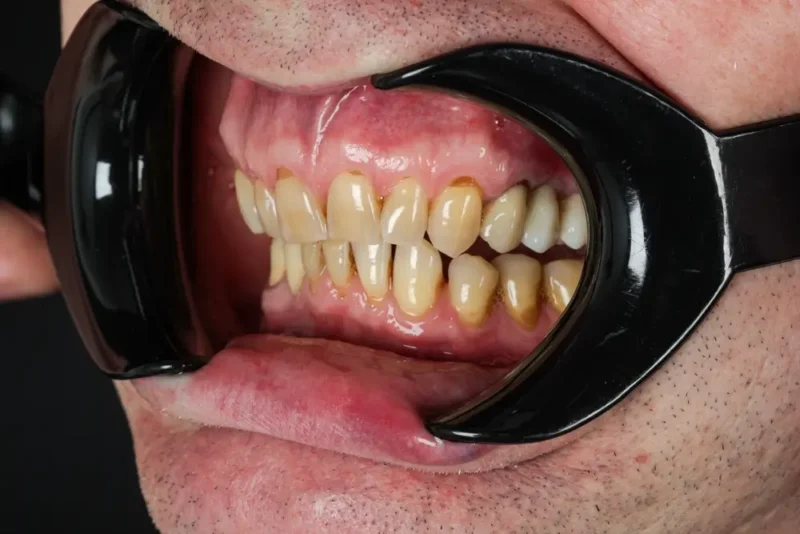
Gum recession is one of the most common dental conditions in adults. It does not stabilize on its own. Left untreated, it progresses, potentially leading to infections, further recession and even tooth loss.
The most common reasons a periodontist recommends a gingival graft are:
- Exposed tooth roots causing pain, sensitivity or aesthetic concerns
- Tooth sensitivity to hot, cold, sweet or acidic food
- Thin or fragile gum tissue at risk of further recession
- Preparation for dental implants
- Prevention of bone loss
The 3 Types of Gum Grafting
There are four main gingival grafting techniques in use today. Each has its own set of advantages, ideal candidates, and recovery times. A periodontist will assess you personally before recommending an approach. The right technique depends on the type and severity of your recession, how much keratinised tissue you have, the aesthetic demands of the area, and your own preferences. Let’s take a detailed look.
1. Connective Tissue Graft (CTG)
In a CTG, the periodontist makes a small flap in the roof of the mouth and removes subepithelial tissue from underneath. The harvested tissue is then positioned over the exposed tooth root and sutured. CTG ensures the most natural results, making CTG the preferred choice for the front teeth.
2. Free Gingival Graft (FGG)
A free gingival graft harvests transplanted tissue from the palate’s surface. The FGG technique’s main goal is to thicken thin or fragile gum tissue, rather than primarily to cover a root. The main trade-off is the palate is left to heal as an open wound (comparable to a pizza burn), which can be more tender in the first week.
3. Pedicle Grafting
A pedicle graft (or lateral graft) uses gum tissue harvested immediately next to the area being treated. The periodontist partially cuts a flap of healthy gum and rotates or slides it leaving one edge attached. This often supports excellent, predictable healing. If the neighbouring gum is thin or also receded, this technique isn’t suitable.
Allograft (Donor Tissue)
An allograft uses processed human donor tissue — commonly an acellular dermal matrix (ADM) such as AlloDerm — instead of tissue from the patient’s own mouth. The major benefit is comfort: there is no second surgical site.
Comparison of Techniques
Technique | Tissue Source | Primary Use | Success / Root Coverage | Recovery Comfort | Best Candidate |
Connective Tissue Graft (CTG) | Sub-surface tissue from palate | Covering exposed roots; aesthetics | ~80% root coverage (gold standard); often higher | Moderate — palate flap heals well | Front teeth, aesthetic cases, root coverage |
Free Gingival Graft (FGG) | Surface tissue from palate | Thickening thin gums; keratinised tissue | 76–95.5% root coverage; 83% stable up to 35 yrs | Lower — open palate donor site | Thin/fragile gums, stabilising recession |
Pedicle Graft | Adjacent gum tissue | Localised root coverage | High & predictable (retains blood supply) | Good — no palate site | Localised recession with healthy neighbouring gum |
Allograft (Donor) | Processed donor tissue (e.g. AlloDerm) | Root coverage; multiple teeth | 80–90% coverage; >90% survival | Best — no second surgical site | Multiple teeth, comfort-focused patients |
Are there Any Alternatives to Gum Grafting?
For patients who want to explore options before committing to surgery, it is important to be clear about what non-surgical approaches can and cannot do. No non-surgical treatment can replace lost gum tissue or permanently reverse recession. What alternatives can do is slow progression, manage symptoms, and — in very mild cases — buy time.
The main real alternatives to gingival grafting are:
- Composite bonding over exposed roots
- Orthodontic repositioning
- Topical antimicrobial treatments
- Pinhole Surgical Technique (PST
The Surgery Step by Step
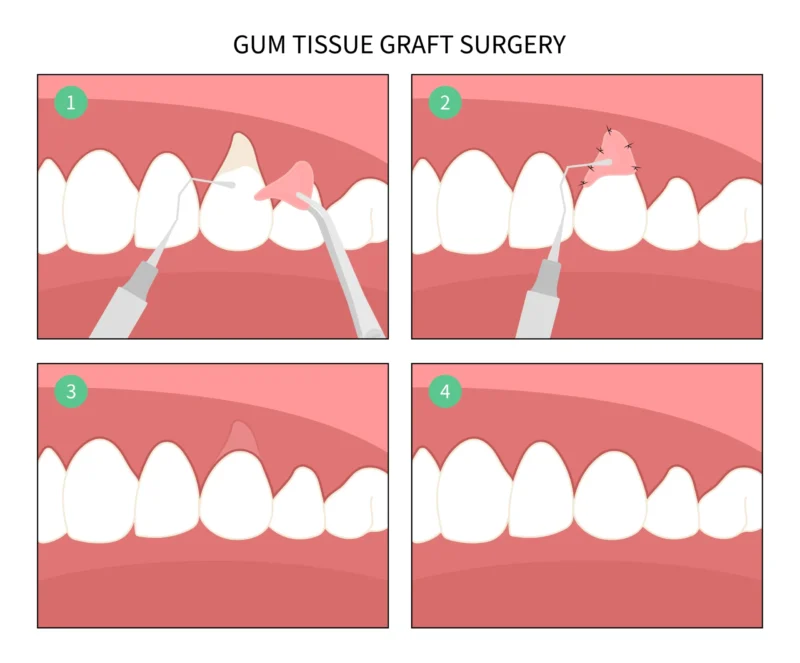
Most gingival graft procedures follow the same core sequence. Knowing what happens at each stage removes much of the anxiety patients feel beforehand. Here is what a typical gum graft looks like from start to finish.
- Consultation and assessment
Before any surgery, the periodontist measures the extent of recession, reviews your medical and dental history, and may take X-rays or 3D scans to confirm the diagnosis and plan the right technique.
- Anaesthesia
Local anaesthetic is administered so the procedure is pain-free. For patients with dental anxiety, sedation can usually be arranged in advance.
- Preparing the recipient site
The exposed root surface is thoroughly cleaned, and the periodontist lifts a small section of gum to create space for the new tissue.
- Harvesting the graft
Depending on the chosen technique, tissue is taken from the palate (CTG or FGG), from adjacent gum (pedicle), or prepared from donor tissue (allograft). Specialists such as Dr. Astolfi often favour minimally invasive harvesting techniques and platelet-rich fibrin (PRF) to support faster, more comfortable healing.
- Placing and securing the graft
The graft is shaped to match the recession site, positioned precisely, and secured with fine sutures.
- Final checks and aftercare instructions
The donor site is protected, and you are given detailed aftercare guidance before heading home the same day.
How Long Does Gum Grafting Take?
A single-site gingival graft is a relatively quick procedure. Treatment typically takes 60 to 90 minutes, and most patients return home the same day. The exact duration depends on 3 main factors:
- Number of teeth treated
- Technique used
- Complexity of the case
Is Surgery Painful?
During the procedure, you will not feel pain. The treatment is carried out under local anaesthesia, so the surgical siteis numb. Discomfort comes afterwards, once the anaesthetic wears off — and it is typically mild, with pain diminishing quickly, controlled with painkillers.
The most important factor affecting pain is the surgical technique. Procedures harvesting tissue from the palate (free gingival grafts) tend to leave a more tender donor area for the first week than connective tissue grafts, where the surface is stitched back over.
Post-OP Recovery & Aftercare
The graft needs time to establish a blood supply and integrate with the surrounding tissue. Your aftercare in the first two weeks is what protects that process. Bear in mind, the success of a gingival graft depends almost as much on what happens after surgery as on the procedure itself.
The core aftercare principles are:
- Eat only soft foods for 1-2 weeks: Yogurt, scrambled eggs, mashed potatoes, smoothies, soup and soft pasta are ideal.
- Do not brush or floss the graft site:Until your periodontist confirms it is safe.
- Rinse gently: A gentle rinse of half a teaspoon of salt in an 8-ounce glass of warm water helps keep the area clean without disrupting the graft.
- Do not smoke: Smoking is one of the leading causes of graft failure.
- Avoid pulling on or inspecting the area:Lifting the lip to check the graft can disturb the sutures and slow healing.
- Take prescribed medication:as directed by your periodontist
How Long Until I Recover?
Recovery typically takes 1 to 2 weeks, while complete healing and integration of the graft may take several weeks to months. Here is what to expect along the way:
- Days 1–3 (peak phase):Swelling, mild discomfort and minor bleeding are at their most noticeable. Rest, soft foods, and pain management are the priorities.
- Week 1-2: After one week, the graft begins to connect with the surrounding tissue, appearing as a mixture of red-pink and white opaque areas — this is normal.
- Weeks 2–4:Discomfort largely resolves. Many patients return to most normal foods, guided by their periodontist.
- Weeks 6–8 and beyond:Most patients reach full recovery within 6 to 8 weeks, with full maturation taking up to three months. The graft now settles into its final colour, texture and thickness.
Benefits of a Gingival Graft
For most of our patients, a gingival graft is a procedure they feel happy about. It is simple, fast, painless and has a great impact in their overall health, quality of life and self-esteem. Its main benefits, in our opinion, would certainly include:
- Stops recession progressing
- Reduces or eliminates gum sensitivity
- Protects against root decay and bone loss
- Improves the gum line and smile
- Makes oral hygiene easier
- Supports dental implants
- Long-lasting results
Risks & Potential Complications
A gingival graft is a low-risk procedure — but it carries a small set of potential complications. Being informed is a reason to choose an experienced periodontist and follow aftercare instructions carefully. With the right technique, the right surgeon, and proper aftercare, it is one of the most predictable interventions in periodontal care.
The most relevant risks include:
- Graft failure
Rare. Under 2% cases when performed by experienced periodontists and patients follow post-operative care.
- Infection
Uncommon when antiseptic protocols are followed. Signs include increasing pain, swelling or discharge after the first few days.
- Excessive bleeding
Minor bleeding in the first 24 hours is normal. Sustained or heavy bleeding is not and requires prompt contact with your periodontist.
- Tissue shrinkage
All grafts shrink slightly during healing as the tissue contracts and stabilises. This is accounted for in how the graft is sized and positioned. Allografts may shrink marginally more than autografts during early healing.
- Colour or texture mismatch
Most noticeable with free gingival grafts, where the palate tissue can look slightly different to the surrounding gum in the short term. This typically improves significantly over several weeks.
- Donor site discomfort
The palate donor site in CTG and FGG procedures requires its own healing time, which adds to overall recovery. Most patients find it manageable, comparable to a mild pizza burn.
- Recurrence of recession
If the underlying causes — aggressive brushing, uncontrolled gum disease, orthodontic forces — are not addressed, recession can return. The graft itself does not cause recurrence; the original trigger does.
- Nerve sensitivity
Very rarely, temporary altered sensation may occur in the palate following tissue harvesting. This resolves on its own in the vast majority of cases.
How Much Do Gingival Grafts Cost?
The cost of a gingival graft varies depending on where you have treatment, which technique is used, and how many teeth are treated. Below is a clear breakdown by country, followed by a summary table.
United Kingdom
The average cost of a gum graft in the UK is between £750 and £1,200 per tooth. For patients needing multiple sites treated, the total cost rises proportionally. In the UK, gingival grafting is usually performed privately.
United States
In the US, gum grafting procedures typically range from $600 to $3,000 per tooth, depending on the type of graft, the number of teeth treated, and the geographic location. Free gingival grafts and pedicle grafts are similarly priced; allografts with specialist materials tend to be at the higher end.
How About Turkey?
Turkey has become one of the most established destinations for periodontal treatment in Europe. The cost of gum graft treatment in Turkey is typically between £100 and £350 per tooth or $200–$350, compared to $600–$1,200 in the United States.
Turkey’s dental sector is regulated by the Turkish Dental Association and the Ministry of Health, both of which set and enforce clinical standards for licensed clinics.
Cost Comparison Table
UK | USA | Turkey | |
Cost per tooth | £750–£1,200 | $600–$2,000 | £100–£350 / $200–$350 |
Multiple teeth | Significant cumulative cost | Significant cumulative cost | Most cost-effective at volume |
Typical saving vs UK | — | Comparable | Up to 70–80% |
Regulatory body | General Dental Council (GDC) | American Dental Association (ADA) | Turkish Dental Association / Ministry of Health |
Material standards | CE / MHRA | FDA | CE / FDA |
Dental tourism infrastructure | N/A | N/A | Established; multilingual coordination |
Is Gum Grafting Covered by the NHS?
In most cases, no. Most patients in England, Scotland, Wales and Northern Ireland will need to access gum grafting through a private periodontist. There are rare exceptions where NHS specialist treatment may be available via referral, typically for severe or complex cases. Waiting times for NHS specialist periodontal services can be lengthy, however.
Will Insurance Pay for Gum Graft?
In the UK, most standard dental insurance policies do not cover periodontal soft tissue surgery as standard. In the US, dental insurance may cover a portion of the cost when the procedure is medically necessary — for example, when recession is causing documented bone loss, root decay or significant functional impairment.
Long-Term Care & Oral Hygiene
A gingival graft is not a permanent fix. Results are durable for over 10 years only with the right maintenance andthorough oral hygiene. The key habits that protect a graft long-term are:
- Switch to a soft-bristled toothbrush
- Use correct brushing technique
- Maintain regular hygienist appointments
- Address any bite issues
- Do not smoke
- Attend periodontal follow-up appointments