
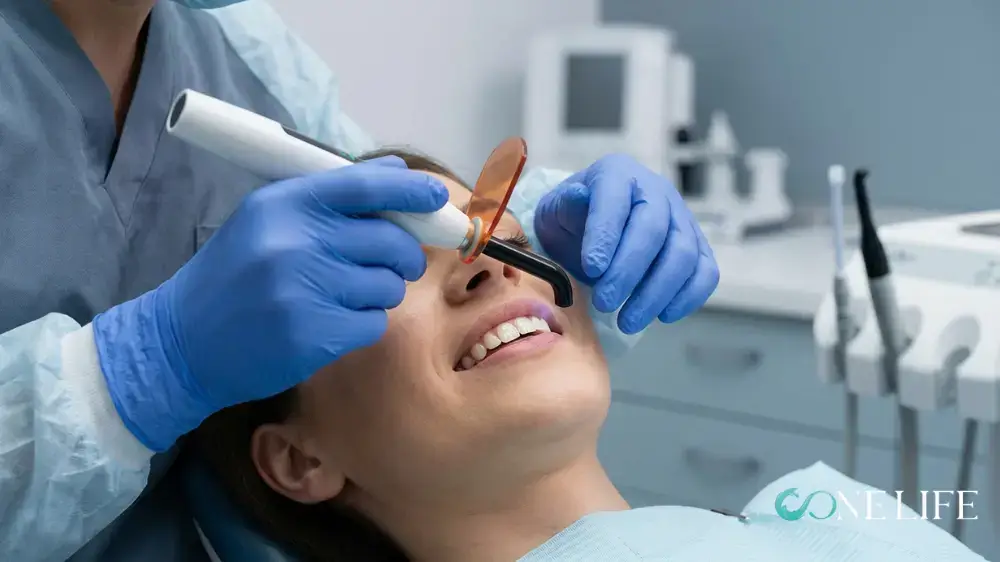
What if you could fix your smile in an afternoon? If you have a chip, a crack, a gap, composite bonding is likely the treatment to recommend. A tooth-coloured resin is applied to the tooth, sculpted by hand, and hardened with a UV light. In the UK, prices start from £200 per tooth; in the US, from $300. Results are immediate and, with proper care, can last 5 to 10 years. This guide covers how the procedure works, what it costs, and how to make results last the longest.
What is Composite Bonding?
Composite bonding solves minor dental imperfections by applying a tooth-colored resin to cover, fill or restore worn-down teeth. It requires no laboratory work and, in most cases, no shaving down of enamel. Composite resin has a survival rate of 93% at five years (Journal of Esthetic and Restorative Dentistry, 2026), making teeth bonding one of the safest, most conservative and cost-effective treatments.
Composite bonding can fix:
- Chipped or cracked teeth
- Gaps between teeth(diastemas)
- Tooth discolouration
- Short or uneven teeth
- Misshapen teeth
- Minor misalignment
- Exposed tooth roots
- Worn-down teeth
- Small cavities
Are You a Candidate?
Composite bonding is suitable for most healthy adults looking to correct minor cosmetic imperfections. The procedure is minimally invasive, reversible, and appropriate for a wide range of patients.
You are likely a good candidate if you:
- Have healthy teeth and gums
- Want to fix minor cosmetic issues such as chips, gaps or discolouration
- Are looking for an immediate result
- Prefer a reversible, non-invasive option
- Have realistic expectations — bonding is not permanent
You may not be suitable if you:
- Have severe tooth decay or periodontal (gum) disease
- Suffer from bruxism (teeth grinding) without a night guard
- Have heavily stained teeth
- Need major structural correction
- Have a deep bite or edge-to-edge bite
Composite Bonding Step by Step
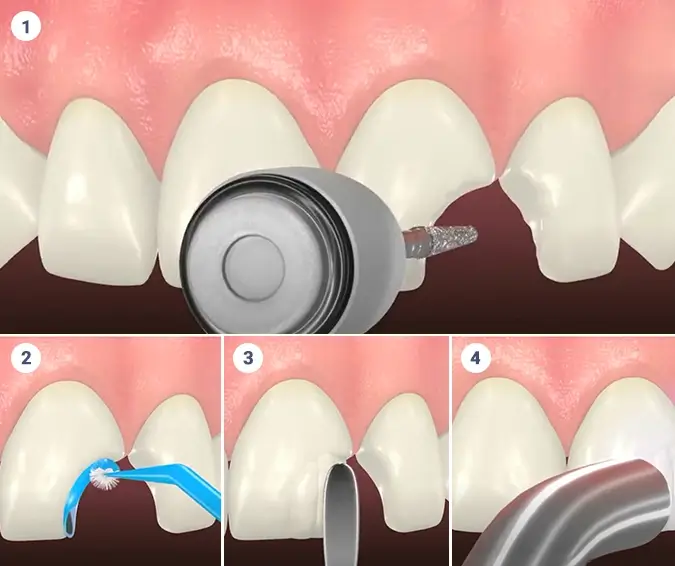
The composite bonding process takes 30 to 60 minutes per tooth. It requires no laboratory work, no enamel reduction in most cases, no anesthesia and no recovery period. At OONE LIFE, we use digital smile design to blend your face, teeth and smile in harmony.
1. Digital Smile Design
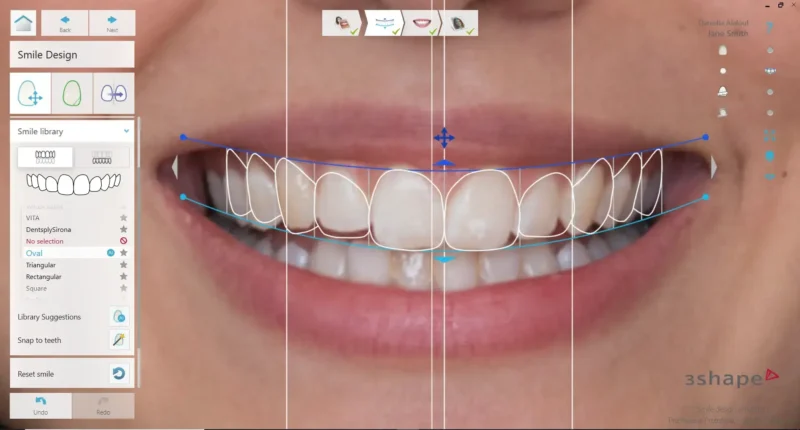
Digital Smile Design (DSD) is the planning stage. If teeth whitening is recommended, it is completed in the weeks prior to bonding, and the resin is then shade-matched. During this stage, your dentist analyses facial proportions, tooth-to-gum ratios, midline alignment and your preferences:
- Facial proportions
- Tooth-to-gum ratios
- Midline alignment
- Tooth shape and symmetry
- Smile shape
2. Choosing Your Color Shade
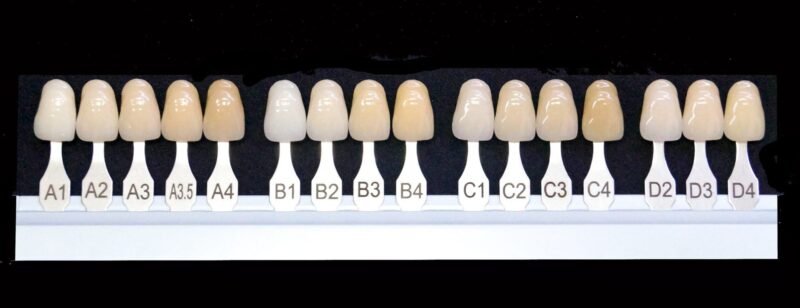
A poor-matched shade makes bonding noticeable. A well-matched one invisible. The standard for shade selection is the VITA shade guide, which organises tooth colours into four groups. A1 and B1 are the most frequently requested.
- A shades (A1–A4): reddish-brown tones
- B shades (B1–B4): reddish-yellow tones
- C shades (C1–C4): grey tones
- D shades (D2–D4): reddish-grey tones
3. Tooth Preparation
Once the shade is confirmed, your dentist lightly roughens the surface of the tooth using a mild gel — typically a 30–40% phosphoric acid solution applied for 15 to 30 seconds. This creates microscopic pores in the enamel that allow the bonding to grip the tooth securely. No drilling is usually required and the process is entirely painless.
4. Applying the Bonding
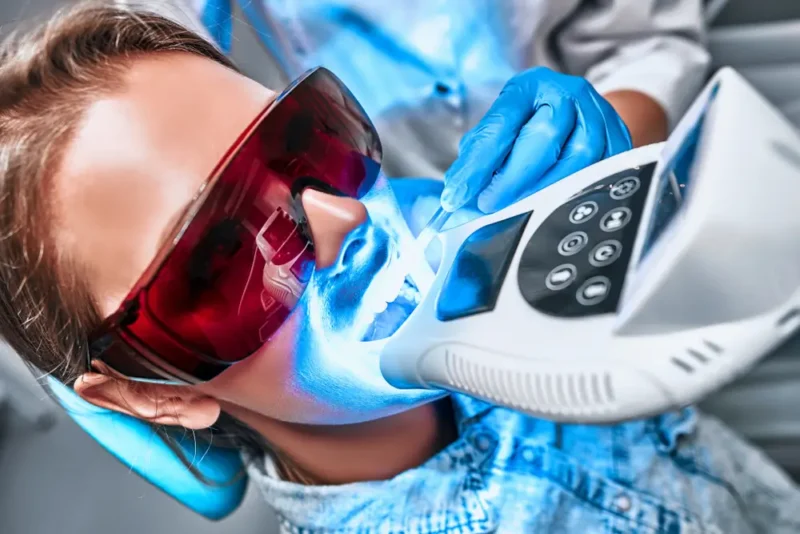
A thin layer of liquid bonding is brushed onto the etched surface and cured with an LED light for 10 to 20 seconds. This first layer acts as a bridge between the enamel and the composite resin, ensuring a firm, durable bond.
5. Sculpting the Resin
An experienced cosmetic dentist works much like a sculptor, building up the resin incrementally to correct the imperfection while matching the natural contours and translucency of the surrounding teeth.
6. Bite Check & Polishing
Once the resin has been cured, your dentist trims and refines the shape using fine discs and burs, then polishes the surface to a natural shine. The final step is your dentist will ask you to bite down to confirm the bonding doesn’t interfere with your occlusion (the way your teeth meet).
How Long Does Composite Bonding Take?
A single tooth typically takes 30 to 60 minutes from start to finish. A full smile makeover — treating six to ten teeth — can take anywhere from 3 to 6 hours, which may be split across two appointments. There is no recovery time. Most patients return to work, eat, and go about their normal day immediately after the appointment.
Composite Bonding Cost
Composite bonding is one of the most affordable cosmetic dental treatments available. That said, prices vary depending on where you are and how many teeth are being treated. Here is a comprehensive guide for 2026.
Teeth Bonding Price UK
Private composite bonding in the UK typically costs £200–£500 per tooth, with most patients paying around £300–£350. Edge bonding — where resin is applied only to the edges of a tooth to correct minor chips — sits at the lower end of the range.
Treatment Type | Cost Per Tooth (UK) | Typical Use Case |
Edge bonding | £150–£250 | Minor chips, small gaps, worn edges |
Standard composite bonding | £250–£400 | Discolouration, reshaping, diastemas |
Full composite veneers | £350–£500 | Complete tooth surface coverage |
Full smile makeover (6–10 teeth) | £1,200–£3,500 | Comprehensive aesthetic transformation |
Is Composite Bonding Covered by the NHS?
No — not for cosmetic purposes. There is, however, one exception. If your dentist confirms the bonding is clinically necessary — for example, to repair a tooth fractured in an accident or damaged by decay — it would usually fall under Band 2 NHS dentistry, costing £73.50 in England as of 2026.
Cost in the US
The national average cost for teeth bonding in the US is $431, with prices ranging between $288 and $915 per tooth depending on location, complexity and the dentist’s experience. More complex cases — such as closing wide diastemas or full arch reshaping — can reach up to $1,000 per tooth at specialist cosmetic practices.
Treatment Type | Cost Per Tooth (US) | Notes |
Basic bonding | $288–$400 | Minor chips, small repairs |
Standard composite bonding | $400–$600 | Gap closure, reshaping, discolouration |
Complex cases | $600–$1,000+ | Multiple teeth, extensive sculpting |
What about Turkey?
Turkey has become one of the world’s leading destinations for dental tourism, and composite bonding is among the most requested treatments. The reason: prices are 50 to 70% lower with no reduction in clinical quality. Composite bonding in Turkey costs £130–£220 per tooth in 2026, compared to £200–£500 at UK private practices.
For patients treating multiple teeth, all-inclusive packages offer considerably better value:
Package | Included | Approximate Cost (2026) |
4 teeth | Treatment + consultation | £600–£900 |
8 teeth | Treatment + 4-night hotel + transfers | £1,200–£1,800 |
Full smile (10+ teeth) | Treatment + hotel + transfers + aftercare | £1,500–£2,500 |
Before and After Composite Bonding
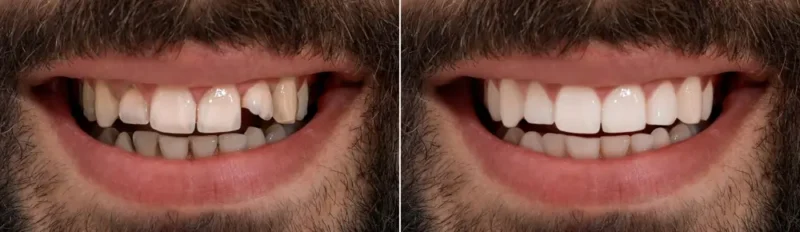
Before-and-after images published by dental clinics — including those here and on our social media — are often photographed under ideal lighting conditions and at flattering angles. This does not mean the results are not genuine, but it does mean that a realistic in-person consultation is always more informative than any photograph. At OONE LIFE, we use Digital Smile Design to show you a projected outcome before treatment begins.
How Long Does Composite Bonding Last?
Composite bonding typically lasts between 5 and 10 years, though most patients see minor staining or surface dulling between years 3 and 5. For context, here is how composite bonding longevity compares to alternative treatments:
Treatment | Average Lifespan | Stain Resistance | Repairability |
Composite bonding | 5–10 years | Moderate | Easy |
Composite veneers | 5–7 years | Moderate | Easy |
Porcelain veneers | 10–15+ years | High | Difficult |
Dental crowns | 10–20+ years | High | Complex |
The following factors shorten the lifespan of composite bonding:
- Teeth grinding
- Staining drinks: coffee, tea, red wine and cola
- Smoking
- Biting hard objects
- Using abrasive toothpaste
- Alcohol-based mouthwash
Long Term Care & Maintenance
With the right habits, composite bonding can remain looking excellent for the full upper end of its lifespan. The following are the aftercare recommendations of OONE LIFE’s periodontist, Dr. Víctor Astolfi:
Daily habits:
- Brush twice daily with a soft-bristled toothbrush
- Use a non-abrasive fluoride toothpaste
- Floss daily to prevent plaque build-up around bonded areas
- Use an alcohol-free mouthwash
- Rinse with water after consuming staining foods or drinks
Professional maintenance:
- Attend a dental check-up every six months
- Book a professional polish every 6 to 12 months
- If you grind your teeth, wear a custom-fitted night guard
What to do if your bonding chips or stains:
Contact your dentist promptly. An advantage of composite bonding is that chips can almost always be repaired chairside — a quick, inexpensive fix.
Can Composite Bonding Break or Chip?
Yes. Composite resin is not as hard as natural tooth enamel and is softer than porcelain. This means it is more vulnerable to impact, excessive pressure, and certain habits. What causes composite bonding to break or chip?
- Biting hard foods
- Using teeth as tools
- Teeth grinding (bruxism)
- Accidental impact
- Poor bonding technique
Composite Bonding Pros & Cons
Composite bonding is an excellent treatment for the right patient — but like every dental procedure, it has its own limitations and disadvantages when compared to other alternatives (see below). Here is an honest, balanced assessmentof the best and worst sides of teeth bonding.
Pros of Composite Bonding
- Single appointment: the entire procedure is completed chairside in one visit, with no laboratory waiting time and no temporary restorations
- Minimally invasive: in most cases, no enamel is removed and no drilling is required, preserving the natural tooth structure completely
- No anaesthesia needed: the procedure is painless for the vast majority of patients
- Reversible: because no enamel is removed, the composite can be polished off and the tooth returned to its original state at any point
- Affordable: significantly cheaper than porcelain veneers or crowns, with UK prices starting from £200 per tooth and US prices from $300
- Immediate results: patients leave the chair with a visibly improved smile the same day
- Easy to repair: chips and minor fractures can almost always be fixed chairside with a simple resin addition, without replacing the entire restoration
- Versatile: addresses a wide range of cosmetic concerns including chips, gaps, discolouration, uneven edges and exposed roots
- No downtime: patients return to normal activities, including eating, immediately after treatment
Cons of Composite Bonding
- Short lifespan: composite bonding lasts 5–10 years compared to 10–15+ years for porcelain veneers; it will need refreshing or replacing within that window
- Susceptible to staining: composite resin is more porous than porcelain and picks up colour from coffee, tea, red wine and tobacco over time, particularly in the first 48 hours after placement
- Cannot be whitened: composite resin does not respond to bleaching agents; if you whiten your teeth after bonding, your natural enamel will brighten but the bonded areas will not, creating a visible mismatch
- Require maintenance: professional polishing every 6 to 12 months is recommended to maintain surface lustre; this is an ongoing cost porcelain veneers do not require to the same degree
- Not suitable for severe cases: heavily stained teeth, major structural damage, or significant misalignment are better addressed with veneers, crowns or orthodontics
- Skill-dependent: the quality of the outcome varies between dentists; composite bonding is as much an art as a clinical procedure, and an inexperienced clinician can produce a result that looks obviously artificial
- Vulnerable to grinding: patients with unmanaged bruxism will shorten the lifespan of their bonding significantly without a custom night guard
Alternatives to Composite Bonding: Veneers, Crowns & More
Composite bonding is the right starting point for many patients — but it is not the only option, and it is not always the best one. Here is a clear overview of the main alternatives, how they compare on cost, longevity and invasiveness.
Composite Bonding vs Porcelain Veneers
Porcelain veneers require a small amount of enamel removal — typically 0.3 to 0.5mm — to create space for the shell. This makes them an irreversible procedure: once enamel is removed, it cannot be restored.
The table below summarises the key differences:
Factor | Composite Bonding | Porcelain Veneers |
Cost (UK) | £200–£500 per tooth | £600–£1,100 per tooth |
Cost (US) | $300–$1,000 per tooth | $925–$2,500 per tooth |
Lifespan | 5–10 years | 10–15+ years |
Appointments | 1 | 2–3 |
Enamel removal | None in most cases | 0.3–0.5mm |
Reversibility | Fully reversible | Irreversible |
Stain resistance | Moderate | High |
Repairability | Easy — chairside | Difficult — full replacement |
10-year survival rate | ~60% (anterior teeth) | ~95.5% |
Best for | Minor corrections, reversibility | Comprehensive, long-lasting transformation |
Dental crowns
Dental crowns require substantial enamel removal and are irreversible — but they last for 10 to 20+ years. Cost in the UK ranges from £500 to £1,500 per tooth privately; in the US, from $1,000 to $3,500.
Teeth whitening
Appropriate for patients whose concern is tooth colour rather than shape, chips or gaps. Professional in-clinic whitening typically costs £300–£600 in the UK and can be completed in a single session.
Orthodontics (Invisalign or fixed braces)
For patients whose gaps or misalignment are the result of tooth position rather than tooth shape. Composite bonding can close small diastemas, but it cannot move teeth. For anything beyond a minor gap, orthodontic treatment might be needed. Clear aligner treatment in the UK typically costs £1,500–£5,500 .
Dental bridges
They are not a cosmetic alternative to bonding in the conventional sense, but they are worth mentioning for patients who have lost teeth and are considering their options alongside cosmetic treatment.