
Dental implants are one of the most reliable and long-lasting solutions for missing teeth. But their long-term success depends on one critical factor: how consistently and correctly you clean them.
This guide covers everything you need to know about cleaning dental implants — the right tools, daily routines, professional protocols, and the mistakes that silently damage implants over time.
Why Proper Maintenance Is Vital for Your Dental Implants
Dental implants are engineered to last a lifetime. Their reported success rate reaches up to 97%, making them the gold standard in restorative dentistry. Yet that track record hinges entirely on proper, daily care.
Implants cannot develop cavities — but the gum tissue and bone surrounding them remain fully vulnerable to infection. Without consistent dental implants cleaning, bacteria accumulate silently at the implant base and trigger an inflammatory process that can destroy the bone supporting your implant.
Early warning signs of neglected implant hygiene:
- Redness, swelling or tenderness around the implant
- Bleeding when brushing or flossing
- Persistent bad breath or an unpleasant taste
- Gum recession around the implant crown
- Discomfort when chewing
Improper cleaning is one of the leading causes of implant failure, primarily through peri-implantitis. What makes it dangerous is that it often develops with no pain in the early stages.
Unlike natural teeth, implants lack the periodontal ligament that provides immune defense against infection. This means the surrounding tissue and bone carry the entire burden of protection — and both are highly vulnerable to bacterial plaque.
Bacterial biofilm forms on implant surfaces within hours of cleaning and hardens into tartar within days if not disrupted. This is why a thorough daily cleaning routine for dental implants is not a recommendation — it is a necessity.
Do Dental Implants Need to Be Removed for Cleaning?
This is one of the most common questions patients ask — and the answer depends on the type of implant restoration you have.
Fixed implants (single crowns, fixed bridges, All-on-4) are permanently attached to the implant post and cannot and should not be removed at home. They are cleaned in place, just like natural teeth, using specific tools and techniques described in the next section.
Removable implant-supported dentures (also called snap-in or overdentures) are designed to be taken out daily. These should be removed daily, soaked in a denture-cleaning solution, and the underside gently brushed with a soft denture brush. The implant posts and gum tissue underneath must also be cleaned thoroughly before reinsertion.
As a general rule:
- Fixed implants → cleaned in place, never removed at home
- Removable overdentures → removed daily for cleaning
- For larger restorations, your dentist may remove the prosthetic teeth for professional cleaning during scheduled check-ups
If you are unsure which type of restoration you have, ask your implant specialist. The cleaning protocol differs significantly — and using the wrong approach can cause damage.
How to Clean Dental Implants at Home: Step-by-Step
Consistent at-home cleaning of dental implants is the foundation of long-term implant health. The routine is straightforward — but the tools and technique matter.
The Right Tools for Cleaning Dental Implants
Using the wrong products can scratch implant surfaces, irritate gum tissue, or accelerate wear on the crown. Use toothpaste that lacks abrasive ingredients such as baking soda or stain-remover agents, as these may wear on acrylic and remove glaze from porcelain implants.
Recommended tools:
- Soft-bristle toothbrush (manual or electric) — gentle on gum tissue and effective at removing plaque
- Low-abrasive, non-whitening toothpaste — implant-safe formulas preferred
- Implant-specific floss (e.g. Super Floss, Bridge & Implant Floss) — stiff-ended for easy threading
- Interdental brushes with plastic-coated wire (e.g. TePe, GUM Proxabrush) — ideal for cleaning between implant crowns
- Water flosser with implant tip (e.g. Waterpik) — flushes bacteria from below the gumline
- Alcohol-free antimicrobial mouthwash — reduces bacterial load without drying gum tissue
Alcohol-free mouthwash is recommended for dental implant maintenance, as it is gentler on gum tissue and less drying. Antimicrobial formulas help reduce bacteria while supporting overall oral hygiene.
Daily Brushing Technique for Implants
Brushing technique around implants requires slightly more attention than brushing natural teeth. Follow these steps:
- Use a soft-bristle brush — electric or manual
- Hold the brush at a 45-degree angle to the gumline
- Use gentle circular motions around the implant crown and base
- Pay attention to the implant-gum junction — this is where biofilm accumulates first
- Brush for a minimum of two minutes, twice daily
- Do not apply excessive pressure — aggressive brushing can scratch the implant surface and damage surrounding gum tissue
Flossing and Interdental Cleaning Around Implants
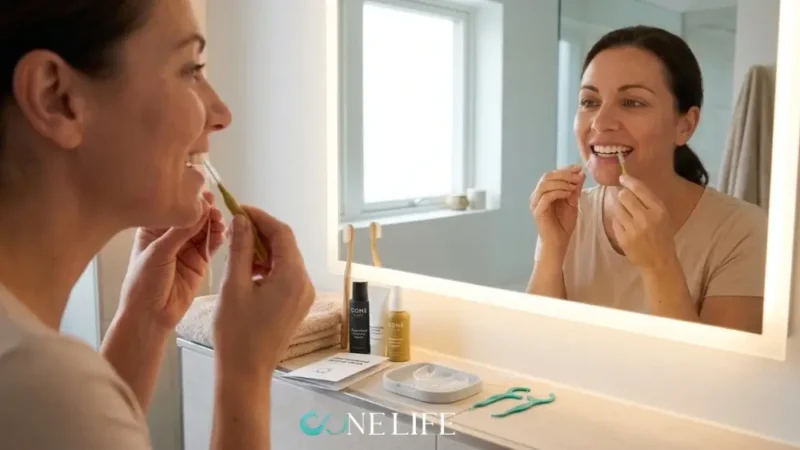
Wrap implant floss gently around the base of the implant crown in a C-shape and move back and forth to clean beneath the crown and along the gumline. This technique removes the biofilm that brushing alone cannot reach.
For water flossers:
- Fit a non-metal tip, set the water flosser to low pressure, and angle the tip at approximately 45 degrees to the gumline.
- Use it before brushing, so you are not flushing away the fluoride from your toothpaste
- Avoid the high-pressure setting — it can disrupt gum tissue around the implant seal
For interdental brushes:
- Choose a size that fits snugly but comfortably between implants
- Insert gently without forcing — never push against resistance
- Move back and forth in short strokes to disrupt plaque
Mouthwash: What to Use and What to Avoid
Mouthwash is a valuable addition to your implant hygiene routine — but not all formulas are suitable.
Use:
- Alcohol-free antimicrobial rinses (e.g. chlorhexidine-based, as directed by your dentist)
- Fluoride mouthwashes for supporting gum and residual natural tooth health
Avoid:
- Mouthwashes with high alcohol content — drying and potentially irritating to peri-implant tissue
- Whitening rinses — may contain abrasive agents harmful to implant surfaces
- Strong whitening agents may irritate tissues or contribute to dryness around the implant site
Swish for 30 to 60 seconds and avoid rinsing with water afterwards to maintain effectiveness.
Dental Implants Cleaning: Single Implant vs. All-on-4 vs. Implant-Supported Dentures
Different implant restorations require slightly different cleaning approaches. The table below summarizes the key differences:
Restoration Type | Removable? | Key Cleaning Tools | Special Considerations |
Single implant crown | No | Soft brush, implant floss, water flosser | Focus on gumline junction and interproximal spaces |
Implant-supported bridge | No | Floss threader, water flosser, interdental brush | Clean under the bridge daily — food debris accumulates easily |
All-on-4 fixed prosthesis | No | Sulcus brush, water flosser, implant floss | Extra attention to food debris between bridge base and gumline |
Snap-in overdenture | Yes | Denture brush, soft brush for posts | Remove daily, soak overnight, clean posts and gum tissue |
All-on-4 implants require particular diligence. The full-arch prosthesis creates more surface area where bacteria can hide, especially along the tissue bar underneath. A sulcus brush — roughly one-third the width of a regular toothbrush — is especially effective at cleaning the part of the bridge that transitions to soft tissue.
Comparing Natural Teeth vs. Dental Implants Maintenance
Understanding the differences between caring for natural teeth and implants helps set the right expectations and avoid common errors.
Aspect | Natural Teeth | Dental Implants |
Cavity risk | Yes | No |
Gum disease risk | Yes | Yes (peri-implantitis) |
Bone loss risk | Yes (periodontitis) | Yes (if poorly maintained) |
Sensitivity to pressure | Yes (via ligament) | Reduced — no periodontal ligament |
Toothpaste type | Standard fluoride | Low-abrasive, non-whitening |
Floss type | Standard dental floss | Implant-specific or super floss |
Professional cleaning tools | Standard metal scalers | Implant-safe plastic or resin instruments |
Recommended check-up frequency | Every 6 months | Every 3–6 months (implant-specific) |
As summary, implants do not require more effort than natural teeth, but they do require the right technique and the right tools. Using standard dental instruments or abrasive products can damage implants over time.
What Happens at Your Check-Up?
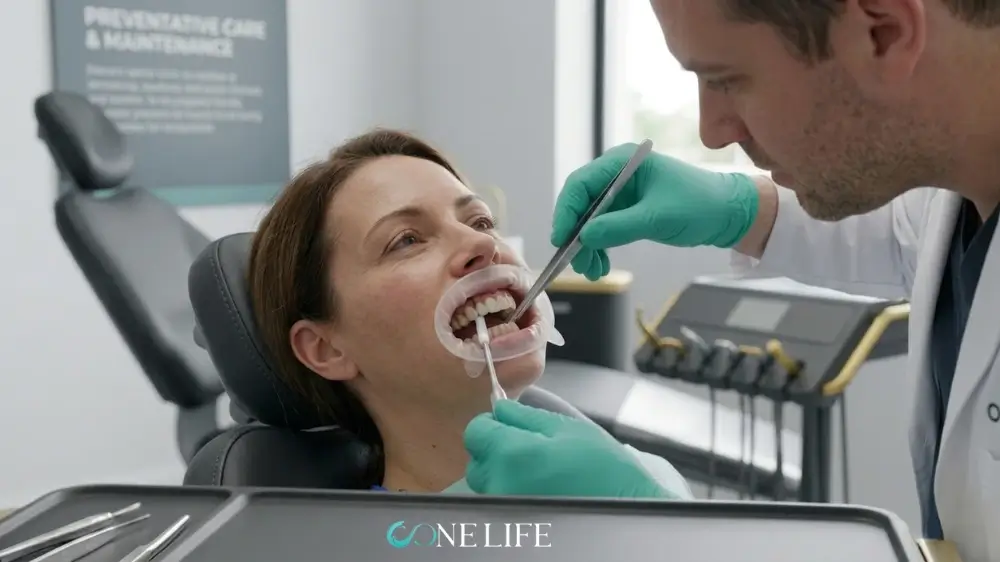
Professional maintenance is an essential pillar of long-term dental implant care — and it goes well beyond a standard teeth cleaning.
Dental instruments used on natural teeth can scratch the implant, crown, or abutment surface, potentially leading to bacterial accumulation. Hygienists use specially designed implant-safe tools made from plastics, resins, or carbon fiber to clean effectively without damaging the restoration.
During a professional implant maintenance visit, your specialist will:
- Remove hardened tartar and plaque deposits with implant-safe instruments
- Measure peri-implant pocket depths to detect early bone loss
- Assess gum tissue health and check for bleeding or recession
- Examine the implant crown and abutment for signs of wear or micro-fractures
- Take targeted X-rays if bone loss is suspected
- Provide personalized guidance on optimizing your home care routine
Professional cleaning should be carried out at least twice a year. Patients who have lost teeth due to periodontitis should be aware that implants are less resistant to disease progression than natural teeth and require careful monitoring.
For higher-risk patients — smokers, diabetics, or those with a history of gum disease — quarterly visits are typically recommended.
The Most Common Cleaning Mistakes That Damage Implants
Even well-intentioned patients make errors that compromise implant longevity. Here are the most frequent mistakes.
- Using abrasive toothpaste — whitening or baking soda-based pastes scratch implant and crown surfaces, accelerating wear
- Brushing too hard — excess pressure damages gum tissue and can cause recession around the implant
- Skipping flossing — brushing alone does not remove biofilm from the implant-gum junction
- Using the wrong floss — standard waxed floss can shred and leave fibres that fuel bacterial growth; always use implant-specific floss
- Setting the water flosser too high — high-pressure settings can disrupt the peri-implant tissue seal
- Using alcohol-based mouthwash daily — dries oral tissue and can irritate the gum cuff around the implant
- Missing professional check-ups — tartar build-up that home cleaning cannot remove becomes a direct driver of peri-implantitis
- Ignoring early warning signs — bleeding, swelling or bad breath around an implant should prompt an immediate clinical assessment, not a wait-and-see approach
Statistics on Peri-Implantitis and Implant Failure Rates
Research published in the journal Antibiotics estimates that around 40% or more of five-year-old implants could be vulnerable to peri-implantitis. Left untreated, this condition leads directly to implant failure.
Key data points every implant patient should know:
- The average global implant failure rate is 3.1%, rising to 6% in the United States
- Failure rates can reach up to 20% in smokers — one of the most significant modifiable risk factors
- A meta-analysis covering a 20-year period found a mean implant survival rate of approximately 92%, which can decrease to around 78% when broader factors affecting longevity are considered
- Poor oral hygiene is one of the leading causes of peri-implantitis, alongside smoking, pre-existing gum disease, diabetes and improper implant placement
The conclusion is consistent across all sources: the single most controllable factor in implant survival is daily oral hygiene. Patients who clean their implants correctly and attend regular professional maintenance visits achieve dramatically better long-term outcomes.
Habits That Support Your Implant Health
Beyond brushing and flossing, several lifestyle habits have a direct and measurable impact on implant longevity.
- Eat a balanced diet rich in vitamins C and D, calcium and phosphorus — all critical for healthy bone and gum tissue
- Stay well hydrated — a dry mouth reduces saliva flow, which is the mouth’s natural defense against bacteria
- Wear a night guard if you grind your teeth — bruxism generates forces that can loosen crowns and fracture abutments over time
- Attend every professional maintenance appointment — even when your implants feel and look fine
Habits to reduce or eliminate:
- Smoking — tobacco use reduces blood flow to the gums, impairs healing and weakens the immune response, making it easier for bacteria to thrive around implants
- Excessive alcohol consumption — contributes to dry mouth and slows tissue healing
- Chewing hard objects — ice, pen lids, hard sweets and nutshells can chip implant crowns or fracture the prosthesis
- High sugar intake — feeds the bacterial biofilm that accumulates around the implant base
Simple choices today lead to a healthy smile for decades. If you stick to a good routine now, your implants will stay in great shape for years to come. Neglecting them today only creates avoidable problems later.