
Millions of people are missing at least one tooth and dental implants have become the best solution for good reason. Success rates consistently range between 95% and 98%, with long-term outcomes beyond 25 years at +75% with proper care. No bridge or denture can match that.
In this guide, you will find a clear, evidence-based breakdown of the 5 core benefits of dental implants — from bone preservation to aesthetics — so you can make a fully informed decision about your oral health.
What Are Dental Implants? A Quick Overview
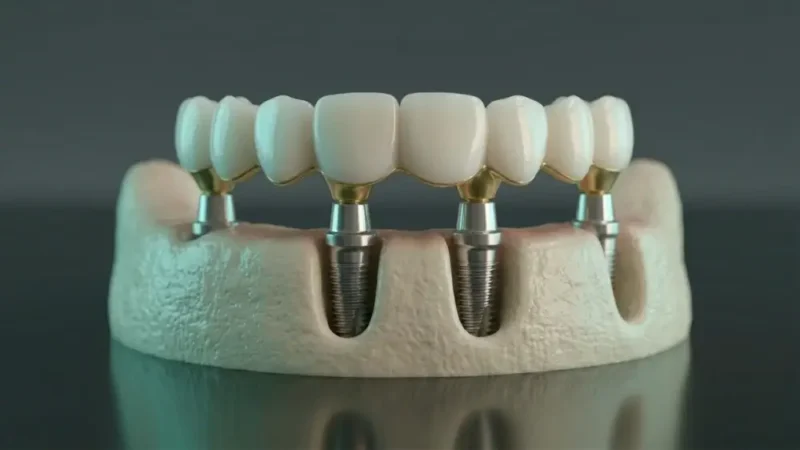
A dental implant is a small titanium post surgically inserted into the jawbone to replace a missing tooth root. Once it fuses with the bone —osseointegration — it provides a stable, permanent foundation for a crown, bridge, or denture.
Unlike removable dentures or bridges, dental implants replicate the full structure of a natural tooth: both the root and the visible crown. This makes them the most anatomically accurate tooth replacement option available in modern dentistry.
Today, titanium implants dominate the market, accounting for 93% of all placements, due to their durability and biocompatibility.
The Core Advantages of Dental Implants — Why Are They Superior?
Dental implants do not simply fill a gap. They restore function, protect surrounding structures, and deliver results that last. Below are the 5 main long-term advantages that set them apart from every other tooth replacement option.
1. Permanent and Long-Lasting Tooth Replacement
Dental implants are designed to last a lifetime. With proper care, a single dental implant can last 25 years or even a lifetime- a claim no bridge or denture can reliably make. Statistics from the Journal of Oral Implantology indicate that with careful oral hygiene, the survival rate of implants after 10 years is approximately 98%.
Dentures typically last 5–10 years and bridges last 7–15 years, meaning patients who choose those alternatives will almost certainly face repeat procedures and additional costs over time.
The secret lies in osseointegration. Once the titanium post fuses with the jawbone, it becomes a fixed, load-bearing structure — just like a natural tooth root. There is no adhesive, no clasping mechanism, no dependency on neighboring teeth. It is a stable, permanent part of your anatomy.
2. Jawbone Preservation and Facial Structure Protection
When a tooth is lost, the jawbone beneath it begins to deteriorate —as it is no longer receiving stimulation. Dental implants are the only tooth replacement option that actively prevents this bone loss. The titanium post mimics a natural tooth root, transmitting bite forces directly into the bone and keeping it healthy and dense.
Research published in Clinical Oral Implants Research shows that areas with implants maintain 90–95% of original bone volume over 20 years, compared to just 40–60% retention in denture-wearing areas. That difference compounds over decades.
Beyond bone health, this has a direct impact on facial appearance. Bone loss after tooth loss leads to a sunken, aged look around the jaw and cheeks. Implants preserve facial structure and prevent that deterioration — a benefit that is both medical and aesthetic.
3. Natural Look, Feel and Function
Dental implants are virtually indistinguishable from natural teeth. The custom crown placed on top is color-matched and shaped to blend seamlessly with your existing smile. Nobody will know — unless you tell them.
More importantly, implants function like natural teeth. They allow normal eating, speaking, and oral hygiene — with no slipping, no movement, and no impact on adjacent teeth. Patients who switch from dentures to implants consistently report a dramatic improvement in their confidence when eating and speaking in social situations.
This is not a cosmetic detail — it is a quality-of-life outcome. A 2023 longitudinal study following patients for 15 years found that implant recipients maintained better nutritional status and reported higher oral health-related quality of life compared to bridge or denture wearers.
4. No Impact on Adjacent Healthy Teeth
A dental bridge requires the two neighboring teeth to be filed down and capped with crowns — permanently altering healthy tooth structure. Dental implants require no such sacrifice.
Unlike bridges, implants don’t require altering nearby teeth, making them a fully independent restoration. Each implant stands on its own, anchored directly into the jawbone. This means your healthy teeth remain completely untouched, preserving their natural enamel and long-term integrity.
This advantage is especially significant for younger patients, where compromising healthy teeth early can lead to dental problems over the following decades. An implant protects not just the gap, but the entire surrounding dentition.
5. Improved Oral Health and Easier Hygiene
Dental implants are maintained exactly like natural teeth — brushing, flossing and regular dental check-ups are all that is required. There are no removal routines, no special soaking solutions, no adhesives.
Bridges, by contrast, create areas beneath the prosthetic tooth that are difficult to clean effectively, increasing the risk of decay and gum disease in the supporting teeth over time.
Dental Implants vs. Bridges vs. Dentures: Comparison
Choosing the right tooth replacement is a long-term decision. The table below summarizes the key differences across the three main options to help you compare clearly.
Feature | Dental Implants | Dental Bridges | Dentures |
Longevity | Lifetime (25+ years) | 7–15 years | 5–10 years |
Jawbone preservation | ✅ Yes — stimulates bone | ❌ No | ❌ No |
Impact on adjacent teeth | ✅ None | ❌ Requires filing down | ⚠️ Partial impact |
Stability | Fixed, permanent | Fixed | Removable, may slip |
Appearance | Natural, custom | Good | Variable |
Oral hygiene | Easy — brush & floss normally | More complex | Requires removal & soaking |
Success rate | 95–98% | Moderate | Variable |
Repeat procedures | Rarely needed | Likely every 10–15 years | Every 5–10 years |
Dental Implant Success Rates
The clinical evidence supporting dental implant success rates is extensive and consistent. Overall success rates range from 95% to 98%, with long-term outcomes extending beyond 25 years when patients maintain proper oral hygiene and attend regular check-ups.
Certain factors influence individual outcomes, including bone density, smoking habits, systemic health conditions such as diabetes, and the experience of the surgical team. Patients who do not smoke, maintain good oral hygiene and follow post-operative protocols consistently achieve the best long-term results.
Key figures worth knowing:
- All-on-4 implants — a full-arch solution using four strategically placed implants — report a 98.8% prosthetic survival rate.
- The average global implant failure rate is just 3.1%, reflecting a highly reliable procedure when performed by trained professionals.
- Tapered implants in low bone volume or immediate placement cases show a success rate of approximately 98.7% within two years.
Dental Implants in Turkey: Success Rates
Turkey has established itself as one of the leading global destinations for dental implants, combining internationally trained specialists, accredited clinics and significantly lower costs compared to Western Europe or North America — without compromising clinical standards.
Turkish dental clinics routinely use premium implant systems from globally recognized brands such as Straumann, Nobel BioCare and Dentsply Sirona. Patients benefit from the same materials and protocols used in top clinics across the UK, Germany or the US, at a fraction of the price. Immediate-load protocols — where the crown is attached shortly after implant placement — are progressing at an **11.7% CAGR globally, and leading Turkish clinics are fully equipped to offer them.
Dental implants in Turkey success rates consistently reaching 95–98% — the same figures reported in peer-reviewed clinical literature worldwide.