
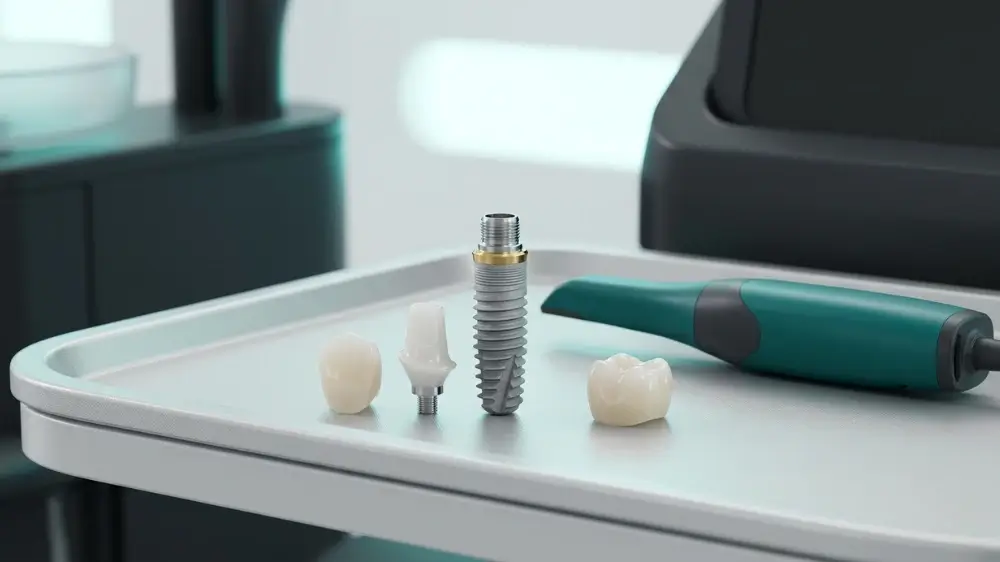
A dental implant is designed to last between 25 years and a lifetime. While the ceramic crown attached to the implant may require replacement every 10 to 15 years due to normal mechanical wear, the titanium or zirconia post integrated into the jawbone is considered a permanent solution. According to longitudinal clinical studies, dental implants show a 95% to 98% success rate over a 10-year period when placed by specialized surgeons and maintained with proper oral hygiene.
To ensure this longevity, factors such as bone density, the systemic health of the patient (e.g., controlled diabetes), and the quality of the implant brand are decisive.
What is the average lifespan of a dental implant?
The average lifespan of a dental implant post is 20 to 25 years, whereas the prosthetic crown typically lasts 10 to 15 years. Statistical data from the International Journal of Implant Dentistry suggests that with 6-month professional cleanings, over 90% of implants remain fully functional after 20 years. Because the post is biologically fused to your bone through a process called osseointegration, it does not decay like a natural tooth.
However, the crown is subject to the same biting forces as natural enamel. Over a decade of chewing, even high-grade Zirconia or E-max porcelain may develop micro-fractures or staining, necessitating a simple replacement of the top part without disturbing the underlying implant.
Key Statistics: Dental Implant Success Rates in 2026
Modern dental implantology boasts one of the highest success rates in elective surgery, consistently exceeding 97%. Data from global clinical registries in 2026 indicates that failures are rare and usually occur within the first six months (early failure) or after several years due to gum disease (late failure).
Timeframe | Success Rate | Primary Factor for Success |
1 Year | 98.5% | Surgical precision and sterile environment. |
5 Years | 97.2% | Proper osseointegration and initial healing. |
10 Years | 95.8% | Maintenance of gum health and bone levels. |
20+ Years | 90% – 94% | Lifestyle factors (smoking, hygiene, systemic health). |
Short-term vs. Long-term durability
Short-term durability (0-2 years) depends almost entirely on the surgical phase and the body’s initial healing response. If an implant is going to fail early, it usually happens because the bone fails to grow around the titanium surface.
Long-term durability (10+ years) is determined by the patient’s lifestyle and maintenance. Patients who avoid smoking and attend regular check-ups significantly outperform the statistical averages for longevity, often keeping their implants for the rest of their lives.
What Factors Determine How Long Dental Implants Last?
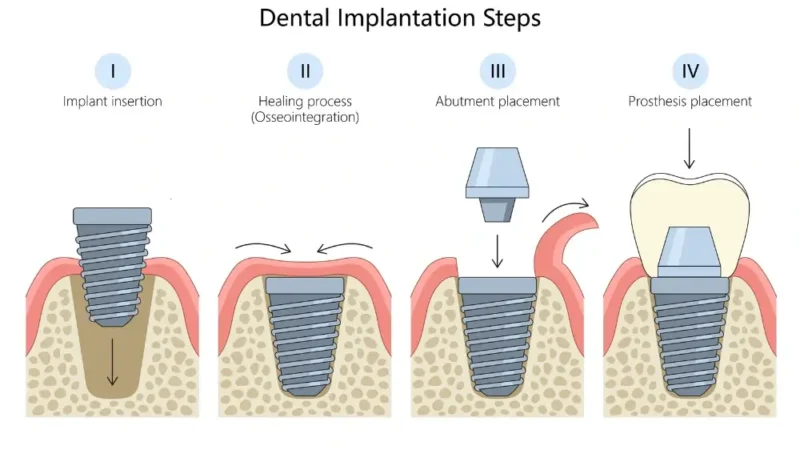
The longevity of a dental implant is determined by 3 main factors:
- The quality of the titanium material
- The patient’s health and care routine
- The precision of the surgical placement
Modern implants must achieve high Primary Stability (mechanical fit) and subsequent Secondary Stability (biological fusion) to survive decades of use.
Quality of the Titanium Post (Straumann vs. Generic)
Clinically, the most successful implants are those made from Grade 4 or Grade 5 Titanium or high-performance Zirconia (ceramic). Premium implant brands like Straumann or Nobel Biocare significantly outperform generic alternatives in long-term clinical trials. Data from the Journal of Oral Implantology suggests that premium implants maintain bone levels 15% to 20% better over a 10-year period than low-cost copies.
*Using a reputable brand also ensures that components (like the abutment or screw) will be available worldwide for decades.
Patient’s Bone Density and Biological Integration
Adequate bone volume and density are the foundation that allows an implant to last a lifetime. If there is insufficient bone, the implant lacks support and is prone to micromovements, which lead to failure. In cases of bone loss, procedures like Sinus Lifts or Bone Grafting are essential to create a stable environment for the titanium post.
*Conditions such as uncontrolled Type 2 diabetes or heavy tobacco use (more than 10 cigarettes a day) can reduce the body’s healing capacity. Smoking, in particular, restricts blood flow to the gums, increasing the risk of implant failure by up to 11% compared to non-smokers.
Oral Hygiene and Professional Maintenance
Strict oral hygiene is the single most important factor within a patient’s control to ensure implant longevity.Although implants cannot get cavities, the surrounding gum tissue can become infected. This infection, known as mucositis in its early stages, can quickly escalate if not treated.
- Daily Care: Brushing twice a day and using specialized implant floss or interdental brushes.
- Water Flossers: Highly recommended for full-mouth restorations to reach under the prosthetic bridge.
- Professional Cleaning: Patients should visit a dental hygienist every 6 months for a professional “deep clean” to remove biofilm that regular brushing cannot reach.
The precision of the surgical placement
Computer-guided surgery increases the accuracy of dental implant placement to within 0.1mm, extending long-term success. Using 3D CBCT scans allows the surgeon to visualize the bone structure, nerve paths, and sinus cavities. This ensures that the implant is surrounded by the maximum amount of healthy bone and is perfectly positioned to support the final crown.
Why do dental implants fail? Understanding risks
The primary causes of dental implant failure are peri-implantitis (infection) and mechanical overloading due to teeth grinding. Failures are categorized into “Early” and “Late.” Early failure occurs within the first 3-4 months due to infection during surgery or premature loading. Late failure occurs years later, often triggered by a change in the patient’s health or a decline in hygiene standards.
Peri-implantitis: The leading cause of implant loss
Peri-implantitis is an inflammatory disease that causes the bone around the implant to dissolve, eventually leading to its loss. Because implants do not have the same nerve supply as natural teeth, peri-implantitis is often painless until it reaches an advanced stage.
Clinical studies indicate that roughly 1 in 5 patients may develop some form of peri-implant disease over a 10-year period if maintenance is neglected. Regular X-rays are the only way to monitor bone levels accurately.
Mechanical failure and crown wear
Mechanical failure occurs when the internal screw breaks or the ceramic crown chips under excessive force. This is most common in patients with Bruxism (nighttime teeth grinding). While the titanium post is incredibly strong, the prosthetic components have a fatigue limit.
To prevent this, we often recommend:
- Night Guards: A custom-made clear tray to protect the porcelain from grinding forces.
- Material Selection: Using Monolithic Zirconia for back teeth, which is virtually unbreakable under normal biting conditions.
- Bite Calibration: Ensuring that the upper and lower teeth meet perfectly to distribute pressure evenly.
How to extend the life of your dental implants
To maximize the lifespan of your dental implants, you must treat them with the same care than natural teeth. While the titanium post is immune to decay, the biological seal between the implant and your gum is more delicate than a natural ligament. Maintaining this seal is the secret to a lifetime of function.
- Quit Smoking: Smoking is the #1 preventable cause of late-stage implant failure due to reduced blood flow.
- Avoid “Hard” Habits: Never use your implants to open bottles, bite fingernails, or chew on ice.
- Use a Night Guard: If you wake up with a sore jaw, you are likely grinding your teeth; a protective guard is a cheap insurance policy for your smile.
- Manage Systemic Health: Keeping blood sugar levels stable (for diabetics) and managing bone density (osteoporosis) helps the jawbone stay strong around the implant.
How We Ensure Permanent Dental Implants in Turkey
OONE LIFE Dental combines elite European technology with world-class surgical expertise to provide dental implants in Turkey designed for permanent results. We use Premium Grade 5 Titanium and Full Monolithic Zirconia, materials proven to withstand the test of time. Furthermore, our surgeons are specialists in complex bone reconstructions, ensuring that even patients with significant bone loss receive a foundation that lasts.