
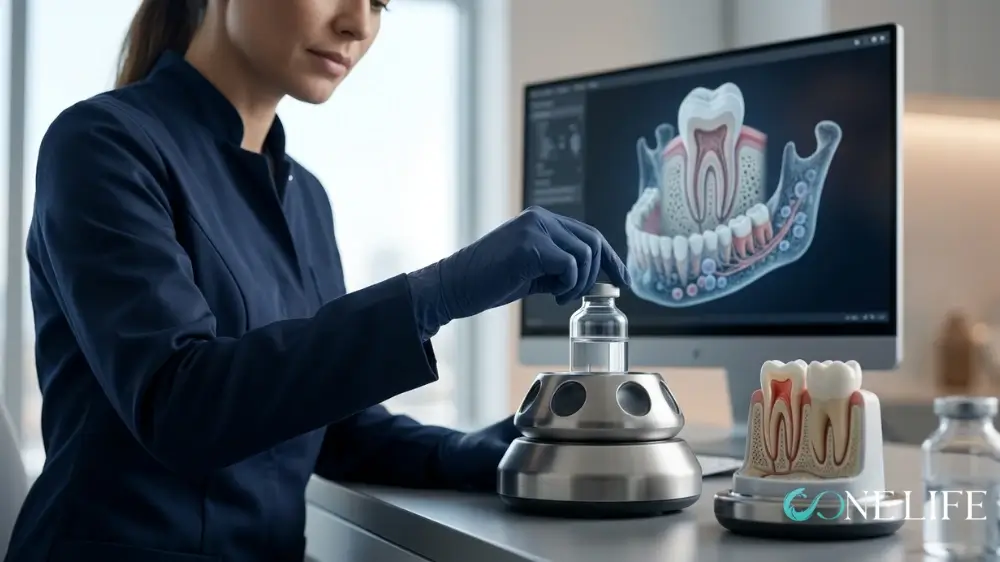
Right now, in 2026, adult human teeth cannot grow back naturally. Once a permanent tooth is lost, your body has no way to replace it. But that answer is changing. Researchers in Japan have launched the world’s first human clinical trials of a drug designed to do exactly that — regrow a third set of teeth — with a target launch date of 2030.
This article explains what the science actually says, how far away tooth regeneration truly is, and what the most effective, proven solutions are for dealing with tooth loss right now.
Can Adult Teeth Grow Back Naturally?
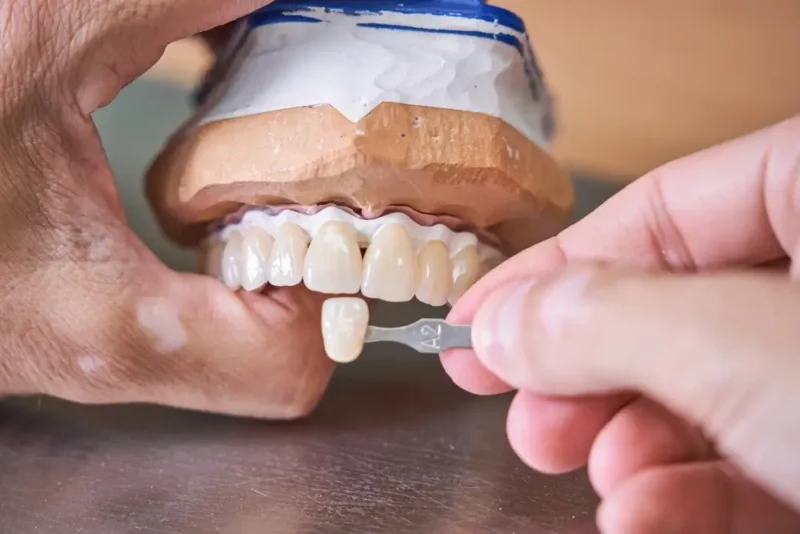
No — adult teeth cannot grow back on their own. Humans are diphyodonts, meaning we grow exactly two sets of teeth in a lifetime: the 20 primary (baby) teeth and the 32 permanent (adult) teeth.
Once a permanent tooth is lost — whether through decay, trauma, gum disease, or extraction — nothing replaces it.
Why Humans Only Grow Two Sets of Teeth
Unlike sharks, which replace their teeth continuously throughout their lives, humans evolved as diphyodonts and only replace teeth once. This happened because, as our diet became more varied and cooking reduced the need for extreme bite force, evolutionary pressure to maintain costly regrowth machinery simply faded.
The key player in this story is a gene — or rather, a gene suppressor — called USAG-1 (Uterine Sensitisation Associated Gene-1). This protein inhibits tooth development after your second set of teeth.
Can Teeth Regenerate? The Science in 2026
Yes — but not yet in humans, and not in the way most headlines suggest.
The genes responsible for triggering a third cycle of tooth growth exist in your DNA but have become permanently dormant once your adult teeth fully develop. Reactivating them is precisely what cutting-edge dental research is now attempting.
The science of tooth regeneration is rapidly advancing, and genuinely exciting. However, it is important to separate what has been proven in animal models from what is available to patients today.
In 2026, there are 3 promising researches being pursued:
1. Japan’s Tooth Regrowth Drug: USAG-1
The most advanced research comes from Japan. Human clinical trials officially began in July 2024 under the supervision of Toregem BioPharma and Dr. Katsu Takahashi at Kyoto University Hospital.
The drug is called TRG-035. It works by blocking the USAG-1 protein — the biological switch that suppresses tooth regrowth in adults. By neutralising USAG-1 with an antibody, the researchers aim to trigger the growth of a third set of natural teeth.
Success With Animals
The results in animals were striking. By blocking this protein, researchers were able to regrow teeth in mice and ferrets, publishing images that demonstrate successful regrowth.
Ongoing Human Trials (2026)
The initial phase of the trial involves 30 healthy adult males aged 30 to 64, each of whom is missing at least one tooth. The goal is to assess the safety of the drug and measure the appropriate dosing. It is not yet a test of whether the drug actually grows teeth in humans — that comes in later phases.
Do Molars Fall Out and Grow Back? TRG-035 for Back Teeth
Molars do not fall out and grow back – yet. But the Japanese TRG-035 trials, focused on molar teeth, will be ready for mass adoption by 2030, according to Toregem BioPharma, the laboratory developing the drug. The initial phase involves 30 healthy adult males aged 30–64, each missing at least one molar tooth.
Molar loss is disproportionately common — driven by decay, periodontal disease, and age — and molar extraction causes the most significant bone loss over time. This explains why solving molar teeth regrow is a priority for the research team led by Dr. Katsu Takahashi.
2. Stem Cells and Lab-Grown Teeth: How Close Are We?
Alongside the TRG-035 drug, two other pathways are advancing — more slowly, but with significant long-term potential.
Dental stem cell therapy has been a research focus for over two decades. In April 2025, researchers in the UK grew human teeth in a lab, offering a potential alternative to dental implants and fillings. Specifically, researchers at King’s College London led by Ana Angelova Volponi reported the laboratory generation of early tooth-like structures using a hydrogel scaffold designed to support interactions between odontogenic cells.
Meanwhile, researchers at Science Tokyo identified two separate stem cell lineages responsible for forming tooth roots and the alveolar bone that anchors teeth in the jaw — with results published in Nature Communications in July 2025.
The key challenge with stem cells remains host compatibility and the fact that human and animal dentin, while similar, are not identical — meaning animal results cannot yet be directly replicated in human patients.
Tooth Regeneration in 2026: Where Is the Research Right Now?
Approach | Lead Researchers | Current Stage | RealisticPublic Release |
USAG-1 Antibody Drug (TRG-035) | Dr. Katsu Takahashi, Toregem BioPharma (Japan) | Phase I human trials — Oct 2024 | ~2030 (if trials succeed) |
Dental Stem Cell Therapy | Multiple — King’s College London, Science Tokyo, Columbia University | Pre-clinical / early lab stage | 2030–2040+ |
Lab-Grown Bioengineered Teeth | King’s College London (Volponi et al.) | Lab-grown tooth-like structures achieved in 2025 | 2035–2040+ |
Laser-Activated Stem Cell Regrowth | Harvard University | Animal models only | Unknown / long-term |
Can Teeth Regrow by 2030?
Possibly — but for a narrow patient group, under specific clinical conditions, and not as a universal treatment.
If clinical trials continue to show positive results, Toregem BioPharma anticipates commercial availability by 2030. That is an optimistic estimate from the company conducting the trials. Independent experts are more cautious.
Here is what the 2030 timeline actually means in practice:
- Phase I trials (currently underway) test only for safety, not effectiveness. They run through 2026
- Phase II trials will test efficacy in children with congenital tooth agenesis — not adults with acquired tooth loss.
- Phase III large-scale trials are planned thereafter, and only after Phase III completion can any regulatory body consider approval.
- Even if approved in Japan by 2030, UK, US, Canadian, and Australian regulatory approval (via the MHRA, FDA, Health Canada, and TGA respectively) would require separate review processes, adding further years.
What Tooth Regeneration Will and Won’t Replace
Even when tooth regeneration becomes available, it is unlikely to be a universal solution. Several biological limitations will remain:
- Bone loss — a tooth grown into a resorbed jaw may lack the structural support to function correctly without prior bone grafting.
- Positioning — a regenerated tooth grows where a dormant bud exists, not necessarily where the missing tooth was.
- Speed — natural tooth development takes months to years; a regenerated tooth would follow similar timelines.
- Cost and access — a novel biologics drug will not be inexpensive at launch, and access outside specialist clinical centres will be limited initially.
Has an Adult Tooth Ever Grown Back? Rare Cases and What They Tell Us
In standard human biology, no — a lost adult tooth has never spontaneously regrown. However, there are rare, documented cases that offer a fascinating biological clue about what the human body may theoretically be capable of.
A small number of people worldwide are born with a condition called hyperdontia — the development of extra teeth beyond the standard 32. In some cases, these extra teeth erupt in adulthood. This is not regrowth in the true sense, but it does confirm one important fact: the genetic machinery for producing additional teeth exists in the human genome.
There are also isolated case reports of tertiary teeth — a third tooth emerging in a position where a previous tooth was lost — but these are extraordinarily rare, largely unexplained, and have never been reliably reproduced.
What these cases tell researchers is significant, though. They are part of the reason Dr. Takahashi’s team believe the USAG-1 pathway is a viable target.
What Is the Best Solution for Missing Teeth Right Now?
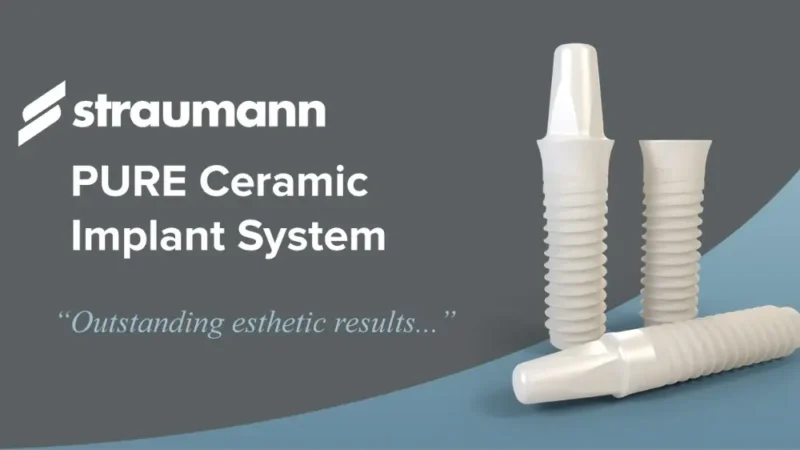
The answer is dental implants — and by a significant margin. In 2026, dental implants remain the only treatment in modern dentistry that replaces both the visible crown and the tooth root, preserving the jawbone and restoring full chewing function.
They have been refined over more than 50 years of use and carry a documented 95–98% long-term success rate in healthy patients.
Book a Free Consultation
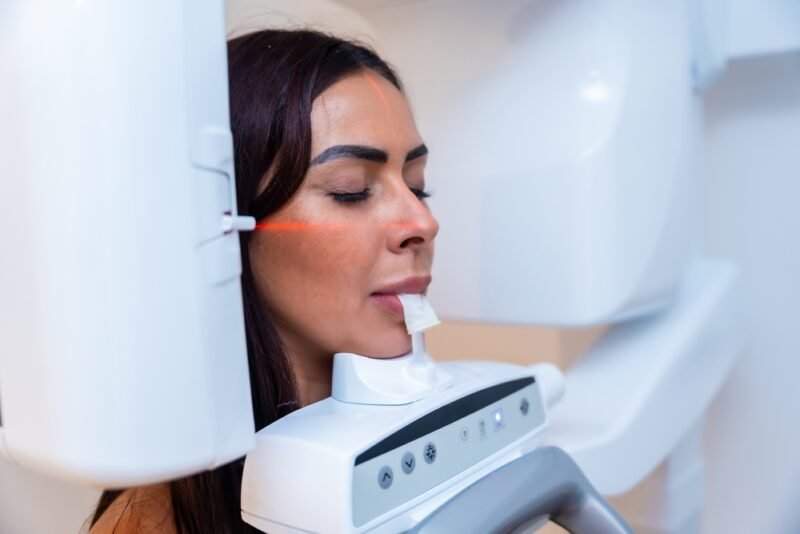
Not sure which treatment is right for you? The team at OONE LIFE DENTAL offers a free, no-obligation consultation to assess your specific situation, review your options, and provide a transparent treatment plan with itemised costs.