
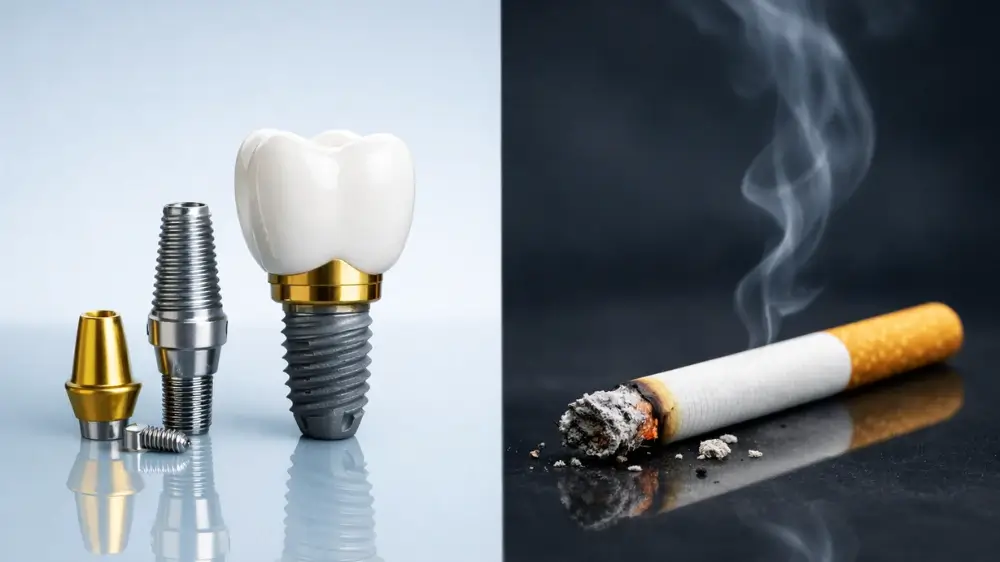
If you are a smoker and have lost a tooth, you are likely wondering if smoking and dental implants are still an option for you. The short answer is yes, but it comes with a caveat. The success of a dental implant relies on a process called osseointegration. For non-smokers, the success rate is 95% to 98%. For smokers, the failure rate is 6% to 15%, doubling or tripling the risk.
If you’re going to invest $2,500 to $3,000 for a single tooth, you need to know exactly how nicotine and smoking can affect your oral health.
Nicotine and Oral Healing
We have to look at how your blood behaves after a puff. Nicotine forces your blood vessels to narrow. When you undergo surgery, your gums and jawbone need oxygen and nutrients to heal the wound. If the bone cannot grow around the implant properly, the implant will never reach the stability required for a crown.
Furthermore, smoking slows down the white blood cells that fight off oral bacteria. This is why smokers often experience more swelling, more pain, and a higher chance of post-surgical infection. Smoking makes your body work harder to achieve a standard result.
Implant Success Rates for Smokers vs. Non-Smokers
When we look at the clinical data, the numbers tell a very clear story. While every patient is different, the global consensus in dental literature points to a distinct gap in long-term outcomes based on tobacco consumption. If you are a smoker, your biology is affected, the question being about the extent of the damage.
Comparative Dental Implant Statistics
Patient Category | Success Rate | Risk of Infection (Peri-implantitis) | Average Healing Time |
Non-Smoker | 95% – 98% | Low (Baseline) | 3 – 4 Months |
Light Smoker (<10/day) | 90% – 93% | Moderate | 4 – 5 Months |
Heavy Smoker (>10/day) | 84% – 89% | High | 6+ Months |
* Statistics derived from clinical meta-analyses (2022-2025) comparing longitudinal implant survival rates.
Early vs. Late Implant Failure
In implantology, we categorize failure into two stages: early and late. For smokers, the risks are heightened in both phases, but for different reasons.
Early failure usually occurs within the first few months, often before the permanent crown is even attached. In smokers, this is typically a “healing failure.” Because the oxygen supply is limited, the jawbone fails to knit to the titanium surface. In these cases, the body treats the implant as a foreign object rather than part of the anatomy, and the post becomes mobile.
Late failure, on the other hand, can happen years after a successful surgery. Even if your implant integrates perfectly at first, continuous smoking attacks the attachment fibers and bone height around the post. This leads to bone recession. Without a solid foundation of bone and healthy, oxygenated gum tissue, the implant loses its grip and eventually fails.
Risks of Tobacco Use in Implantology
Beyond the initial healing, there are clinical risks that smokers must navigate. These can compromise the integrity of your entire jaw.
Impaired Osseointegration and Bone Density
Osseointegration is the “magic” of dental implants. It is the process where bone cells grow directly into the microscopic pores of the titanium. Smoking significantly lowers bone mineral density. When the bone is less dense, it is more brittle and less likely to provide a stable “anchor” for the implant. For heavy smokers, this often means the bond between metal and bone is weaker and more prone to fracture under the pressure of chewing.
Peri-implantitis
Think of peri-implantitis as the implant-specific version of gum disease. It is an inflammatory condition that destroys the soft tissue and bone surrounding an implant. As smoking masks the early signs of gum disease (like bleeding) by reducing blood flow, many smokers don’t realize they have an infection until it is too late. Peri-implantitis is the leading cause of late-stage implant loss in smokers, and it is significantly harder to treat than standard gingivitis.
Reduced Blood Flow and Vasoconstriction
We often see “delayed wound healing” in smokers, which is directly tied to vasoconstriction. When blood flow is restricted, the surgical site doesn’t get the “clean-up crew” of white blood cells it needs to remove debris and bacteria. This stagnant environment is a playground for infection. In some cases, the tissue around the implant may even turn gray or blue (cyanosis), indicating that the cells are gasping for air.
Is Vaping or Smokeless Tobacco a Safer Alternative?
Many patients ask if switching to vaping or e-cigarettes is a safe “loophole” for dental implant surgery. From a medical perspective, the answer is no. While vaping eliminates the combustion of tobacco and some of the tar found in traditional cigarettes, it does not eliminate the primary enemy of your implant: nicotine.
Whether it is inhaled as a vapor or absorbed through a patch, nicotine still enters your bloodstream and triggers vasoconstriction. This means your blood vessels will still narrow, and your healing will still be compromised. Furthermore, the heat from the vapor and the chemical additives in e-liquids can irritate the delicate gum tissues during the first week of recovery. For the best outcome, we treat vaping with the same level of caution as traditional smoking.
How to Prepare for Surgery if You Smoke
If you are a smoker, your preparation for a dental implant starts long before you sit in the dental chair. Success is a team effort between your biology and our surgical expertise. To give your jawbone the best chance to fuse with the implant, we recommend a strict nicotine-free window.
Pre-Operative Protocol for All Smokers
Ideally, you should stop smoking at least two to four weeks before your surgery date. However, we tailor our recommendations based on your current habits:
- Light Smokers (<5 cigarettes/day): Even a small amount of nicotine causes immediate vasoconstriction. We recommend a minimum of one week of total abstinence to allow your blood oxygen levels to stabilize.
- Medium Smokers (5–10 cigarettes/day): You should stop at least two weeks prior. This period is essential for your immune system to “reboot” and for the inflammation in your gingival tissues to subside.
- Heavy Smokers (>10 cigarettes/day): We strictly recommend four weeks of cessation. Heavy tobacco use often results in chronic changes to bone density, and your body needs this extended window to restore a healthy healing response.
Post-Surgical Maintenance and Long-Term Care Recommendations
Once the implant is placed, the real work begins. Your body is in a race to build bone before any bacteria can take hold. Maintaining a clean, oxygen-rich environment is non-negotiable. This includes rigorous hygiene and avoiding any lifestyle habits that lower your oral pH or dry out your mouth, as dry tissues are more prone to infection.
When Can You Smoke After a Dental Implant Surgery?
We recommend a minimum of two weeks of total abstinence following the procedure. The first 72 hours are the most critical for blood clot formation, but the “knitting” of bone to titanium—the primary osseointegration—takes several months. If you will resume, waiting until the two-month mark significantly reduces the risk of early rejection. However, the longer you wait, the more stable your implant will be.
Bone Grafting and Smoking
For many patients, losing a tooth also means losing the bone that once held it. If you require a bone graft before your implant, smoking becomes even more dangerous. Bone grafts are essentially “scaffolds” that rely entirely on your blood supply to turn into bone.
Smokers have a much higher rate of bone graft failure because the limited blood flow prevents the graft material from integrating with your natural jaw. If the graft fails, the implant has nothing to hold onto. In these cases, we have to wait several months to try again, increasing the cost and duration of your treatment.
How to Improve Dental Implant Success in General?
Regardless of your smoking status, success depends on a few key pillars of health:
- Oral Hygiene: Brush and floss twice daily. Use an interdental brush to clean around the implant site once healed.
- Nutrition: Focus on Vitamin D and Calcium to support bone growth.
- Regular Check-ups: Visit your dentist every six months to monitor the bone levels around your implant.
- Control Underlying Conditions: If you have diabetes or hypertension, ensure they are well-managed, as these also affect healing.
Frequently Asked Questions (FAQs)
Can I use nicotine patches instead of smoking?
While patches are better for your lungs, they still contain nicotine. Since nicotine is the primary cause of narrowed blood vessels, patches can still interfere with bone healing. We recommend discussing a nicotine-free cessation plan with your doctor.
Will my dentist know if I smoked?
Yes. Your oral tissues change color and texture when exposed to smoke, and the healing rate of the surgical site is a clear indicator of tobacco use. Honesty is the best policy for your safety.
What are the signs of implant failure?
The most common signs are a loose or “wiggling” implant, persistent pain, swelling that doesn’t go away after the first week, and discharge around the gums.
Is the risk of failure permanent?
The highest risk is during the first year. However, as long as you smoke, you will always have a higher risk of developing peri-implantitis compared to a non-smoker.
Will smoking 100% cause dry socket?
While it is not a 100% guarantee, smoking increases your risk of developing a dry socket by nearly 300% to 400%. A dry socket occurs when the protective blood clot at the surgical site is dislodged or fails to form. The physical act of “sucking” on a cigarette creates a vacuum in the mouth that can literally pull the clot out. Additionally, the chemicals in the smoke prevent the clot from stabilizing. Without that clot, the underlying bone and nerves are exposed to air, food, and bacteria, causing intense, radiating pain that requires emergency dental intervention.