
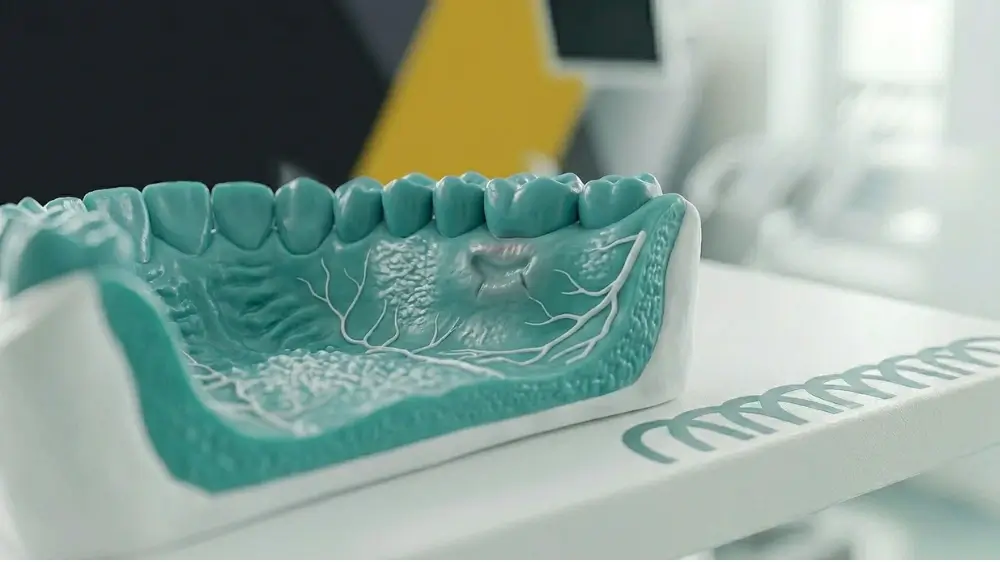
Are you suffering from chronic cheek biting, repetitive biting, chewing, or nibbling of the buccal area? The clinical term is Morsicatio Buccarum and it is more than a simple accident. Chronic sufferers often result in thickened, whitish patches of scarred tissue. This condition is categorized under Body-Focused Repetitive Behaviors (BFRBs), treated in the same clinical family as hair-pulling (trichotillomania) and skin-picking (dermatillomania).
The physiological damage caused by biting inside of the cheek typically manifests as irregular plaques. These lesions are not inherently malignant, but the constant trauma prevents the oral mucosa from healing, creating a cycle of inflammation.
Types of Cheek Biting
There are three primary types of cheek biting. It is key to distinguish yours in order to provide the best possible solution.
Accidental Cheek Biting
This happens due to a momentary lack of focus, fast chewing, or a sudden jaw movement. These bites are usually isolated incidents. They often heal within a few days without any treatment. However, the swelling from the first bite can make the area more prominent. This makes it easier to bite the same spot again, sometimes starting a chronic cycle.
Habitual Cheek Biting
This type occurs subconsciously or semi-consciously. People often bite their cheeks while concentrating, reading, or watching television. It is a repetitive behavior that many don’t even realize they are doing until they feel pain or notice a change in the skin’s texture. It often serves as a way to relieve boredom or help with focus.
3. Morsicatio Buccarum (Compulsive Cheek Biting)
This is the most complex and serious form. Here, the biting is intentional but driven by an uncontrollable urge. It is frequently linked to high levels of stress or anxiety. The act of biting provides temporary relief or a sense of sensory gratification.
Causes of Cheek Biting
Below, we look into the 2 main causes of cheek biting before getting into the solutions.
Anatomical and Dental Misalignment Factors
A frequent cause of biting inside of cheek is dental malocclusion, commonly known as a “bad bite.” When your teeth do not align properly—due to crowding, gaps, or jaw discrepancies—the cheek tissue can easily become trapped between the upper and lower teeth. This is particularly common with wisdom teeth (third molars).
Beyond alignment, the condition of your dental work plays a significant role. Broken fillings, sharp edges on crowns, or ill-fitting dentures can create a “catch point” for the tissue. Once the tissue becomes swollen from an initial bite, it occupies more space in the mouth, making accidental cheek biting almost inevitable during mastication or speech.
Psychological Triggers and Body-Focused Repetitive Behaviors (BFRB)
For many, the question of why do I keep biting my cheek is answered by looking at mental health. Chronic cheek biting is often a Body-Focused Repetitive Behavior (BFRB). These are self-grooming behaviors where individuals pull, pick, or bite their own body, resulting in physical damage. It is frequently used as a coping mechanism to regulate emotions or sensory input.
Psychological triggers often include high-pressure environments, social anxiety, or periods of intense concentration. The act of biting releases a brief sensation of control or “perfectionism” as the individual attempts to “smooth out” a perceived bump or rough patch on the mucosa. Ironically, this biting creates more rough edges, fueling the compulsive cycle of the behavior.
How can I tell if my cheek-biting is a compulsion?
It is vital to distinguish between a habit and a compulsive BFRB. A habit can usually be stopped with simple awareness. However, a compulsion feels like an overwhelming urge that causes significant distress if resisted. If you find yourself searching for “uneven” spots in your mouth with your tongue and feel a strong impulse to bite them until they are “level,” you are likely dealing with a compulsion.
Another sign of compulsive behavior is the presence of shame or secrecy. Many patients bite their cheeks in private and feel embarrassed about the resulting sores or the inability to stop. If the behavior persists despite causing physical pain, bleeding, or interference with your social life, it has likely transitioned from a simple habit into a clinical BFRB that may require therapeutic intervention.
Clinical Data and Prevalence Statistics
Research indicates that Morsicatio Buccarum is more common than many patients realize, though it often goes underreported due to the “silent” nature of the habit. Studies suggest a higher prevalence in populations experiencing high levels of academic or professional stress. Interestingly, gender distribution in clinical studies often shows a slight skew toward females, although this may reflect a higher rate of reporting rather than a biological predisposition.
The following table outlines the key differences between accidental biting and chronic Body-Focused Repetitive Behaviors (BFRB):
Feature | Accidental Cheek Biting | Chronic Morsicatio Buccarum |
Frequency | Rare / Occasional | Multiple times daily |
Primary Cause | Distraction / Fast Chewing | Stress / Anxiety / Malocclusion |
Tissue Appearance | Acute redness / Small tear | Thickened white plaques (Keratosis) |
Healing Time | 3 to 7 days | Persistent / Never fully heals |
Awareness | High (Immediate pain) | Often subconscious |
Treatment | None / Topical gel | Behavioral therapy / Dental guards |
Current data from the Journal of Oral Pathology & Medicine indicates that approximately 0.5% to 1.5% of the general population experiences clinical-level cheek biting. However, among individuals with existing anxiety disorders, the prevalence of biting the inside of the cheek as a coping mechanism can rise significantly.
How to Stop Biting Your Cheek: Behavioral Evidence-Based Strategies
Learning how to stop biting your cheek requires a dual approach: managing the immediate physical habit and addressing the underlying psychological or dental triggers. Because the oral mucosa regenerates quickly, even a few days of cessation can lead to significant healing, which in turn reduces the “rough” texture that often invites further biting. Consistency is the most critical factor in breaking this Body-Focused Repetitive Behavior (BFRB).
Many patients find success by combining self-monitoring with external aids. By becoming aware of the specific times and environments where the biting occurs—such as while driving, studying, or during stressful work meetings—you can implement “competing responses.” These are physical actions that make it impossible to continue biting the inside of the cheek, effectively retraining the brain’s motor patterns.
Immediate Behavioral Interventions
The first line of defense involves habit reversal training (HRT). This technique focuses on identifying the “pre-urge” sensation—that itchy or tense feeling in the jaw—and replacing the bite with a harmless action. For instance, you might choose to gently press your lips together or place your tongue against the roof of your mouth. These actions occupy the muscles used for biting, providing a physical barrier against the habit.
Other immediate strategies include:
- Sugar-free gum: Chewing gum provides the sensory stimulation the jaw craves without damaging the cheek tissue.
- Oral lubricants: Using a specialized mouthwash or gel can smooth the inner lining of the mouth, making it harder for teeth to “grip” the tissue.
- Mindfulness triggers: Placing a small reminder, like a rubber band on your wrist or a digital notification, can pull you out of a “trance-like” state of habitual cheek biting.
Long-term Dental and Therapeutic Solutions
If the issue is rooted in anatomical or dental misalignment, behavioral changes alone may not suffice. A dental professional can assess your bite and determine if orthodontic treatment, such as braces or clear aligners, is necessary to move the teeth away from the buccal mucosa. In cases where sharp tooth edges or old fillings are the culprits, a simple smoothing procedure (enameloplasty) can eliminate the physical trigger for biting the inside of the cheek.
For those whose biting is strictly psychological, Cognitive Behavioral Therapy (CBT) is highly effective. A therapist can help you deconstruct the stress-response cycle and develop healthier coping mechanisms for anxiety. Additionally, custom-made night guards or occlusal splints can be worn during high-risk periods to provide a physical shield, allowing the scarred tissue of the morsicatio buccarum to heal completely without further trauma.
When to Consult a Specialist for Chronic Tissue Damage
While minor accidental nicks and scratches generally heal on their own, chronic biting inside of cheek requires professional oversight to prevent permanent structural changes to the oral mucosa. If you notice persistent white or red patches (leukoplakia or erythroplakia) that do not resolve within two weeks, an evaluation is mandatory. Chronic irritation can sometimes mask more serious conditions, and a specialist can perform a differential diagnosis to rule out oral candidiasis, lichen planus, or other mucosal pathologies.
You should seek an immediate clinical consultation if you experience:
- Persistent Bleeding: Sores that open frequently and do not form a stable scab.
- Firm Lumps: The presence of a “knot” or firm mass within the cheek tissue, which may indicate deep scarring or fibromas.
- Limited Jaw Movement: Pain or swelling that makes it difficult to open your mouth fully or chew comfortably.
- Visible Asymmetry: Significant differences in the internal texture of one cheek compared to the other.
Consequences and Complications of Cheek Biting
Chronic biting of the inside of the cheek is not merely a cosmetic issue; it carries significant physiological and psychological risks. When the oral mucosa is repeatedly traumatized, the body attempts to protect itself by creating a layer of keratin, resulting in a calloused, white appearance known as hyperkeratosis. While this tissue is tougher, it is also uneven, often leading to a “vicious cycle” where the tongue constantly seeks out these rough patches, triggering further biting.
Beyond the immediate discomfort, frequent biting can lead to painful mouth ulcers and open sores that are susceptible to secondary infections. In severe cases, chronic irritation can cause significant swelling, making it difficult to speak or chew without further injury. Psychologically, the inability to control the habit can lead to feelings of guilt, social withdrawal, and anxiety, especially if the individual is self-conscious about the appearance of their inner cheeks or the repetitive motion of their jaw in public.
Fixing Damage of Cheek Biting
When biting inside the cheek becomes a chronic issue, the damage requires professional dental intervention. Beyond stopping the habit, a dentist must address the physical changes in the oral cavity to prevent long-term complications. If the tissue has become chronically thickened or if the teeth have shifted due to the constant jaw pressure, specific clinical treatments are necessary to restore oral health and symmetry.
One of the most effective solutions is the fabrication of a custom-made mouth guard (occlusal guard). Unlike over-the-counter boil-and-bite options, these are precision-engineered to your specific dental anatomy. By providing a smooth, durable barrier between the upper and lower teeth, these guards prevent the “grip and tear” action on the buccal mucosa. Furthermore, if chronic biting has led to recessed gums or enamel wear from related grinding (bruxism), these appliances provide essential protection for the tooth structure.
Other clinical interventions include:
- Enameloplasty: Smoothing out sharp or jagged tooth edges that catch on the cheek tissue during speech or mastication.
- Laser Therapy: Using low-level lasers to stimulate the healing of chronic morsicatio buccarum lesions and reduce inflammation in the scarred areas.
- Orthodontic Adjustment: Realigning teeth that are positioned too far toward the cheek (buccal version) to create more “corridor” space in the mouth.
Frequently Asked Questions (FAQs)
Can cheek biting cause oral cancer?
Chronic cheek biting is a benign condition and is not a direct cause of oral cancer. However, long-term chronic inflammation should always be monitored by a professional to ensure the tissue remains healthy and to distinguish it from other potentially pre-malignant lesions.
Why is the inside of my cheek white and bumpy?
This is typically a sign of keratosis, where the oral skin thickens to protect itself from repeated trauma. It is essentially a “callus” inside your mouth caused by persistent friction from biting the inside of the cheek.
Is cheek biting a sign of anxiety?
Yes, it is often classified as a Body-Focused Repetitive Behavior (BFRB). It is frequently triggered or exacerbated by high levels of stress, anxiety, or deep concentration as a subconscious coping mechanism.
How long does it take for a bitten cheek to heal?
A standard accidental bite usually heals within 3 to 7 days. However, chronic lesions from morsicatio buccarum may take several weeks of total cessation to return to a normal, smooth, pink texture.
Are there medications for cheek biting?
While there is no specific pill to stop the habit, a doctor may prescribe topical steroid gels to reduce inflammation and pain during the healing process, or address underlying anxiety with appropriate therapeutic interventions.