
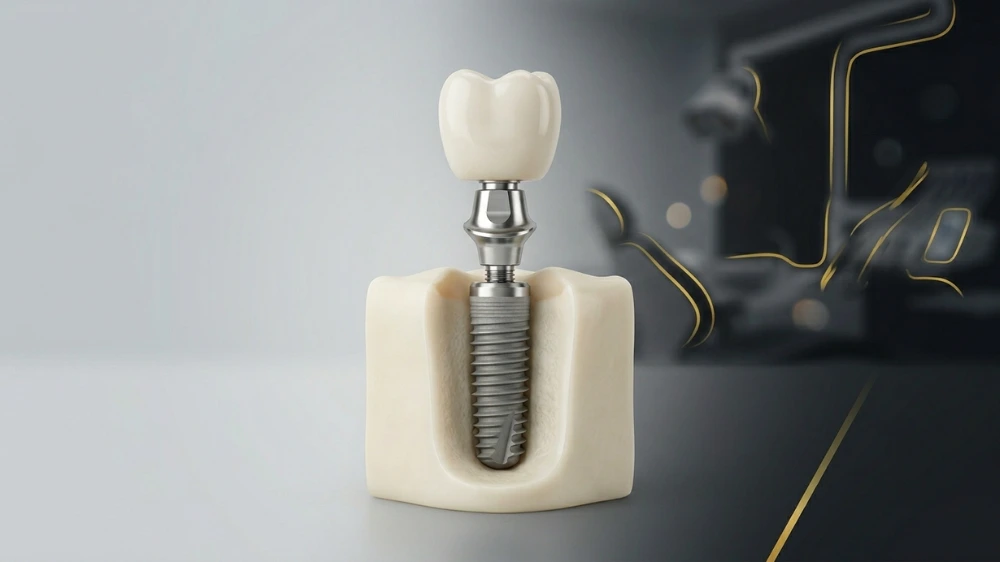
An endosteal implant is a device surgically placed directly into the jawbone to serve as an artificial tooth root. Typically constructed from biocompatible titanium or ceramic materials, their success rate is approximately 95% to 98% according to clinical studies. Dr. Astolfi emphasizes that endosteal dental implants remain the only solution thatprevents bone resorption, where the jawbone shrinks after tooth loss.
What Are the Three Types of Endosteal Implants?
The three types of endosteal implants are screws, cylinders, and blades. While all are placed directly into the jawbone, their geometry varies based on the patient’s specific bone anatomy and the mechanical load required for the restoration.
- Screws (Threaded): The most common variety. These utilize a threaded design to provide immediate primary stability within the bone, facilitating faster osseointegration.
- Cylinders: These have a smooth or macro-porous surface. They rely entirely on the biological bond of the bone growing into the implant surface rather than mechanical threading.
- Blades: Used less frequently today, these are thin, flat metal plates designed for patients with narrow jawbones where a traditional circular screw cannot be accommodated.
Dr. Astolfi notes that threaded titanium screws are the industry standard due to their superior surface area for bone attachment. The choice of implant shape is determined by high-resolution CBCT scans to ensure the device integrates perfectly with the existing bone density.
Are You a Suitable Candidate for Endosteal Dental Implants?
A suitable candidate for endosteal implants is any adult with sufficient jawbone density and healthy gum tissue.Because these implants are placed directly into the bone, osseointegration—the process where bone fuses to the titanium—requires a solid structural foundation to ensure long-term stability.
- Bone Density: You must have enough bone height and width to house the implant. If bone loss has occurred, Dr. Astolfi may recommend a bone graft or sinus lift prior to surgery.
- Systemic Health: Chronic conditions like uncontrolled diabetes or autoimmune disorders can slow healing. However, managed conditions usually do not disqualify patients.
- Non-Smokers: Smoking significantly increases the risk of implant failure by reducing blood flow to the surgical site.
- Oral Hygiene: Candidates must be committed to maintaining a rigorous cleaning schedule to prevent peri-implantitis, an infection that can cause the implant to loosen.
Dr. Astolfi emphasizes that the primary contraindication is active periodontal disease, which must be treated before the implant can be safely integrated.
The Procedure Step by Step

The endosteal implant procedure is a multi-stage surgical process that involves placing a titanium post into the jawbone, followed by a healing period of three to six months. This phased approach ensures the implant achieves total osseointegration before supporting the final prosthetic tooth.
- Initial Consultation: Astolfi uses CBCT 3D imaging to map bone density and nerve locations, ensuring precise implant placement.
- Implant Placement: Under local anesthesia, a small incision is made in the gum. A specialized drill creates a site in the bone where the titanium screw is precisely inserted.
- Osseointegration: This is the critical healing phase. Over several months, your natural bone grows into and around the implant surface, creating a permanent structural bond.
- Abutment Attachment: Once healed, a small connector piece called an abutment is attached to the implant post above the gum line.
- Final Restoration: A custom-made ceramic crown, designed to match your natural teeth, is permanently fixed to the abutment.
Recovery & Aftercare
Recovery after an endosteal implant procedure typically takes 7 to 14 days for initial healing, though osseointegration continues for 3 to 6 months. While minor swelling and discomfort are expected in the first 72 hours, most patients return to work within 24 to 48 hours following surgery.
- First 24 Hours: Focus on resting and applying ice packs to the jaw. Avoid hot liquids and vigorous rinsing to protect the surgical site and the forming blood clot.
- Dietary Adjustments: Stick to a soft-food diet (yogurt, protein shakes, mashed potatoes) for the first week to prevent mechanical stress on the newly placed titanium screw.
- Oral Hygiene: Astolfi recommends rinsing with a prescribed antimicrobial mouthwash or warm salt water. Do not brush directly on the surgical site for the first 48 hours.
- Long-term Maintenance: Treat the implant like a natural tooth. Regular flossing and professional cleanings are mandatory to prevent peri-implantitis, the leading cause of late-stage implant failure.
What Are the Risks of Endosteal Implants?
The primary risks of endosteal implants include infection (peri-implantitis), nerve damage, and failed osseointegration. While complications occur in less than 5% of cases, understanding these risks is essential for informed consent and proactive aftercare.
- Peri-implantitis: A localized infection of the gums and bone surrounding the implant. If untreated, it leads to bone loss and eventual loss of the implant.
- Nerve Damage: Rare, but can occur if the implant is placed too close to the mandibular nerve. Dr. Astolfi mitigates this risk using 3D CBCT imaging for precise surgical mapping.
- Sinus Issues: In the upper jaw, implants can occasionally protrude into the sinus cavities. This is avoided by performing a sinus lift if bone height is insufficient.
- Implant Failure: This occurs when the bone fails to fuse with the titanium surface. Risk factors include smoking, uncontrolled diabetes, and poor bone quality.
How Much Do Endosteal Implants Cost?
The average cost of a single endosteal implant ranges from $3,000 to $6,000 in the United States, covering the post, abutment, and crown. While dentists typically pay only $100 to $500 per unit for the physical hardware, the final price reflects the high operational charges and clinical expertise. This price disparity explains why many patients choose Turkey, where they pay between $600 and $1,200 for the same high-quality endosteal dental implants due to significantly lower clinical overheads.
Detailed Price Breakdown:
- Surgical Placement Hardware ($100 – $500): This is the wholesale cost of the titanium or zirconia screw (the fixture). While the hardware is the foundation, it represents the smallest fraction of the US clinical bill.
- Abutment ($300 – $500): This is the connector piece that links the implant to the crown. In many high-end clinics, this is custom-milled to fit your specific gum line.
- Prosthetic Crown ($700 – $2,500): The visible “tooth” made of porcelain or zirconia. This cost includes the laboratory fees for manufacturing a restoration that matches your natural teeth in color and strength.
- Clinical Operational Overheads ($1,500 – $3,000): This accounts for the largest portion of the fee in the US. It covers sterilized surgical suites, specialized nursing staff, malpractice insurance, and the surgeon’s professional expertise.
- Diagnostic Imaging ($200 – $500): High-resolution CBCT scans and 3D mapping are essential for safety and precision, ensuring the “Biotech Anatomy” is correctly mapped.
- Supplementary Procedures: Total costs increase if the patient requires bone grafting ($500 – $2,000) or a sinus lift to create sufficient bone density.
What is The Alternative to Endosteal Implants?
The primary alternatives to endosteal implants are subperiosteal implants, dental bridges, and removable dentures. While endosteal options are the “gold standard” for those with healthy bone, patients with significant bone atrophy may require different clinical approaches.
- Subperiosteal Implants: These sit on top of the jawbone but under the gum tissue. They are used for patients who cannot undergo bone grafting and lack the depth for an endosteal implant.
- Dental Bridges: A non-surgical option that uses adjacent healthy teeth as anchors. The disadvantage is the necessity to shave down healthy enamel on neighboring teeth.
- Removable Dentures: The most traditional alternative. While lower in cost, they do not prevent bone resorption, meaning the jawbone will continue to shrink over time.
Endosteal vs. Subperiosteal Implants
The fundamental difference is the placement: endosteal implants go in the bone, while subperiosteal implants sit on the bone. Dr. Astolfi notes that 90% of modern patients are candidates for endosteal versions due to advancements in bone grafting technology.
Feature | Endosteal Implant | Subperiosteal Implant |
Placement | Inside the jawbone | Under the gum, on the bone |
Primary Use | Most common / Standard | Low bone density / No graft |
Stability | Maximum (Osseointegration) | Moderate (Tissue support) |
Longevity | 25+ years to lifetime | 10–15 years |
Get Your Free Quote and Consultation
You can receive a personalized treatment plan and a free quote for endosteal implants in Turkey by scheduling a virtual consultation today. Dr. Astolfi and our surgical team provide high-precision restorations at a fraction of US costs!
- Free Online Consultation: Speak with our specialists from the comfort of your home.
- Transparent Pricing: Receive a detailed breakdown of your endosteal implant cost with no hidden fees.
- Expert Care: Access world-class titanium implants and 5-star dental tourism infrastructure.
Contact us now to book your free consultation!