Home » Before and Afters

Full Mouth Dental Implants Before
and Afters in Turkey | Dr. Tarkan & Dr. Serkan

Experience the artistry behind every smile. At OOne Life, we partner exclusively with award-winning specialists to deliver the best dental implants before and after results in Turkey. From initial design to final execution, every procedure is meticulously managed, including insurance in all our package deals. 

Specialized in

Full Mouth Dental Implants

Full Arch Zirconium & Botox

e.max Zirconium & Botox

Full Arch e.max Crowns

All on 6 e.max Dental Implants

All on 4 Porcelain-Coated Zirconium

Explore our comprehensive Dental Transformation Timeline to follow the journey from the initial healing phase to the final results. Gain a clear understanding of our restorative protocols and receive transparent guidance on the investment for your custom dental packages in Turkey. Contact our team today for a treatment plan and all-inclusive quote.

How Does Dental Implants Surgery Work?

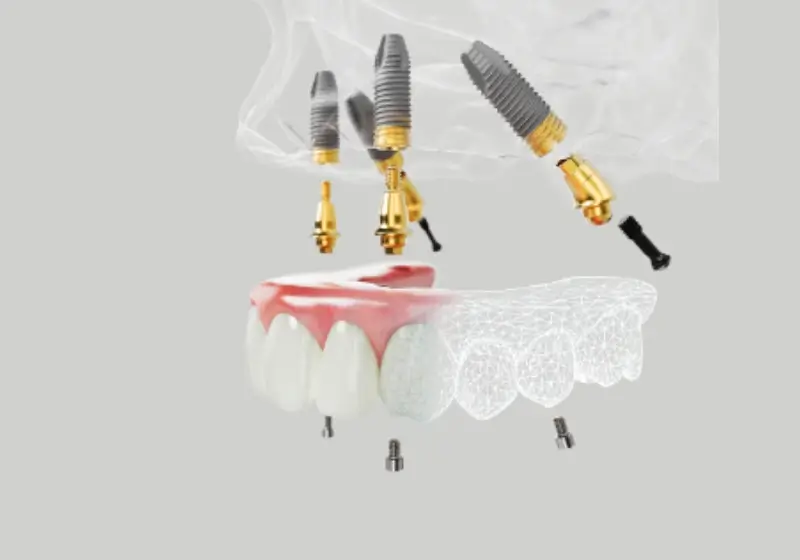
The success of dental restoration depends on biocompatible materials and precision surgery. By utilizing computer-guided implantology, the margin of error is virtually eliminated, ensuring that the dental implants before and after photos in Turkey are both functional and aesthetic.

Phase 1: Diagnostics, 3D Tomography, and Bone Density 

CBCT Scan for dental implants in Turkey

Before any surgical intervention, a digital blueprint of the patient’s oral anatomy is created. This is not a standard X-ray; it involves CBCT (Cone Beam Computed Tomography) scans which provide a 3D view of the bone structure, nerve paths, and sinus cavities.

  • Bone Density Assessment: We evaluate the Hounsfield Units (HU) to ensure the bone can support the primary stability of the implant.
  • Virtual Planning: Surgeons use specialized software to pre-place the titanium posts in a virtual environment, avoiding vital structures and ensuring optimal angulation for the final crown.

Phase 2: Surgery and Immediate Loading


Our philosophy regarding dental implants surgery in Turkey focuses on minimizing “downtime.” Under local anesthesia or IV sedation, the dental implant, a screw-grade Grade 5 Titanium or Zirconia post, is inserted into the jawbone.

  • Primary Stability: The mechanical “grip” of the implant is the bone.
  • Osseointegration: the bone cells grow into the implant surface, a process that typically takes 3 to 6 months for permanent fusion.

Phase 3: Post-Op Aftercare & Medication 

The “after” phase is where clinical success is maintained. Patients are provided with a pharmacological kit to manage inflammation and prevent secondary infection.

  • Medication Protocol: Includes antibiotics, non-steroidal anti-inflammatory drugs (NSAIDs), and specialized antiseptic mouthwashes (Chlorhexidine).
  • Immediate Post-Op Care: Patients must adhere to a “cold-soft diet” for the first 48 hours to facilitate healing and prevent mechanical stress on the surgical site.

Our Smile Gallery

Watch Our Hollywood Smile Before & Afters in Turkey

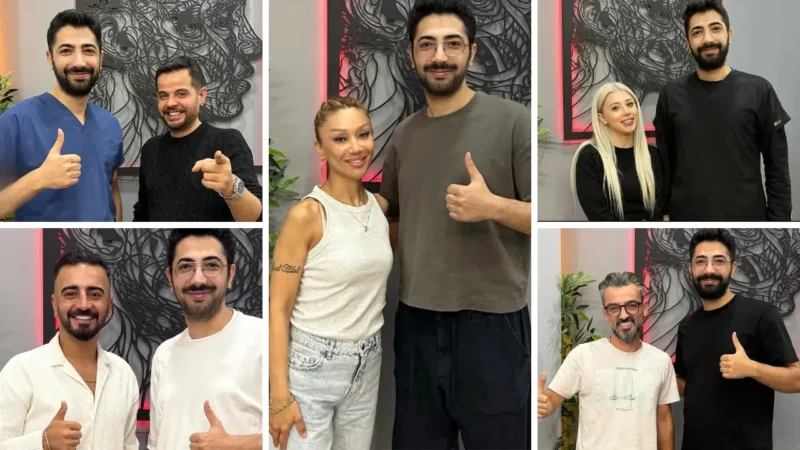
The “Before and After” gallery serves as the clinical proof of a surgeon’s skill and the clinic’s technological capabilities. For patients traveling for dental implants Turkey before and after results, the transformation is often categorized into functional restoration or aesthetic rejuvenation.

  • Structural Restoration: Patients with multiple missing teeth or failing bridges see a dramatic change in facial volume, with dental implants surgery effectively acting as a “biological facelift.”
  • Aesthetic Harmony: Using E-max or Zirconia crowns, dentists can match the shade, translucency, and texture of natural teeth.
  • Case Studies: Clinical audits show that 95% of patients report a significant increase in social confidence within the first month.

Receive your free treatment plan

Dental Implants Surgery Recovery Timeline

To provide a visual analysis of the healing process after dental implants in Turkey, the following table breaks down the clinical expectations from the hour of surgery to the final restoration.

Clinical Recovery Roadmap

Timeframe

Clinical Focus

Patient Experience

Days 1–3

Acute Healing

Minor swelling and localized sensitivity; strict adherence to medication.

Days 4–7

Tissue Regeneration

Swelling subsides; sutures (if not dissolvable) remain in place; soft diet only.

Weeks 2–4

Initial Osseointegration

Gums appear healed; internal bone remodeling begins; return to normal social activities.

Months 3–6

Biological Fusion

The implant becomes a permanent part of the jaw; preparation for the permanent crown.

Year 1+

Maintenance

Annual check-ups; standard oral hygiene; the implant functions like a natural root.

Material Integrity: Verifying the Best Dental Implant Types for Your Case

The longevity of your Turkey dental implants before and after experience depends almost entirely on the surface morphology and the grade of titanium. To ensure patient safety, elite clinics implement a traceability protocol to guarantee world-class materials. Every implant comes with a unique ID card containing:

  1. Brand & Model: (e.g., Straumann, Nobel Biocare, Osstem).
  2. Lot/Batch Number: For global warranty registration.
  3. Material Grade: Grade 4 or Grade 5 Medical Titanium.

Choosing the Right Implant: Aggressive vs. Tissue Level 

The choice of implant depends on your specific bone anatomy. A “one size fits all” approach is a sign of poor clinical practice which must always be avoided.

Implant Type

Characteristic

Best Suited For

Aggressive Thread (Active)

Deep, sharp threads for high initial stability.

Immediate Loading and soft bone quality (Type III/IV).

Tissue Level

Smooth “neck” design to protect the gum line.

Preventing peri-implantitis in the posterior (back) teeth.

Zirconia (Metal-Free)

100% Ceramic; white color.

Patients with metal allergies or very thin gum tissue.

How Much Do Dental Implants Cost in Turkey?

On average, dental implants in Turkey cost between $400 and $900 per unit, while full-mouth “All-on-4” packages range from $3,000 to $7,000 per arch. This represents a 70% to 80% saving compared to the UK, USA, and Australia, where prices for similar premium treatments typically exceed $3,000 for a single implant and $20,000 per arch.

Full Mouth Dental Implants Package Deals in Turkey

To maximize value and transparency, Turkish dental clinics usually offer an all-inclusive package price for full mouth dental implants in Turkey. These “fixed-cost” deals ensure that international patients avoid the common “hidden fees”for 3D scans or abutments.

Standard 2026 Package Inclusions:

  • Premium Implants: Choice of Swiss (Straumann), German (Bego), or high-end Korean (Osstem) systems.
  • Imaging & Diagnostics: Panoramic X-rays and 3D CBCT scans.
  • Prosthetics: Temporary teeth for the healing phase and final Zirconia or E-max crowns.
  • Logistics: VIP airport-to-hotel transfers and 5-star accommodation.
  • Lifetime Warranty: Documented guarantee cards for the implant hardware.

Estimated 2026 Price Comparison (Full Arch Restoration)

Region

All-on-4 (Per Arch)

Single Premium Implant

USA

$20,000 – $35,000

$3,500 – $5,500

UK

£12,000 – £18,000

£2,000 – £3,500

Australia

$25,000 – $40,000

$4,500 – $6,000

Turkey (Elite)

$4,500 – $7,500

$600 – $1,100

How Can OOne Life Achieve Such Excellent Results?

The success of OOne Life is built on a “Specialist-First” philosophy. Unlike general clinics, we treat dental restoration as an architectural project. Our results are driven by three core pillars:

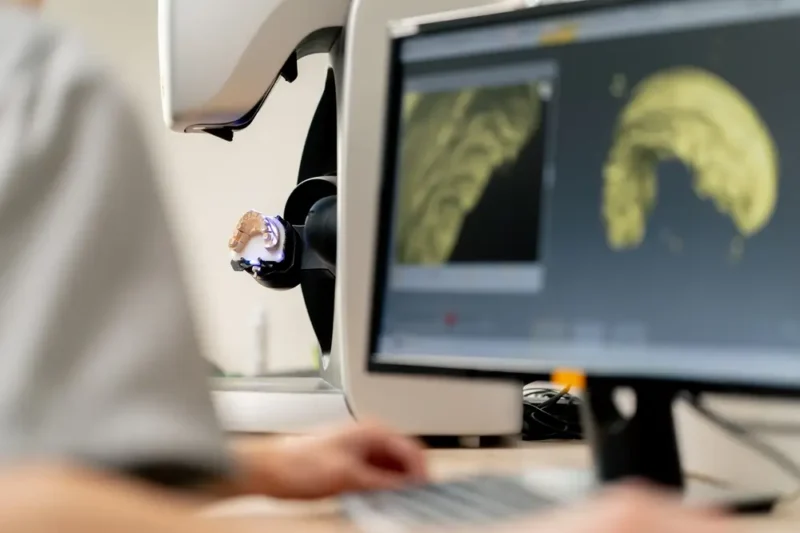
  1. In-House Laboratory Precision: By operating our own CAD/CAM dental lab in Turkey, we eliminate the third-party delays and errors. This allows for bespoke smile design where the patient can approve the shape, color, and fit of their teeth in real-time.
  2. Multidisciplinary Teams: Your case is not handled by a single dentist, but by a team including a Maxillofacial Surgeon (for the implant placement) and a Prosthodontist (for the aesthetic crown work).
  3. Digital Workflow: Every patient undergoes a full digital scan. This “Digital Smile Design” ensures that the dental implants before and after results are mathematically aligned with your facial symmetry.

Medical Insurance for Dental Implants in Turkey

Today, the legal landscape in Turkey is strictly regulated to provide a comprehensive safety net for international patients. Under the newly enacted Regulation on International Health Tourism, it is now mandatory for licensed Turkish clinics to ensure every international patient is covered by Medical Complication Insurance for surgical and invasive procedures (including dental implants).

What is Covered? 

This state-mandated insurance typically covers:

  • Revision Surgery: If a clinical complication arises (such as implant failure or infection), the cost of the corrective procedure is covered.
  • Extended Stay Costs: Coverage for additional hospital nights or hotel stays required due to medical complications.
  • Travel Adjustments: Reimbursement for flight changes necessitated by a medical delay.
  • Duration of Coverage: Most mandatory policies provide a “protection window” of 6 to 12 months post-procedure, ensuring you are covered even after you return to your home country.

Why This Matters for Your “Before and After” 

This regulation elevates Turkey to a highly regulated medical zone. It effectively eliminates the financial risk of complications, which has historically been the biggest barrier for patients.

Expert Tip: When receiving your quote, always ask: “Is the mandatory 2026 Complication Insurance included in my package?” Reputable clinics like OOne Life’s integrate this automatically as part of our transparency protocol.

Receive a Free Dental Consultation Online

We offer a no-obligation virtual consultation where our surgeons review your dental X-rays or photos. Contact us today to receive your personalized Dental Implants Turkey treatment plan and a transparent cost estimate within 24 hours.

FAQs

What's the downside of having dental implants?

The primary downsides include the high initial cost, a multi-month healing period (osseointegration), and the risk of peri-implantitis (infection) if oral hygiene is poor. Rarely, surgical risks like nerve damage or sinus issues can occur.

You never have to go without teeth. While the implant takes 3 to 6 months to fuse with the bone, clinics provide temporary bridges or dentures immediately following surgery to maintain aesthetics and function during the healing phase.

Yes. Modern protocols like “Teeth in a Day” or immediate loading ensure you receive a temporary prosthetic immediately after surgery. These stay in place until your permanent, custom-made Zirconia or porcelain crowns are ready for final fitting.

Most patients report minimal discomfort, often less than a tooth extraction. Procedures are performed under local anesthesia or sedation. Post-operative soreness is typically managed effectively with standard NSAIDs (ibuprofen) and subsides within 3 to 5 days.

Not usually. Most procedures use local anesthesia, keeping you awake but numb. However, for complex cases or dental anxiety, IV sedation or general anesthesia is available to ensure you are completely asleep and comfortable during the surgery.

Individuals with uncontrolled diabetes, active periodontal disease, or those undergoing high-dose radiation therapy to the jaw should avoid implants. Heavy smokers are also cautioned due to significantly higher risks of biological failure and poor bone healing.

Disqualifiers include insufficient bone density (without grafting), active autoimmune disorders, and the use of certain bisphosphonate medications. Additionally, children and adolescents are disqualified until their jawbone has fully finished growing, usually around age 18-21.

There is no upper age limit for implants, provided the patient is in good health. However, they are not recommended for minors whose jawbones are still developing. Successful implants are common in patients well into their 80s and 90s.

Small amounts of food can occasionally get trapped under the bridge or crown. This is prevented through precision CAD/CAM design and managed with daily use of water flossers (Waterpik) or interdental brushes to maintain gum health.

Regret is extremely rare, with patient satisfaction rates exceeding 95%. Regret typically only stems from choosing low-quality clinics or failing to follow aftercare, leading to complications. Most patients view them as a life-changing, positive investment.

iMessage Us